DevOps Fundamentals
Introduction to DevOps
What is DevOps?
Think of a restaurant. You have chefs who create the food (development) and the kitchen staff who manage the ovens, stock the pantry, and make sure everything runs smoothly (operations). In a traditional setup, these two teams barely talk. The chefs finish a dish and just pass it to the kitchen staff, who then have to figure out how to keep it warm and serve it. If something goes wrong, they blame each other. This is how software used to be built.
DevOps changes this by having the chefs and kitchen staff work together from the start. They plan the menu together, organize the kitchen for efficiency, and solve problems as a team.
In the software world, DevOps is a cultural philosophy that brings development (Dev) and operations (Ops) teams together. The goal is to shorten the software development lifecycle and deliver high-quality software more frequently and reliably. It's not a specific job title or a piece of software, but a way of working that emphasizes collaboration, automation, and continuous improvement.
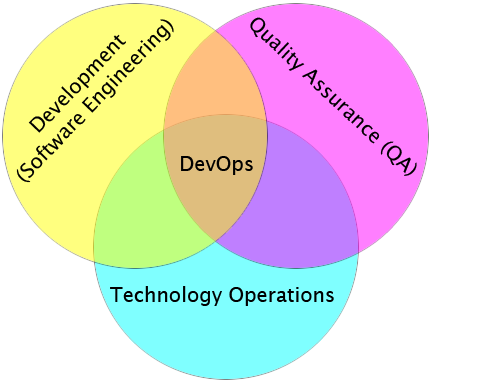
By breaking down the traditional barriers, or "silos," between these teams, companies can build, test, and release software faster and more efficiently.
From Walls to Workflows
Not long ago, software development followed a strict, linear path called the Waterfall model. A team would spend months on one stage—like planning—before handing its work over to the next team for design. Developers would then write code and, when finished,
throw it over the wall
to the operations team to deploy and maintain.
This process was slow and rigid. If a problem was found late in the game, fixing it was expensive and time-consuming. There was little collaboration, and a lot of finger-pointing when things went wrong.
The Agile methodology came along and improved things significantly. It broke large projects into small, manageable cycles called sprints. This allowed for iterative development and frequent feedback. However, Agile focused mainly on the development side of the house. The wall between Dev and Ops, while smaller, still existed.
DevOps is the natural evolution of Agile. It extends Agile principles beyond the 'Build' phase to include deployment and operations. It tears down the wall completely, creating a single, streamlined workflow from idea to production.
Why It Matters
Adopting a DevOps culture isn't just about making developers and operations engineers happier. It has a direct impact on a company's ability to compete and innovate. The primary benefits are clear and compelling.
| Benefit | What It Means |
|---|---|
| Speed | Deliver new features and bug fixes to users much faster. This increases deployment frequency from months to weeks, days, or even hours. |
| Reliability | Automation reduces the risk of human error in testing and deployment, leading to more stable and reliable systems. |
| Quality | By integrating testing throughout the development cycle, teams catch bugs earlier, resulting in a higher-quality product. |
| Collaboration | Teams are no longer in conflict. They share responsibility and work together, leading to better morale and more effective problem-solving. |
| Security | Security is integrated into the development lifecycle from the beginning, not tacked on at the end. This is often called DevSecOps. |
These benefits combine to create a powerful advantage: the ability to respond quickly to market changes and customer needs, all while maintaining a stable and secure product.
The Adoption Challenge
If DevOps is so great, why isn't everyone doing it perfectly? The transition isn't always easy. It's less of a technical problem and more of a human one.
The biggest hurdle is cultural resistance. For years, development and operations teams have had different goals and incentives. Asking them to suddenly collaborate and share ownership requires a fundamental shift in mindset. People are often resistant to changing the way they've always worked.
Another challenge is the skills gap. DevOps relies heavily on automation, which requires expertise in a variety of tools and scripting languages. Teams may need significant training to get up to speed.
Finally, legacy systems can stand in the way. Old, complex infrastructure that was never designed for automation can make it difficult to implement modern DevOps practices.
DevOps is a set of practices that combines software development (Dev) and IT operations (Ops) to shorten the software development lifecycle, deliver features, fixes, and updates frequently in close alignment with business objectives.
Overcoming these challenges requires strong leadership, a commitment to training, and a willingness to start small and iterate. It's a journey, not a destination.
What is the primary goal of the DevOps philosophy?
How does DevOps represent an evolution of the Agile methodology?
This shift towards collaboration and automation is reshaping how modern software is built and delivered.