DevOps Essentials
Introduction to DevOps
Breaking Down the Wall
In traditional software development, two teams had very different jobs. The development team (Dev) wrote new code to create features and products. The operations team (Ops) made sure that code ran smoothly for customers. They often worked separately, which created a natural tension. Developers wanted to release new things quickly, while operations prioritized stability, which meant changing things less often.
This separation often led to a “wall of confusion.” Developers would finish a project and toss it over the wall to operations, who might not have the context or tools to run it effectively. Problems would arise, fingers would be pointed, and releases would slow to a crawl.
DevOps emerged as a solution. It's not a specific tool or a job title, but a cultural philosophy and a set of practices that bring these two teams together.
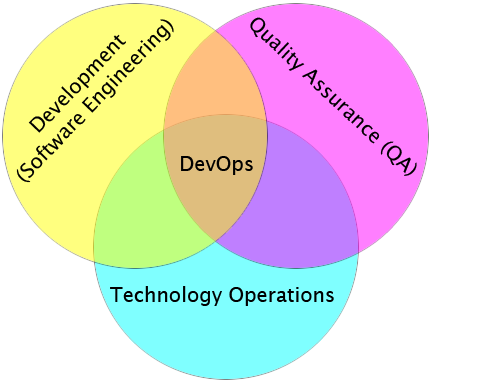
DevOps (a portmanteau of “development” and “operations”) is an approach to IT delivery that combines people, practices and tools to break down silos between development and operations teams.
By combining their skills and goals, teams can build, test, and release software faster and more reliably. The goal is to create a seamless flow from an idea all the way to the customer.
The Core Principles
DevOps is built on a few key ideas that guide how teams work together. These aren't rigid rules but principles that foster a better development environment.
Cross-Functional Collaboration Instead of separate departments, DevOps encourages creating single teams with all the skills needed to deliver a product. A developer, a quality assurance tester, and an operations engineer might all work on the same small team, sharing responsibility for the software from start to finish. This breaks down communication barriers and builds a sense of shared ownership.
Automation Repetitive, manual tasks are prone to human error and slow things down. A core tenet of DevOps is to automate as much as possible, from testing code to deploying it on servers. This frees up people to focus on more complex, creative problems.
Continuous Improvement DevOps isn't a destination you arrive at. It's a mindset of constantly looking for ways to improve. Teams regularly reflect on their processes, measure what's working, and experiment with new approaches to become more efficient. Failure isn't punished; it's treated as a learning opportunity.
The key principle in DevOps is to enable experimentation, and learning from failures.
Why Adopt DevOps?
Companies don't adopt DevOps just because it's a trend. They do it because it delivers real, tangible benefits that help them serve their customers better.
One of the biggest advantages is speed. When teams are aligned and processes are automated, they can deliver new features and bug fixes much more quickly. Instead of large, risky releases every few months, teams can push out small, incremental updates frequently.
This also leads to greater reliability. By testing automatically and releasing in small batches, it's easier to spot and fix problems before they affect many users. And when everyone on the team shares responsibility for the product's stability, quality becomes a central focus.
Finally, DevOps has a significant cultural impact. It fosters an environment of trust and collaboration. When people aren't blaming each other for problems, they can work together to solve them. This leads to higher job satisfaction and more innovative, effective teams.
Ultimately, the goal of DevOps is to shorten the software development lifecycle while delivering a high-quality product. It achieves this by shifting the culture and breaking down the barriers that have traditionally existed in technology organizations.
Time to check your understanding of these core concepts.
What was the primary source of tension between traditional Development (Dev) and Operations (Ops) teams?
In the context of software development, the "wall of confusion" refers to:
This cultural and practical shift represents a fundamental change in how software is made, focusing on people and processes working in harmony.