DevOps Engineering Fundamentals
DevOps Fundamentals
Breaking Down the Walls
In the past, building and running software often felt like a relay race with a very high wall in the middle. The development team would write code, then toss it over the wall to the operations team, who were responsible for making it run. If something broke, fingers would point. Developers blamed operations for a faulty environment, and operations blamed developers for buggy code. This created friction, slowed things down, and made everyone's job harder.
DevOps is a cultural philosophy that tears down that wall. It's about combining Development (Dev) and Operations (Ops) into a single, unified team that works together through the entire software lifecycle, from the first line of code to the end-user's experience.
It’s not a specific tool or a piece of software you can buy. It's a change in mindset, focused on shared ownership and collaboration.
DevOps is a set of practices that combines software development (Dev) and IT operations (Ops) to shorten the software development lifecycle, deliver features, fixes, and updates frequently in close alignment with business objectives.
Core Principles
DevOps stands on a few key ideas that drive this new way of working. At its heart, it's about making the process of creating and deploying software faster, more reliable, and less stressful for everyone involved.
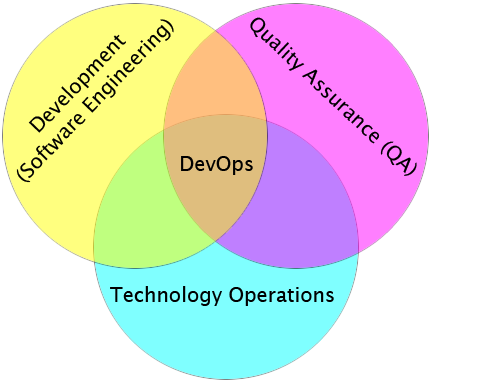
The main principles are:
-
Collaboration: Instead of separate teams with separate goals, everyone shares responsibility for the product. Developers, operations staff, and quality assurance (QA) communicate constantly. This shared ownership means everyone is invested in creating a high-quality, stable product.
-
Automation: Repetitive, manual tasks are prone to human error. DevOps heavily emphasizes automating everything possible, from testing the code to deploying it to production servers. This frees up people to focus on more creative, valuable work.
-
Continuous Integration and Delivery (CI/CD): This is a cornerstone practice of DevOps. Instead of saving up changes for one massive, risky release, developers merge their code into a shared repository multiple times a day (Continuous Integration). Each change is automatically built and tested. From there, Continuous Delivery ensures that the code is always in a state where it could be deployed to users with the push of a button.
The Benefits of Working Together
Adopting DevOps isn't just about making engineers happier, though it often does. It has a direct impact on the business.
Companies that embrace DevOps can release new features and updates much more quickly. Because releases are smaller and more frequent, they are also less risky. If a bug does slip through, it's easier to pinpoint and fix because the change was small.
This speed and stability lead to a few key advantages:
- Faster Time to Market: Get new ideas and products to customers before the competition.
- Improved Quality: Automation catches bugs earlier in the process, and collaboration ensures everyone is focused on stability.
- Increased Reliability: Systems are more stable and recover from failure more quickly.
- Enhanced Collaboration: Teams are more aligned and productive, leading to better morale and innovation.
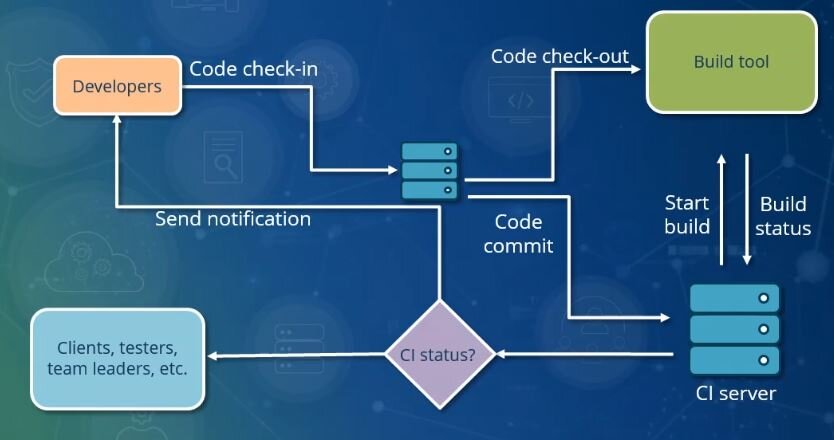
Ultimately, DevOps allows organizations to be more agile and responsive to customer needs, which is a massive advantage in today's fast-paced market.
Ready to check your understanding?
What fundamental problem in traditional software development does the DevOps culture primarily aim to solve?
Which of the following is a core practice of DevOps that involves developers frequently merging their code changes into a central repository, after which automated builds and tests are run?
By focusing on culture, automation, and collaboration, DevOps transforms how software is made, making the entire process more efficient, reliable, and human-friendly.