Developing Immersive Cybersecurity Training for Meta VR
XR Vulnerability Landscapes
New Realities, New Risks
Extended reality (XR) isn't just a new screen; it's a new kind of sensor. Unlike a phone or laptop, a headset like the Meta Quest doesn't just process your clicks and keystrokes. It actively maps your physical environment and reads your biological responses. This creates a fundamentally new attack surface, moving beyond traditional cybersecurity concerns into the realms of physical space and biometric data.
Your Room is Now Telemetry
When you first set up a Meta Quest, it uses its cameras and sensors to create a detailed 3D map of your room. This is called spatial data, and it's essential for room-scale VR. It allows the device to know where the floor, walls, and furniture are so you don't bump into them. The passthrough feature, which lets you see the real world through the headset's cameras, relies on this constant environmental scanning.
While this is crucial for functionality, it poses a significant privacy risk. If compromised, this data isn't just a username or password. It's the layout of your home, the value of your belongings, and your daily habits. This is the core of —the unauthorized theft and analysis of a user's physical environment. An attacker could use this map to plan a physical burglary or conduct corporate espionage by mapping out a secure facility.
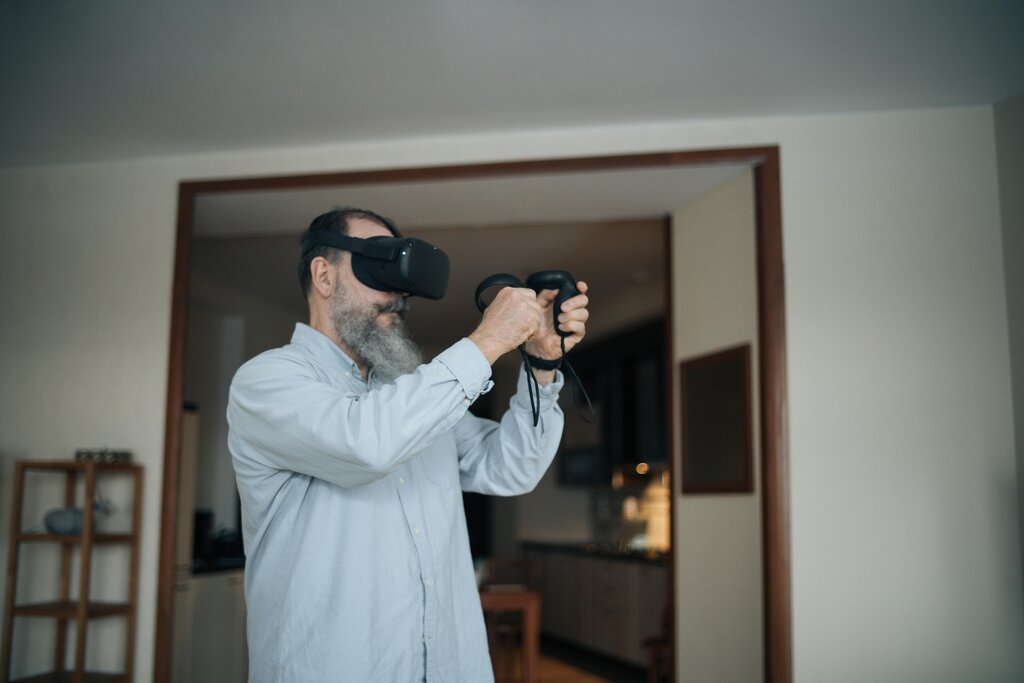
To protect users from colliding with their real-world environment, XR systems create a virtual fence called the Guardian. You draw this boundary during setup, and if you get too close, a grid-like wall appears in your virtual view, warning you to stop. It's a critical safety feature, but it's not foolproof.
A malicious application can intentionally place compelling virtual objects or characters just outside the user's . This technique, known as a guardian bypass, tricks the user into physically moving past their safe zone to interact with the object. The user, immersed in the virtual world, might lunge for a virtual item and collide with a real-world wall or piece of furniture. This attack vector shifts the threat from digital harm to genuine physical injury.
The Human as a Sensor
Beyond mapping rooms, XR headsets are sophisticated biometric scanners. They collect data not just about what you do, but how you do it. High-end headsets use to know exactly where you're looking, how long you linger, and how your pupils dilate. This data can be used to infer your interests, emotional state, or even cognitive load with startling accuracy. Hand tracking records the precise location and orientation of your fingers, creating a unique signature of your gestures and movements.
This constant stream of personal data opens the door to new forms of social engineering. Imagine an attacker in a VR social app who isn't just a name in a chat box, but a photorealistic avatar that mimics the appearance and voice of a colleague. This is avatar impersonation, and it makes traditional phishing emails look primitive. The immersive nature of VR can lower a user's guard, making them more susceptible to manipulation when confronted with a seemingly real person asking for sensitive information.
Finally, attackers can target the user's senses directly through sensory spoofing. This involves manipulating the audio-visual feed to disorient or deceive. An attacker could inject a false fire alarm into a training simulation to cause panic, or subtly alter a user's view to make them misinterpret data. A related concept is motion-based data leakage, where an attacker with a view of the user (even via a webcam) could analyze subtle head movements to infer passwords being typed on a virtual keyboard. Each twitch and nod becomes a piece of data that can be reassembled into sensitive information.
Time to see how well you've absorbed these new realities. Let's test your knowledge of XR's unique threat landscape.
What is the primary security concern related to "spatial data exfiltration" in an XR environment?
A malicious VR game places a valuable virtual gem just outside your designated safe play area, tempting you to lunge for it and collide with a real-world wall. What is this type of attack called?
Understanding these XR-specific vulnerabilities is the first step toward building safer immersive experiences. As we move from 2D screens to 3D spaces, our approach to security must evolve with it.