Develop VR Training Scenarios
Understanding VR Basics
What is Virtual Reality?
Virtual Reality (VR) creates a completely artificial, computer-generated environment that you can explore. Unlike a traditional screen, VR immerses you in a 3D world, making you feel like you're actually there. It tricks your senses into accepting this new reality, allowing you to look around, move within it, and interact with virtual objects.
Immersion
noun
The feeling of being deeply engaged or absorbed in an experience, as if one is physically present in a non-physical world.
The idea isn't new. Concepts of immersive experiences have been around since the 1950s with devices like the Sensorama, which combined visuals, sound, vibration, and even smell. Early flight simulators in the following decades also laid the groundwork. However, it wasn't until recent advances in computing power and display technology that VR became accessible and convincing enough for widespread use.
The Core Components
A modern VR system relies on a few key pieces of hardware working together to create a believable experience. While specific models vary, they all share the same fundamental parts.
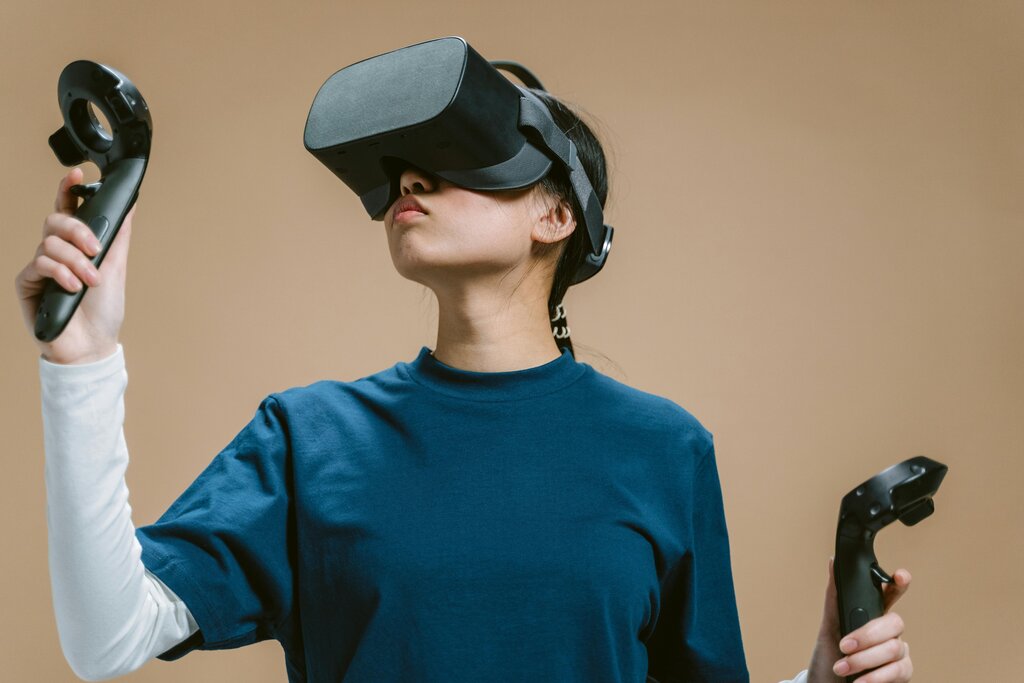
Head-Mounted Display (HMD): This is the headset that covers your eyes. It contains two small screens, one for each eye, to create a stereoscopic 3D image. Lenses in the headset focus and reshape the picture to give you a wide field of view. The HMD also contains sensors that track your head movements, so when you look up, down, or side-to-side, your view in the virtual world changes accordingly.
Input Devices: These are typically handheld controllers that track the position of your hands. They allow you to interact with the virtual environment, whether that's picking up an object, pressing a button, or swinging a sword. Buttons, triggers, and joysticks on the controllers provide additional ways to navigate and engage with the world.
Processing Unit: This is the brain of the operation. It can be a powerful PC, a video game console, or even a self-contained processor built directly into the headset. This unit runs the VR application and generates the complex graphics needed to render the virtual world in real-time.
Together, these components create a feedback loop: you move, the system tracks it, the processor updates the world, and the headset shows you the result instantly. This seamless cycle is what makes immersion possible.
A Spectrum of Realities
VR is often discussed alongside two related technologies: Augmented Reality (AR) and Mixed Reality (MR). It helps to think of them all on a spectrum that spans from the completely real to the completely virtual.
Virtual Reality (VR): As we've covered, VR places you in a fully digital environment, completely blocking out the real world. When you put on a VR headset, your physical surroundings disappear.
Augmented Reality (AR): AR does the opposite. It keeps the real world in view and adds digital elements to it. Think of a smartphone app that lets you see how a new sofa would look in your living room. You're still seeing your room, but with a virtual object placed within it.
Mixed Reality (MR): MR is a more advanced form of AR. It not only overlays digital objects onto the real world but allows them to interact with it. For example, a virtual ball in an MR experience could bounce off a real table in your room. MR blends the digital and physical worlds together.
Applications Across Industries
While often associated with gaming and entertainment, VR's immersive power has practical applications in many fields. Its ability to create safe, repeatable, and realistic simulations is incredibly valuable.
One of VR’s most important contributions to education is that it has allowed students to repeatedly practice complex and demanding tasks in a safe environment.
In healthcare, surgeons can practice complex procedures on virtual patients, reducing risk and improving skills. Therapists also use VR to help patients overcome phobias or PTSD through controlled exposure therapy.
Training and education are major areas of growth. Imagine training to be a pilot in a realistic flight simulator, or learning to repair heavy machinery without the danger of working on a real engine. Students can take virtual field trips to ancient Rome or explore the human bloodstream.
In design and engineering, architects and car designers use VR to walk through their creations long before a physical prototype is built. This allows them to spot design flaws and test ergonomics in a fully immersive 3D model.
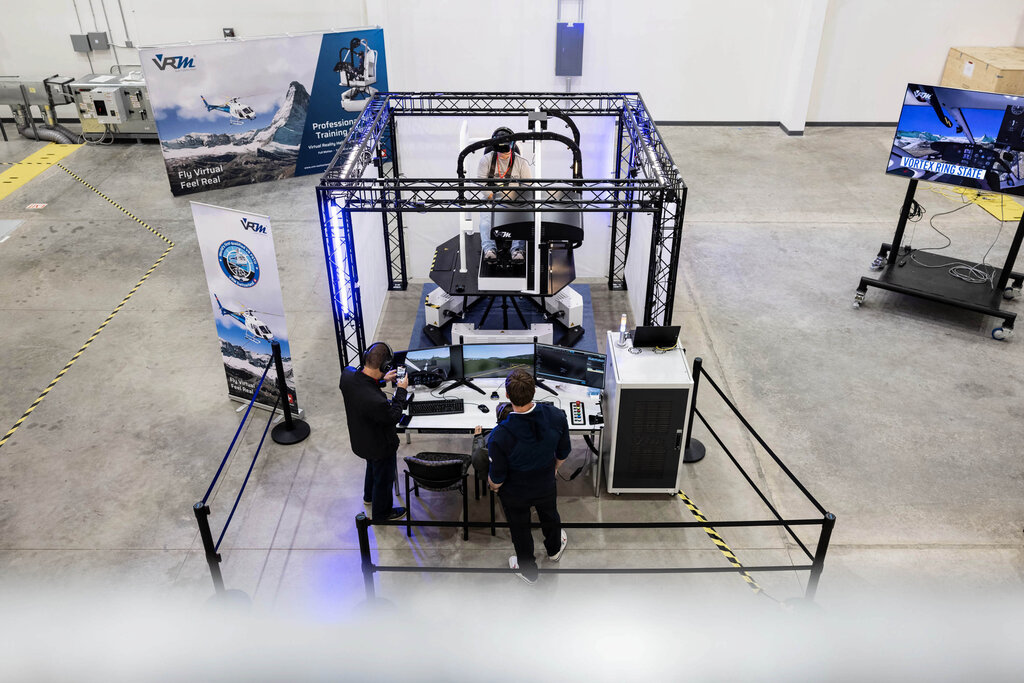
From military simulations to virtual retail showrooms, the applications continue to expand as the technology becomes more powerful and accessible. It offers a new way to learn, create, and experience digital information.
What is the primary function of the two small screens inside a Head-Mounted Display (HMD)?
A smartphone app that lets you see how a virtual chair would look in your actual living room is an example of which technology?