Detecting Fallacies and Manipulation
Introduction to Critical Thinking
Thinking About Thinking
Every day, you're hit with a flood of information. News headlines, social media posts, ads, and conversations with friends all compete for your attention. It's easy to feel overwhelmed, and even easier to simply accept what you see and hear at face value.
Critical thinking is the skill of pausing that automatic acceptance. It’s not about being negative or cynical. Instead, it’s about being an active, thoughtful consumer of information. It means stepping back to analyze, question, and evaluate what's being presented to you before you decide what to believe or how to act.
Critical Thinking
noun
The objective analysis and evaluation of an issue in order to form a judgment.
Think of it as a mental toolkit for building clearer, more reliable beliefs. Instead of just collecting information, you learn how to inspect its quality.
The Core Skills
Critical thinking isn't one single skill but a combination of a few key abilities working together. The three most fundamental are analysis, evaluation, and inference.
Analysis is about breaking down information into its basic parts. When you read an article, you don't just absorb the whole thing at once. You might identify the main claim, the evidence used to support it, and any underlying assumptions the author is making. It’s like a mechanic looking at an engine not as one solid block, but as a system of pistons, wires, and belts.
Evaluation comes next. This is where you judge the quality and credibility of the information. Is the source trustworthy? Is the evidence presented actually relevant to the main claim? Are the arguments logical and strong, or are they full of holes? You're essentially stress-testing the information to see if it holds up.
Finally, inference is the process of drawing conclusions. Based on your analysis and evaluation, what can you logically conclude? An inference isn't just a random guess. It's a reasoned conclusion that follows from the evidence.
These three skills work together in a cycle. You analyze information, evaluate its strengths and weaknesses, and draw an informed conclusion. This process helps you move beyond surface-level understanding.
Fact vs. Opinion
A crucial step in evaluating information is learning to distinguish between facts and opinions. They are often mixed together, and mistaking one for the other can lead to poor judgments.
A fact is a statement that can be proven true or false. It's objective and relies on evidence and data. An opinion, on the other hand, is a statement that expresses a belief, feeling, or judgment. It's subjective and can't be proven right or wrong.
| Fact | Opinion |
|---|---|
| Water freezes at 0 degrees Celsius. | Winter is the best season. |
| The Earth revolves around the Sun. | Space exploration is a waste of money. |
| That car is traveling 60 miles per hour. | That's a beautiful car. |
Recognizing the difference is key. An argument built on verifiable facts is much stronger than one based solely on personal opinions. While opinions are important, they aren't a substitute for evidence.
Look for signal words. Phrases like "I believe," "I think," or adjectives like "best" and "worst" often indicate an opinion. Factual statements tend to use neutral, verifiable language.
Why It Matters Every Day
Critical thinking isn't just an academic exercise. It's a practical skill for navigating the modern world. It helps you make better decisions, solve problems more effectively, and avoid being misled by faulty information.
When you see a health claim online, you can evaluate the source and evidence before trying a new diet. When a politician makes a promise, you can analyze their argument instead of just accepting their conclusion. When you read a news story, you can separate the facts from the author's opinions.
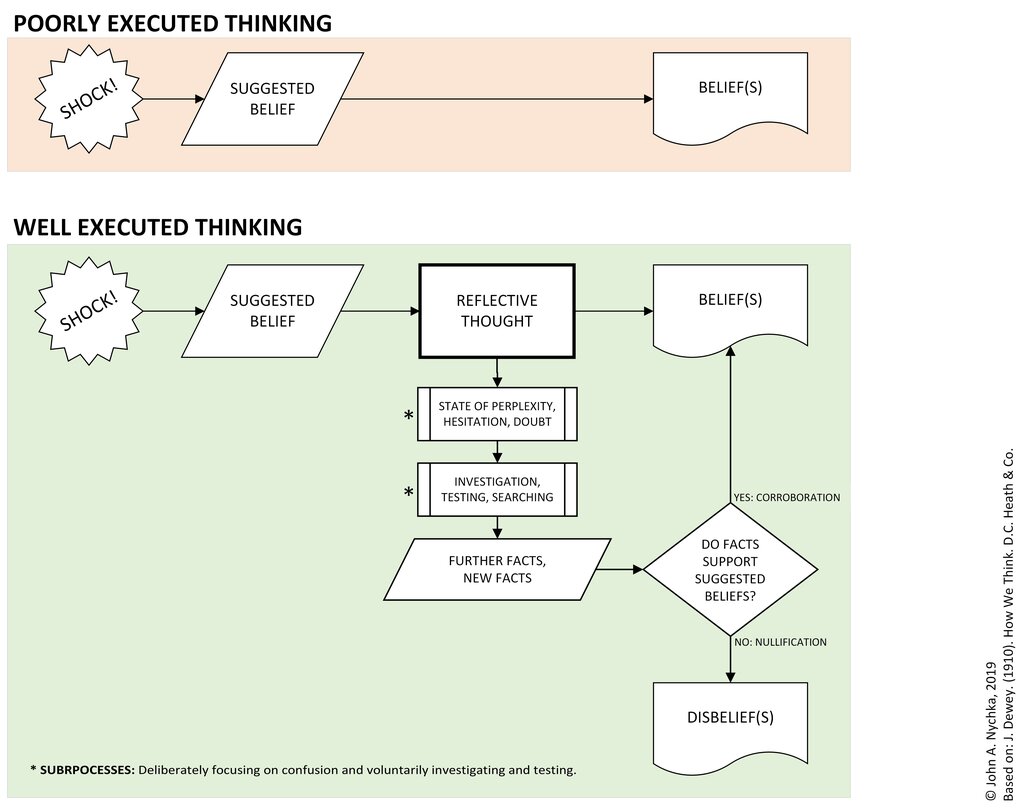
By actively engaging with information, you move from being a passive recipient to an active participant in your own understanding. This empowers you to form your own well-reasoned beliefs and navigate complex situations with more confidence.
Ready to check your understanding?
Which of the following are the three fundamental skills of critical thinking discussed in the text?
A friend tells you, "The new city library is the best building downtown; its modern design is incredible." Their statement is primarily an example of what?
Building these skills is a lifelong process. The more you practice questioning and evaluating the information around you, the sharper your thinking will become.