Designing Multi-Agent Systems
Introduction to Multi-Agent Systems
What Are Multi-Agent Systems?
Imagine a team of specialists hired to build a house. You have a plumber, an electrician, a carpenter, and a project manager. Each person is an expert in their own field. They work independently on their specific tasks but also communicate and coordinate with each other to achieve a common goal: a finished house. A multi-agent system (MAS) works in a similar way.
A multi-agent system is a collection of autonomous agents that interact with each other and their environment to solve problems that are beyond the capabilities of any single agent.
Each agent in the system is its own self-contained entity. It could be a piece of software, a robot, or even a human. The key is that these agents can act on their own, make decisions, and collaborate to get things done.
Core Principles
Multi-agent systems are defined by a few key properties that allow them to tackle complex challenges. These principles distinguish them from more traditional, centralized systems.
Autonomy
noun
The ability of an agent to operate without direct intervention from humans or other agents. It can control its own actions and internal state.
Autonomous agents don't need to be told what to do at every step. Based on the information they have, they can make their own choices to pursue their goals. Think of a self-driving car navigating traffic; it makes constant decisions without a driver.
Local Views: Each agent has its own perspective and possesses only a partial view of the overall system. No single agent knows everything. The electrician knows about wiring, but not necessarily the specific type of wood the carpenter is using.
This limitation is actually a strength. It means agents can specialize and act on the information that's relevant to them without being overwhelmed by data from the entire system.
Decentralization: In most multi-agent systems, there is no single point of control or failure. Decisions and control are distributed among the agents. The project manager might coordinate, but they don't hammer the nails or install the pipes. If one worker is sick, the whole project doesn't necessarily grind to a halt.
MAS vs. Agent-Based Models
You might also hear the term Agent-Based Model (ABM). While similar, MAS and ABM have different goals. Think of it as the difference between building a car and studying traffic patterns.
A multi-agent system is an engineering discipline. The goal is to design a system of agents to solve a specific problem, like coordinating a fleet of delivery drones. An agent-based model is a scientific tool. The goal is to simulate a real-world phenomenon to understand it better, like modeling how a disease spreads through a population.
| Feature | Multi-Agent System (MAS) | Agent-Based Model (ABM) |
|---|---|---|
| Primary Goal | Problem-solving, task execution | Simulation, understanding phenomena |
| Focus | Engineering a solution | Modeling reality |
| Agent Design | Often complex, intelligent, goal-oriented | Can be simple, rule-based |
| Example | Coordinating smart thermostats in a building | Simulating pedestrian flow in a city |
Real-World Applications
Multi-agent systems are not just theoretical concepts. They are used to solve complex problems in many different fields.
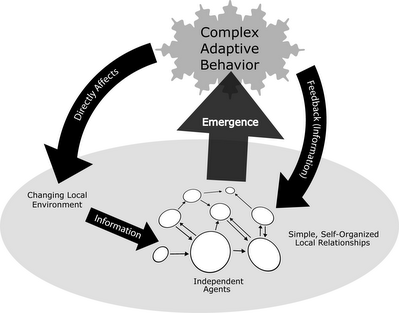
Some common applications include:
- Robotics: Swarms of simple robots can coordinate to explore an area, clean up a spill, or perform search-and-rescue operations.
- Supply Chain Management: Agents can represent different parts of a supply chain (factories, trucks, warehouses) to automatically negotiate prices and schedules, making the whole system more efficient.
- Smart Grids: Agents manage energy production and consumption across a power grid, balancing loads and preventing blackouts by having devices communicate and adjust their usage.
- Gaming and Entertainment: Non-player characters (NPCs) in video games often act as agents, interacting with each other and the player to create a dynamic and believable world.
By distributing tasks and decision-making, multi-agent systems can create solutions that are robust, scalable, and adaptable to changing environments.
Based on the analogy of a team building a house, what does an individual specialist like a plumber or an electrician represent in a multi-agent system?
What is the primary difference between a multi-agent system (MAS) and an agent-based model (ABM)?