Designing Intuitive Robot Interactions
Defining Social Robotics
More Than a Machine
When you use a hammer, you don't think about its feelings. It’s a tool. It does a job, and the interaction is one-way: you act, and it reacts predictably. For most of history, our relationship with technology has followed this simple pattern.
Robots are different. Specifically, social robots are designed to break this pattern. They aren't just tools; they are agents. An agent is something that doesn't just react, but acts on its own, making decisions and behaving in ways that seem intentional. They occupy physical space with us, not as passive objects, but as active participants.
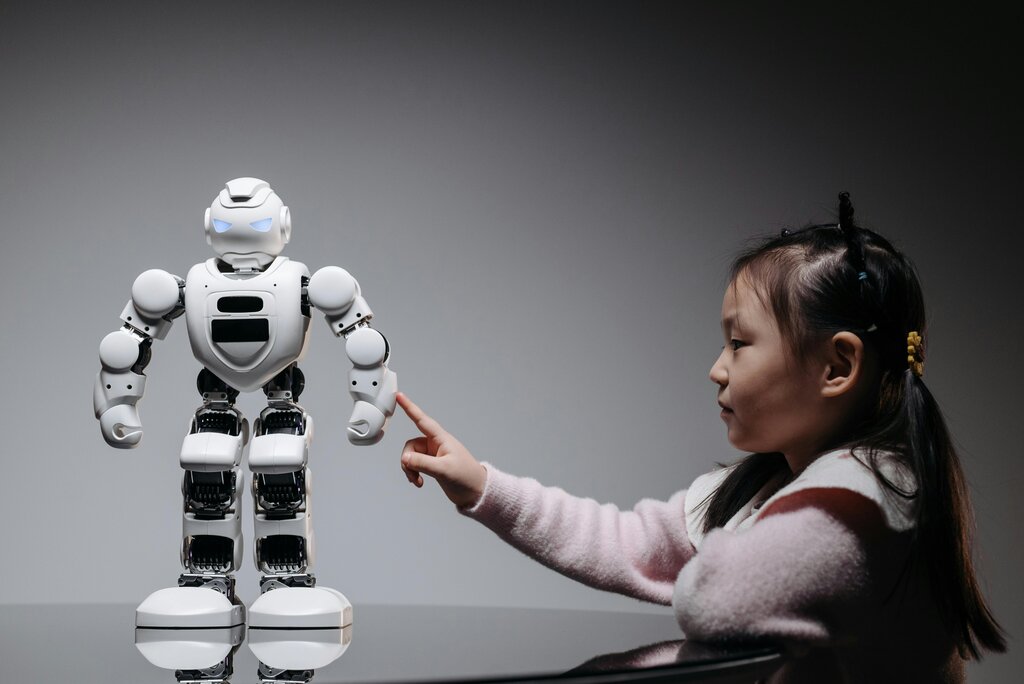
This shifts the focus of design. For a hammer, the design goal is pure efficiency. How well does it drive a nail? For a social robot, the goal is successful communication. This is the core of Human-Robot Interaction, or HRI. It's a field that treats the robot as one half of a conversation. The design isn't just about what the robot does, but how its actions make a person feel and react.
Agent
noun
An entity that perceives its environment and acts upon that environment independently to achieve goals. Unlike a simple tool, an agent has a degree of autonomy.
Industrial vs Social
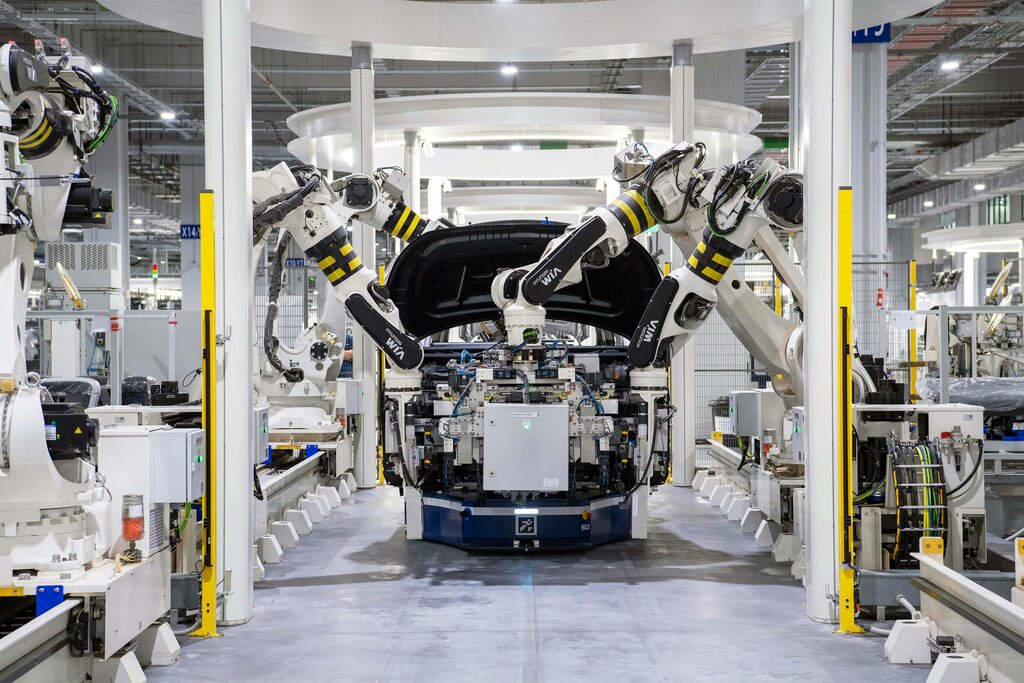
Think of a car factory. The massive robotic arms that weld car frames are incredible machines. They are fast, precise, and powerful. They are also completely indifferent to you. Their world is a cage on the factory floor, and their goal is to perform a repetitive task perfectly. This is industrial automation. Its purpose is efficiency.
Now, imagine a small robot that helps children with autism practice social cues. This robot isn't lifting anything heavy or performing a task with superhuman speed. Its job is to make eye contact, respond to speech, and use gestures that are gentle and encouraging. Its purpose is communication. That's a social robot.
The success of an industrial robot is measured by output. The success of a social robot is measured by the quality of the interaction.
The design choices for these two types of robots are worlds apart. An industrial arm is built for power and rigidity. A social robot might be designed to be soft, small, or have features that mimic a face. Every design element, from the sounds it makes to the speed of its movements, contributes to its perceived 'character'. This character isn't just decoration; it's the foundation of the interaction.
The Interaction Loop
At its heart, HRI design is about creating a seamless feedback loop. It works like a good conversation.
- Human Acts: You speak to the robot or make a gesture.
- Robot Perceives: The robot uses its sensors (cameras, microphones) to understand your action.
- Robot Decides & Acts: The robot's programming determines a response and executes it.
- Human Perceives & Reacts: You see the robot's action and decide what to do next.
When this loop is fast, predictable, and feels natural, we experience a sense of Presence. We stop seeing a pile of motors and circuits and start interacting with a personality. The robot feels like it's 'there' with us.
If the loop breaks, the illusion shatters. A robot that takes too long to respond, misunderstands a command, or moves in a jerky, unsettling way destroys that sense of Presence. The user is reminded they are just dealing with a machine. The primary job of an HRI designer is to build and maintain this loop, making the interaction feel as effortless as talking to another person.
Time to check what you've learned.
What is the primary design goal for a social robot, according to the principles of Human-Robot Interaction (HRI)?
Which of the following best describes the concept of 'Presence' in HRI?
Understanding these core ideas is the first step. It's not about the code or the circuits, but about the conversation between person and machine.