Designing a World-Class Fellowship Curriculum
Introduction to Professional Development
What is Professional Development?
Professional development is the process of gaining new skills and improving your abilities throughout your career. Think of it less as a destination and more as a continuous journey. It’s not just about promotions or new job titles; it’s about becoming more competent, confident, and valuable in your field.
This journey is unique to you. For a software developer, it might mean learning a new programming language. For a marketer, it could be mastering a new analytics tool. For a teacher, it might involve a workshop on new classroom engagement techniques. The core idea is the same: you are actively investing in your own growth.
Your career is a marathon, not a sprint. Professional development is the training that keeps you moving forward, one step at a time.
This process involves identifying gaps in your knowledge, seeking out learning opportunities, and applying what you’ve learned. It's about being proactive rather than reactive, shaping your career instead of just letting it happen.
The Need for Continuous Learning
The world of work is constantly changing. Technology evolves, industries pivot, and the skills that are in demand today might not be tomorrow. Continuous learning is no longer a nice-to-have; it's essential for staying relevant and effective in your role.
Imagine using a smartphone from ten years ago. It might still make calls, but it would lack the features, security, and speed of a modern device. Your professional skill set is similar. Without regular updates, it can become outdated. Continuous learning is how you install those updates, ensuring you're equipped to handle new challenges and opportunities.
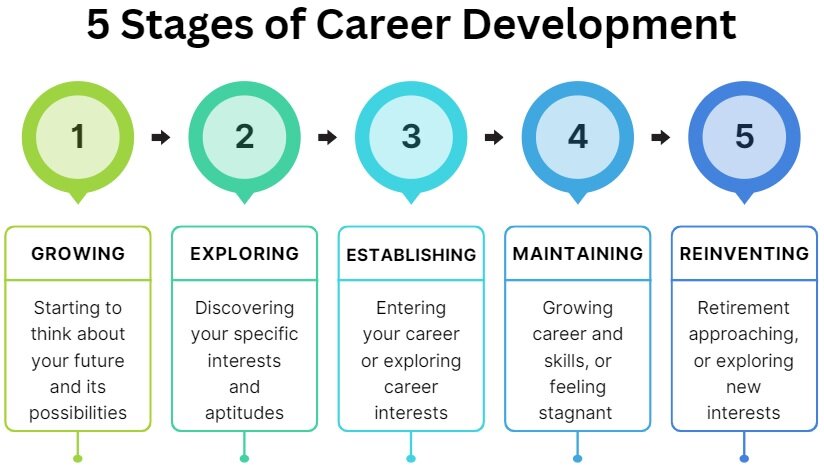
Embracing a mindset of lifelong learning keeps your career dynamic. It opens doors to new possibilities, from taking on more complex projects to transitioning into entirely new fields. It transforms your career from a static job into an evolving adventure.
Setting Your Course with Goals
Professional development without goals is like sailing without a compass. You might be moving, but you have no idea where you're headed. Setting clear, achievable goals gives you direction and a way to measure your progress.
A popular and effective framework for setting goals is the SMART method. It provides a checklist to ensure your goals are well-defined and actionable.
| Letter | Stands For | Meaning |
|---|---|---|
| S | Specific | What exactly do you want to accomplish? Be clear. |
| M | Measurable | How will you track your progress and know when you've succeeded? |
| A | Achievable | Is this goal realistic given your resources and constraints? |
| R | Relevant | Does this goal align with your broader career aspirations? |
| T | Time-bound | What is your deadline for achieving this goal? |
Let's see this in action. A vague goal isn't very helpful.
Vague goal: I want to get better at project management.
SMART goal: I will complete an online introductory project management course and earn a certificate within the next three months to better manage my team's upcoming marketing campaign.
The second goal is powerful because it's specific, its success is measurable (the certificate), it's achievable (an online course), it's relevant (for an upcoming campaign), and it has a clear timeline. Setting goals this way turns broad ambitions into concrete action plans.
The Role of a Mentor
You don't have to navigate your career journey alone. A mentor can be one of your most valuable allies. A mentor is typically a more experienced professional who provides guidance, support, and advice.
They've walked the path you're on and can help you avoid common pitfalls. They can offer insights you wouldn't find in a textbook, share their network, and act as a sounding board for your ideas and concerns. A good mentor doesn't give you the answers; they ask the right questions to help you find the answers yourself.
Pairing experienced staff with newer workers nurtures relationships that encourage personal and professional growth, with mentees gaining valuable career knowledge and mentors reinforcing their own subject matter proficiency and leadership skills.
Finding a mentor can happen formally through a company program or informally by building a relationship with a senior colleague you admire. The key is to find someone you trust and whose career you respect. This relationship can provide the perspective and encouragement needed to accelerate your professional development.
Your career is your responsibility, but by embracing continuous learning, setting clear goals, and seeking guidance from others, you can build a fulfilling and successful professional life.
What is the central concept of professional development?
According to the text, why is continuous learning compared to updating a smartphone?