Design Thinking Fundamentals
Introduction to Design Thinking
A Human-Centered Approach
Design Thinking is a method for solving complex problems by focusing on the people you're trying to help. Instead of jumping straight to a solution, it starts by deeply understanding the needs and experiences of the end user.
Design Thinking is a human-centered approach to problem-solving.
The concept grew out of the way designers have always worked, blending creativity with practical, user-focused methods. It was popularized in the business world by design firms like IDEO, who showed that this approach could be used to create innovative products, services, and strategies, not just physical objects.
The core idea is simple: to build better solutions, you must first build empathy for the people who will use them. This shifts the focus from 'what can we build?' to 'what do people actually need?'
The Core Principles
Design Thinking is built on a few key ideas that make it different from more traditional methods. These principles guide the entire process.
First and foremost is its human-centered focus. Everything starts and ends with the user. This means spending time observing, listening to, and understanding their world before you even think about solutions. The goal is to uncover unmet needs and insights that aren't always obvious.
Next is the iterative process. Design Thinking isn't a straight line from A to B. It’s a cycle of brainstorming ideas, creating simple versions (prototypes), getting feedback, and refining your solution. This loop repeats, with each cycle bringing you closer to a great outcome.
Design Thinking encourages experimentation and iteration, reducing the fear of failure.
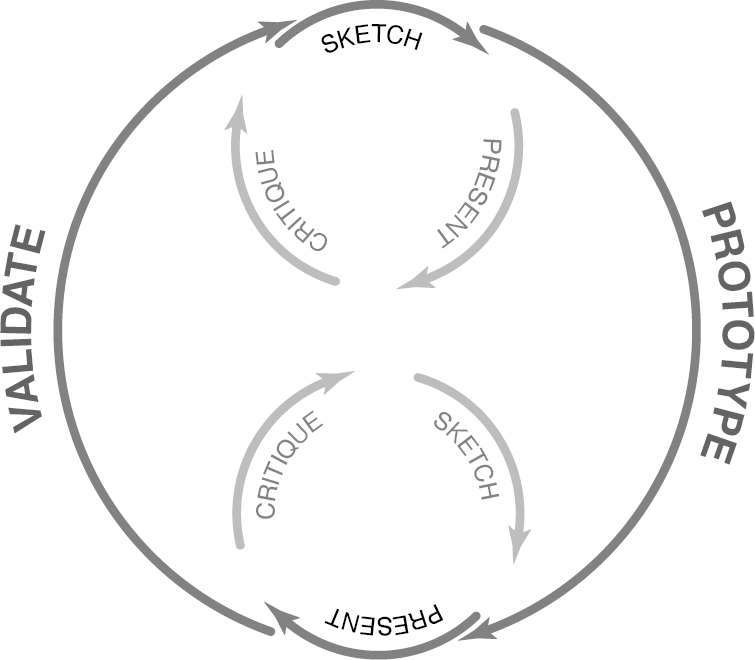
This approach makes failure a part of learning, not a final result. Each 'failed' prototype provides valuable information that shapes the next version.
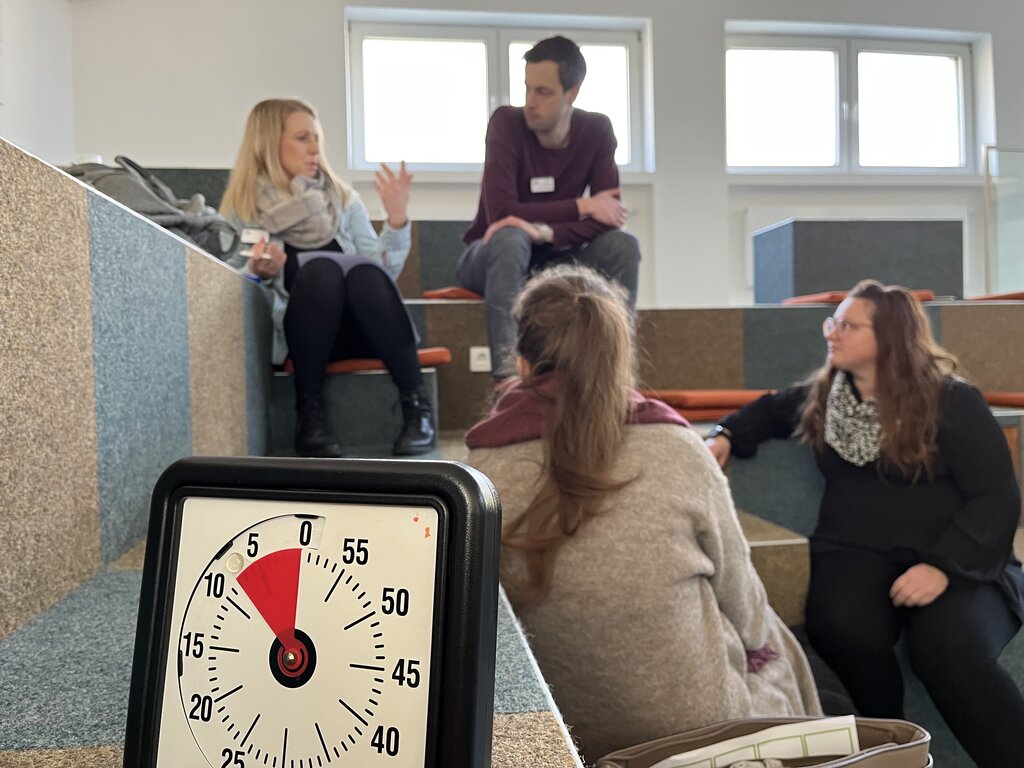
Finally, collaboration is essential. Design Thinking brings together people from different disciplines and backgrounds. A team might include designers, engineers, marketers, and business analysts. This diversity of perspectives fuels creativity and helps the team see the problem from all angles, leading to more innovative and well-rounded solutions.
A Different Way of Thinking
So how does this compare to traditional problem-solving? Many conventional methods are linear and solution-focused. They start with a clearly defined problem and move methodically toward a single, predetermined outcome. This works well for straightforward challenges where the variables are known.
| Traditional Problem-Solving | Design Thinking |
|---|---|
| Assumes the problem is clear | Explores the problem to define it |
| Follows a linear path | Uses a cyclical, iterative process |
| Aims to find the 'right' answer | Aims to find the best fit for users |
| Often relies on historical data | Relies on direct user observation |
| Avoids failure | Embraces failure as a learning tool |
Design Thinking, on the other hand, excels in situations where the problem itself is ambiguous or poorly understood. It embraces uncertainty. Instead of assuming the problem is fixed, it uses empathy and experimentation to uncover the real challenge that needs to be solved.
By focusing on human needs and being open to iteration, Design Thinking provides a flexible framework for tackling complex, human-centered problems in a more creative and effective way.
What is the primary focus of the Design Thinking process?
The Design Thinking process is best described as cyclical and iterative, rather than linear.