Design Principles Essentials
Design Elements
The Building Blocks of Design
Every painting, website, or product you see is built from a few basic ingredients. These are the elements of design. Think of them like the letters of an alphabet. Once you know them, you can start forming words, sentences, and eventually, stories. Mastering these seven elements is the first step to creating anything visual that communicates effectively.
Line and Shape
The simplest element is the line. It's the path between two points. Lines can be straight, curved, thick, thin, wavy, or jagged. They act as the skeleton of a design, outlining objects and separating different parts of a composition. More importantly, lines guide the viewer's eye and can create a sense of movement or mood. A sharp, diagonal line feels dynamic and energetic, while a soft, curved line can feel calm and flowing.
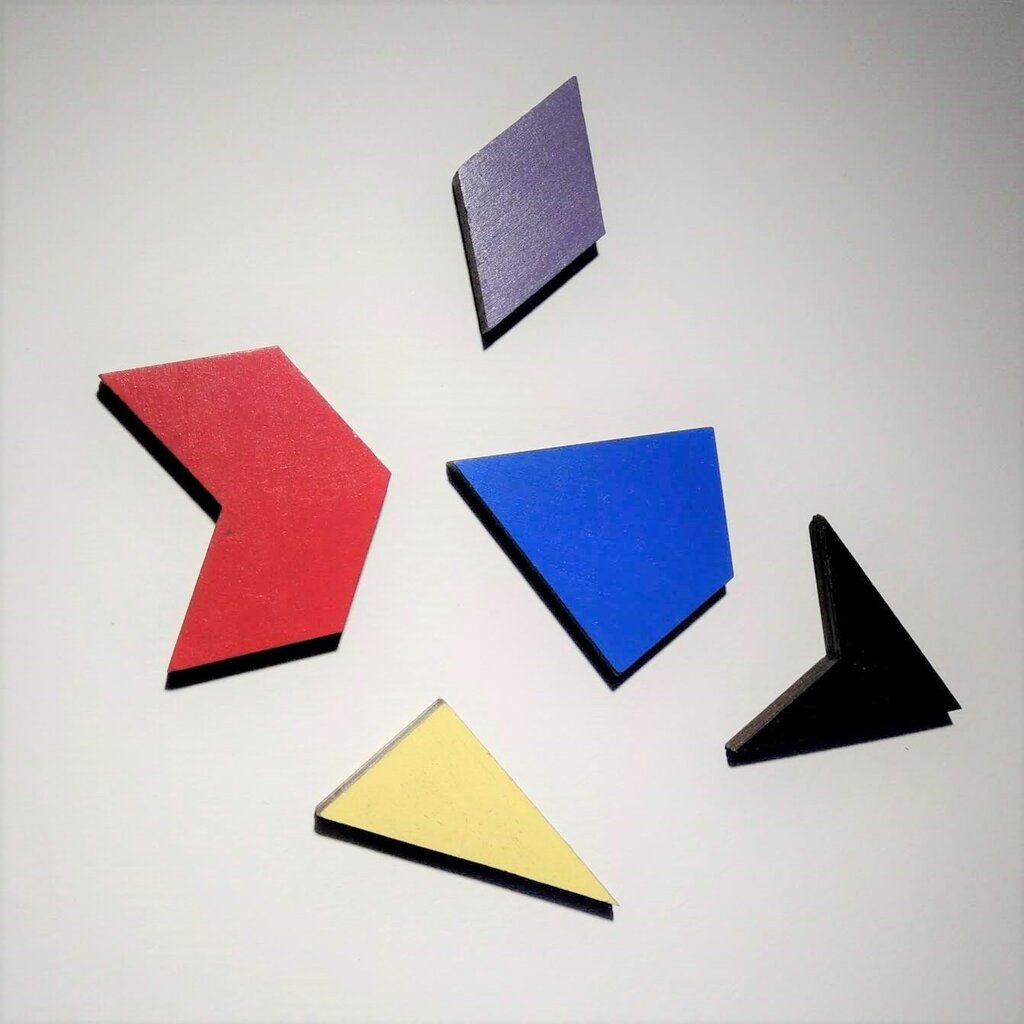
When a line encloses an area, it creates a shape. Shapes are two-dimensional, meaning they only have height and width. They are the primary way we identify objects. We can group shapes into two main categories:
- Geometric shapes: These are the precise, mathematical shapes you know, like circles, squares, and triangles. They often feel orderly and stable.
- Organic shapes: These are irregular and free-flowing, often found in nature. Think of the shape of a leaf, a cloud, or a puddle. They tend to feel more natural and spontaneous.
Form and Texture
Form takes shape to the next level. While a shape is flat, a form is three-dimensional. It has height, width, and depth. In design, you create the illusion of form on a flat surface by using light, shadow, and perspective. This gives objects a sense of volume and makes them feel real and tangible.
A circle is a shape. A sphere is a form. A square is a shape. A cube is a form.
Texture refers to the surface quality of an object. It’s how something feels, or how we imagine it would feel if we could touch it. Texture can be rough, smooth, bumpy, or glossy. In visual design, texture adds depth and interest. It can be real, like the thick paint on a canvas, or implied, like a photograph of tree bark. It makes a design more engaging by appealing to our sense of touch.
Space, Value, and Color
Space is the area around, between, and within the elements of a design. It's not just empty background; it's an active part of the composition. The way you use space can dramatically change how a design is perceived. Positive space is the area occupied by your main subjects, while negative space is the empty area surrounding them. Good use of negative space can create focus, balance, and clarity.
One of the most important design principles, white space (or negative space) ensures clarity, focus, and balance.
Value is the lightness or darkness of a color. It ranges from pure white to pure black, with all the shades of gray in between. Value is what creates contrast in a design. High contrast, like black text on a white background, is easy to read and grabs attention. Low contrast, with similar shades, creates a softer, more subtle feeling. Understanding value is key to creating depth and emphasizing important parts of your design.
Finally, there’s color. Color is one of the most powerful design elements because it evokes emotion. It can make us feel happy, calm, or alert. It’s a complex subject with its own theories about harmony, contrast, and psychology. The three main components of color are:
- Hue: What we typically think of as color (red, green, blue).
- Saturation: The intensity or purity of a color. A highly saturated color is bright and vivid, while a less saturated color is more muted.
- Value: As we just discussed, the lightness or darkness of the color.
Together, these seven elements form the toolkit for any designer. By understanding how to use them, you can create visuals that are not only beautiful but also clear and purposeful.