Design Engaging Intellectual Group Games
Introduction to Game Design
The Anatomy of Fun
What makes a game compelling? Why do we spend hours moving pieces on a board, exploring digital worlds, or solving puzzles? It's not just about winning or losing. It's about the experience. A well-designed game creates a specific feeling, whether it's the thrill of competition, the joy of discovery, or the satisfaction of a story well told.
To understand how to design these experiences, we can use a framework called Mechanics-Dynamics-Aesthetics, or MDA. It helps us see a game from two crucial perspectives: that of the designer and that of the player.
Mechanics, Dynamics, Aesthetics
The MDA framework breaks down a game into three core components. For a designer, the process starts with mechanics.
Mechanics
noun
The rules, systems, and basic actions that define the game. They are the components the designer creates directly.
Think of mechanics as the raw ingredients. In the board game Monopoly, mechanics include rolling dice, moving a token, buying properties, and paying rent. In a video game like Super Mario Bros., the core mechanics are running, jumping, and collecting power-ups. These are the foundational actions and rules.
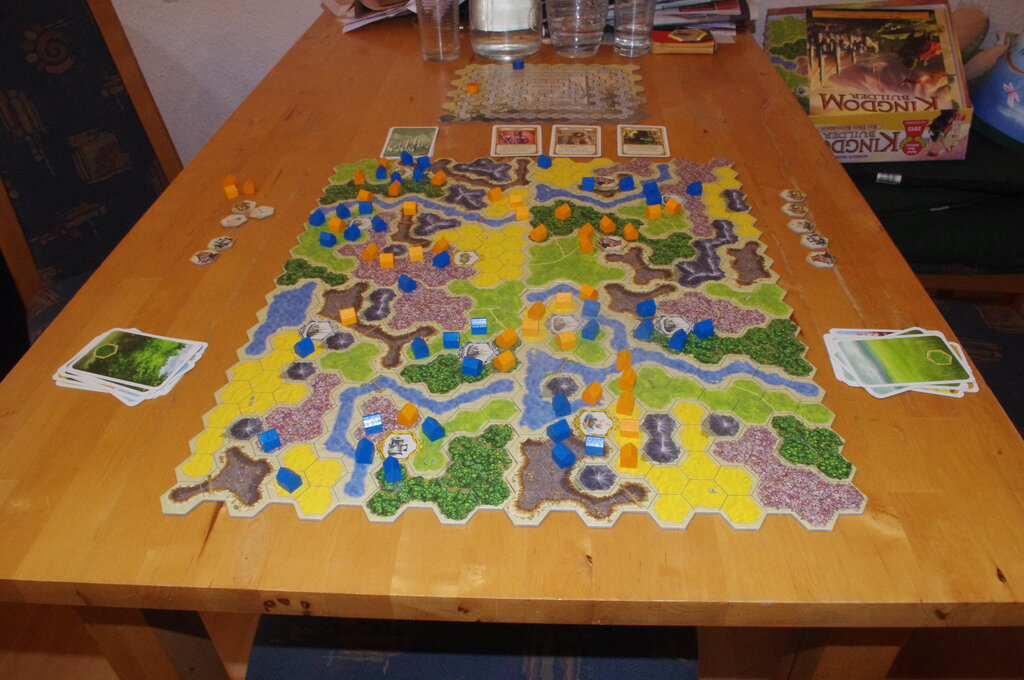
When players interact with these mechanics, something interesting happens. Their behavior creates the game's dynamics.
Dynamics
noun
The run-time behavior of the mechanics acting on player inputs and each other's outputs. It's what happens when the game is actually played.
Dynamics are emergent. The rules of Monopoly don't explicitly mention creating housing shortages by buying all the properties of one color, but it's a powerful strategy that emerges from the mechanics. Similarly, a speedrun in a video game isn't a rule; it's a dynamic created by players pushing the mechanics of movement to their absolute limit. These are the strategies and patterns of play that unfold during the game.
Finally, these dynamics create the emotional experience for the player. This is the aesthetics.
Aesthetics
noun
The desirable emotional responses evoked in the player. It's how the game feels to play.
Aesthetics are the designer's ultimate goal. They describe the type of fun the game offers. Common aesthetics include:
- Challenge: Overcoming obstacles.
- Fellowship: Social interaction and teamwork.
- Discovery: Exploring the game world.
- Narrative: A story that unfolds.
- Expression: Self-discovery and creativity.
The thrill of a last-minute victory, the joy of exploring a new area, or the camaraderie of playing with friends—these are the aesthetics.
As you can see, designers and players experience the game from opposite directions. The designer creates mechanics, which give rise to dynamics, which in turn create aesthetic experiences. The player, however, first experiences the aesthetics—the fun—which shapes how they interact with the game's dynamics and understand its underlying mechanics.
Designing for Learning
This framework is especially powerful for educational games. Instead of starting with rules, we can start by asking: what is the desired aesthetic? For learning, the aesthetic is often the feeling of mastery, insight, or the joy of solving a complex problem.
The goal is to align the learning objective with the game's core mechanics. If you're teaching fractions, the mechanics shouldn't be a distraction from the math; they should be the math. The act of playing the game should be the act of learning.
Effective educational games make learning the core of the fun, not a chore you complete to get to the fun part.
For example, a game teaching programming could have mechanics where players combine blocks of code to solve a puzzle. The dynamic becomes experimenting with different logic combinations. The aesthetic is the 'aha!' moment of understanding when their code works and the puzzle is solved.
By focusing on the desired experience first, we can design mechanics and dynamics that naturally lead to learning. The educational content becomes inseparable from the gameplay itself.
Let's test your understanding of these core concepts.
In the context of game design, what does the 'M' in the MDA framework stand for?
A group of players in a racing game discovering that they can gain a slight speed boost by driving in another car's slipstream is an example of what?
Understanding the MDA framework is the first step toward designing games that are not just entertaining, but also meaningful and effective as tools for learning.