Deng Xiaoping Mao's Legacy
Mao Zedong's Leadership
A New China
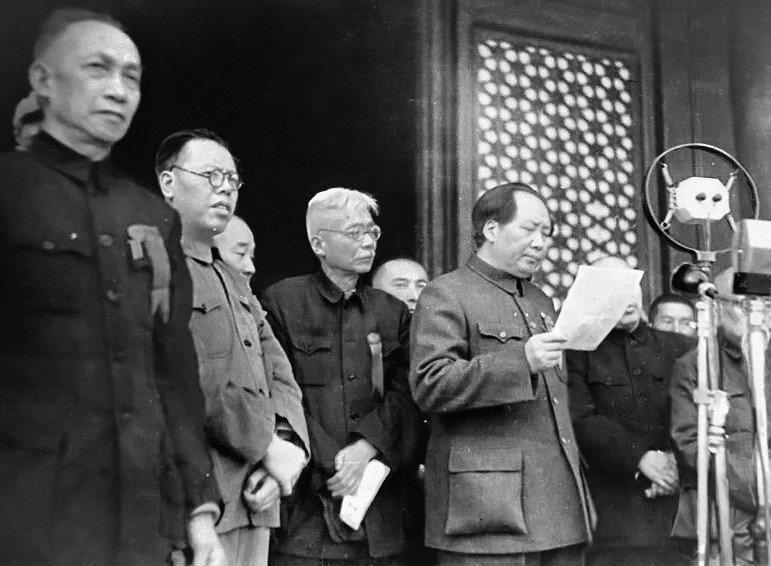
On October 1, 1949, Mao Zedong stood at the Gate of Heavenly Peace in Beijing and declared the founding of the People's Republic of China. This marked the end of a long and bloody civil war between Mao's Communists and the Nationalists, led by Chiang Kai-shek. For millions of Chinese people, it was a moment of hope, promising an end to decades of conflict, foreign invasion, and instability.
Mao and the Communist Party now faced the monumental task of unifying and rebuilding a fractured country. They moved quickly to consolidate control, implementing land reforms and targeting political opponents. The early years of the PRC were focused on establishing a new political and social order based on communist principles, looking to the Soviet Union as a model.
The Chairman's Ideology
The guiding philosophy of this new state was Mao Zedong Thought, often called Maoism. It was a version of Marxism-Leninism adapted to Chinese conditions. While Soviet communism focused on the urban working class, Mao believed that China's vast peasant population was the key to revolution.
His ideology emphasized the importance of a "permanent revolution," the idea that class struggle must continue even after the Communists took power. This was meant to prevent the new society from becoming stagnant or developing a new ruling class. This belief in constant struggle would fuel many of his later, more radical policies.
Maoism
noun
A form of communism developed by Mao Zedong that adapted Marxist-Leninist theory to the conditions of a largely agrarian society, emphasizing the role of the peasantry in revolution and the need for continuous class struggle.
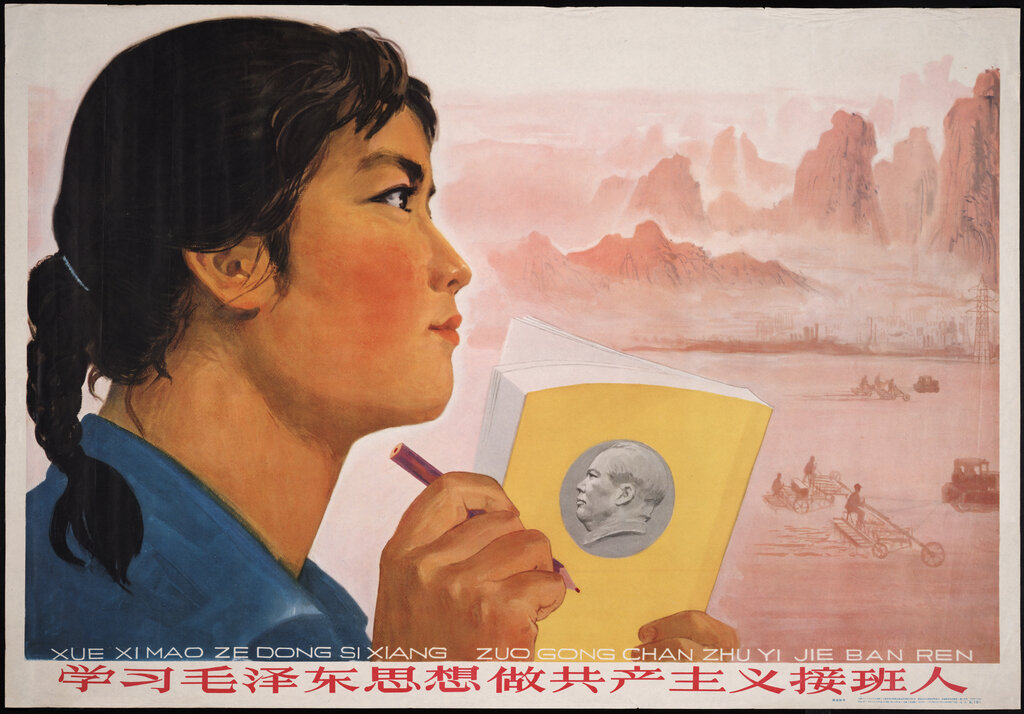
Propaganda was a powerful tool used to instill this ideology across the country. Citizens were encouraged to study Mao's writings and dedicate themselves to the revolutionary cause.
The Great Leap Forward
In 1958, Mao launched the Great Leap Forward. It was an ambitious and radical campaign to rapidly transform China from an agrarian economy into an industrial powerhouse. The plan involved organizing the rural population into huge collective farms known as people's communes, where private land ownership was abolished.
At the same time, people were urged to produce steel in small, backyard furnaces. The goal was to overtake Western industrial production in just a few years. However, the plan was based on flawed ideas and unrealistic expectations. The homemade steel was often low-quality and useless, and diverting farmers to industrial projects crippled food production.
In the lead-up to the famine, Mao Zedong had called on China to rapidly industrialise, as part of a plan called the ‘Great Leap Forward’.
The results were catastrophic. The combination of failed policies and unfavorable weather led to the Great Chinese Famine. From 1959 to 1961, tens of millions of people died of starvation. It was one of the deadliest famines in human history and a devastating failure for Mao's leadership. The disaster weakened his position within the Communist Party, forcing him to take a less active role in governing for a time.
The Cultural Revolution
By 1966, Mao was ready to reclaim absolute authority. He launched the Great Proletarian Cultural Revolution, a decade-long period of political and social turmoil. Its stated goal was to purge China of "bourgeois" elements and revive the spirit of revolution. In reality, it was a brutal campaign to eliminate his rivals and re-establish his dominance.
Mao mobilized millions of young people, known as the Red Guards, to challenge authority figures, including teachers, intellectuals, and even party officials. They were encouraged to destroy the "Four Olds": old customs, old culture, old habits, and old ideas. This led to the destruction of countless historical artifacts, temples, and texts.
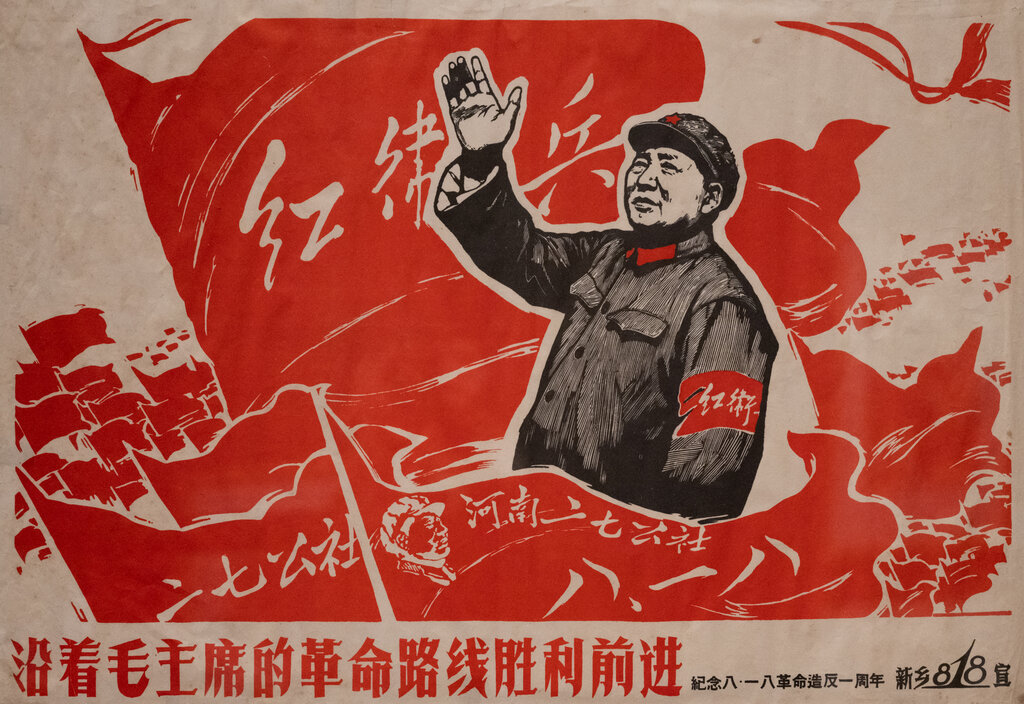
A powerful cult of personality developed around Mao. His image was everywhere, and citizens were expected to study his quotations from the "Little Red Book." The Cultural Revolution threw the country into chaos, shattering countless lives and bringing the economy to a standstill. It only truly ended with Mao's death in 1976.
The official version – a pocket-sized book of more than 200 Mao quotations – helped to shape Mao’s cult of personality before and during the Cultural Revolution and the trajectory of Chinese history in the 20th century.
Mao's rule completely reshaped China, but at an immense human cost. His policies led to both the unification of the country and some of the greatest man-made disasters of the 20th century. Let's review the key events of his era.
Now, check your understanding of Mao Zedong's time as China's leader.
On what date did Mao Zedong declare the founding of the People's Republic of China?
Mao Zedong Thought adapted Marxism-Leninism to Chinese conditions by emphasizing the revolutionary potential of which group?
The death of Mao in 1976 closed a dramatic chapter in China's history and set the stage for a new leader to steer the country in a very different direction.