Demystifying the Supply Chain
Introduction to Supply Chain Management
What is a Supply Chain?
Think about your morning coffee. The journey started with a farmer growing beans, maybe in Colombia. Those beans were harvested, processed, shipped across the ocean, roasted, packaged, and sent to your local grocery store. Finally, you bought the bag and brewed a cup. That entire, complex network is a supply chain.
Supply Chain Management, or SCM, is the art and science of managing this flow. It's about getting the right product to the right place, at the right time, in the right quantity, and at the right cost. The goal is to coordinate all the different pieces, from raw materials to the final customer, as efficiently as possible.
Supply Chain Management (SCM) encompasses the coordinated management of resources, materials, information, and finances as a product or service moves from supplier to manufacturer to wholesaler to retailer to consumer.
Effective SCM helps businesses lower costs, improve quality, and deliver products faster. This creates more value for the customer and gives the company a strong competitive advantage. It's not just about moving boxes; it's a strategic function that impacts the entire business.
The Key Components
A supply chain is made up of several core components that must work together seamlessly. If one part breaks down, the entire chain can be disrupted. Think of it like a relay race where the baton must be passed smoothly from one runner to the next.
Procurement is the starting point. It's the process of sourcing and acquiring the raw materials, components, or services needed to create a product. This involves finding reliable suppliers, negotiating prices, and ensuring the quality of the goods received.
Production is where the transformation happens. Raw materials are converted into finished goods. This phase focuses on efficiency, quality control, and scheduling to meet demand without creating excess inventory.
Distribution involves getting the finished product from the factory to the customer. This includes warehousing (storing the product) and transportation (shipping it to retailers or directly to consumers).
Logistics is the overarching process of planning and coordinating the movement and storage of goods throughout the supply chain. It's the strategic thinking behind the physical flow, ensuring everything is optimized for speed and cost-effectiveness. It ties all the other components together.
Why SCM Matters
In today's global market, a well-managed supply chain is no longer just an advantage, it's a necessity. Companies compete on more than just the quality of their products. They compete on price, availability, and delivery speed, all of which are directly controlled by the supply chain.
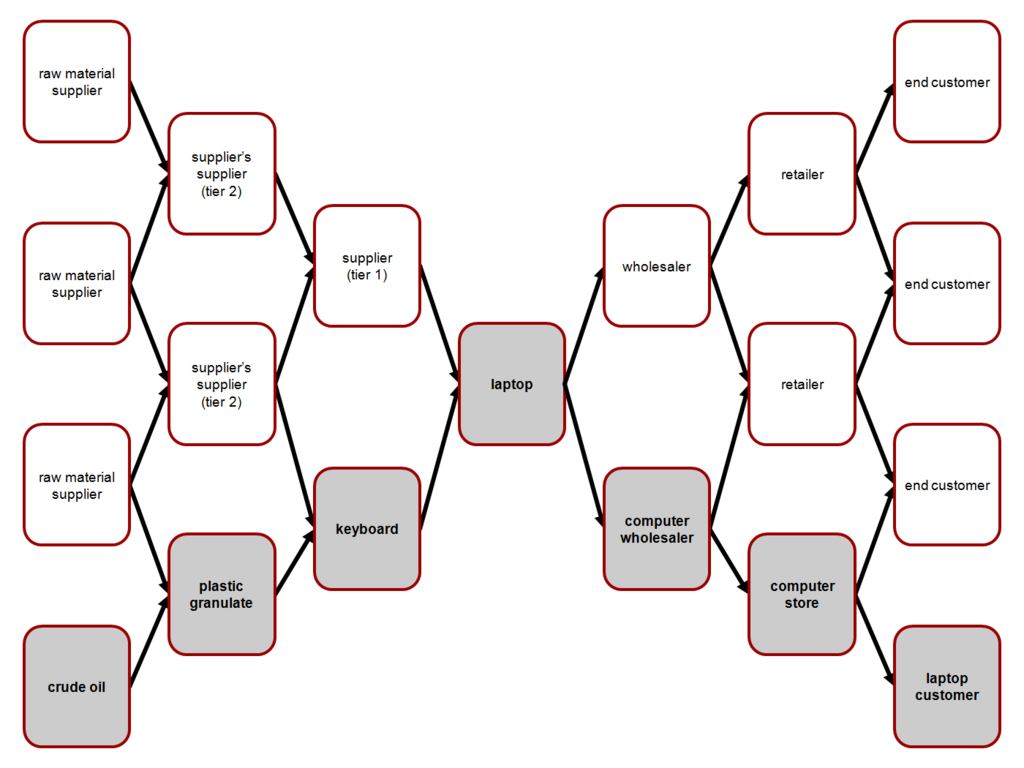
The key to success is integration. Each component, from procurement to logistics, cannot operate in a vacuum. Information must flow freely between them. When the sales team knows what manufacturing can produce, and manufacturing knows what procurement can source, the entire system runs more smoothly.
This integration allows a company to be more responsive to changes in customer demand, reduce waste, and ultimately deliver a better product at a lower cost. A strong supply chain builds customer loyalty and a sustainable business.
Now, let's test your understanding of these core concepts.
What is the primary goal of Supply Chain Management (SCM)?
Which component of the supply chain is responsible for sourcing and acquiring the raw materials needed to create a product?
Managing the flow of goods, information, and finances is the core of SCM. By integrating key components like procurement and logistics, businesses can create value and gain a lasting edge.