Demystifying the Stock Market
Stock Market Basics
What Is a Stock Market?
Think of the stock market as a massive, global marketplace. But instead of selling fruits and vegetables, this market trades tiny pieces of ownership in companies. These pieces are called stocks.
Stock
noun
A type of security that signifies ownership in a corporation and represents a claim on part of the corporation's assets and earnings.
When you buy a company's stock, you become a shareholder, meaning you own a small slice of that business. If the company does well and its value increases, the price of your stock may go up. If it performs poorly, the price may fall.
The market serves two main purposes. For companies, it's a way to raise money to grow, fund new projects, or hire more people. For investors, it's an opportunity to put their money to work, hoping to earn a return over time.

Primary and Secondary Markets
Stocks have a life cycle that plays out across two different types of markets: the primary market and the secondary market.
The primary market is where new stocks are born. The secondary market is where they are traded for the rest of their lives.
When a private company decides to sell shares to the public for the very first time, it does so through an Initial Public Offering, or IPO. This event takes place on the primary market. The company sells its newly created shares directly to a group of initial investors, and the money from this sale goes straight to the company.

After the IPO, the action moves to the secondary market. This is what most people are talking about when they refer to "the stock market." Here, investors buy and sell shares from each other, not directly from the company. The price of the stock is determined by supply and demand among these traders.
Sizing Up a Company
How do you measure the total value of a company on the stock market? You use a metric called market capitalization, often shortened to "market cap."
It's a simple calculation: you multiply the company's current stock price by its total number of outstanding shares.
For example, if a company has 10 million shares trading at $50 per share, its market cap is $500 million. This number gives investors a quick sense of a company's size. Companies are often grouped into categories like large-cap, mid-cap, and small-cap based on this figure.
Market Moods
The stock market doesn't move in a straight line. It has overall trends, which are often described using animal metaphors: the bull and the bear.
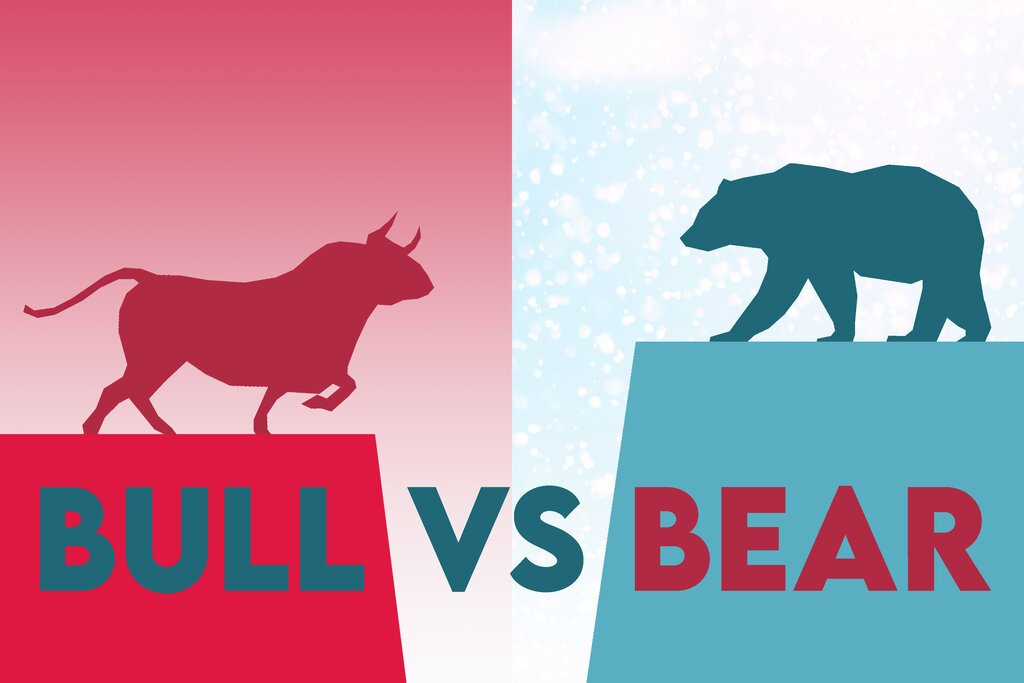
A bull market is a period when stock prices are generally rising. Investor confidence is high, the economy is typically strong, and people are optimistic about the future. The term is thought to come from the way a bull attacks, thrusting its horns up into the air.
A bear market is the opposite. It's a period of falling stock prices, usually marked by a decline of 20% or more from recent highs. Pessimism is widespread, and the economic outlook is often poor. This term might originate from how a bear attacks, swiping its paws downward.
Bull markets represent optimism and rising prices, while bear markets signal pessimism and falling prices.
Now, let's review some key terms before we test your knowledge.
Ready to check your understanding?
What is the primary purpose of an Initial Public Offering (IPO)?
A company has 20 million shares outstanding, and its stock is currently trading at $25 per share. What is its market capitalization?
The stock market plays a vital role in the economy by efficiently channeling money from savers and investors to companies that need capital to grow. This process helps fuel innovation, create jobs, and build wealth.