Demystifying the Confusion Matrix
Introduction to Classification
Sorting the Digital World
At its heart, machine learning is about teaching computers to find patterns. One of the most common tasks we ask them to do is classification. Think of it like sorting mail. You have a pile of envelopes, and you sort them into different bins: bills, letters, and junk mail. Classification is the same idea, but for data.
A classification model learns to assign a label, or “class,” to a new piece of data based on what it has learned from previous examples.
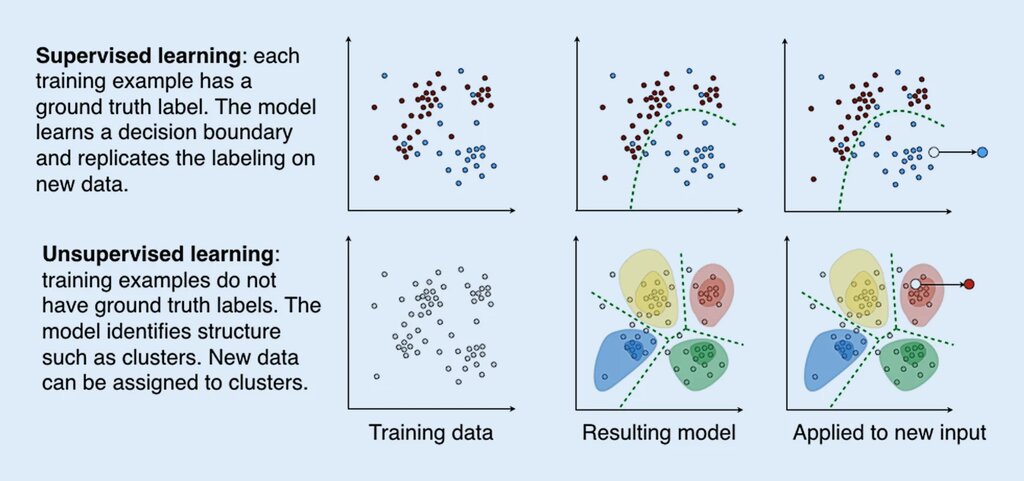
The model is first trained on a dataset where the categories are already known. For example, we might show it thousands of emails that have been manually labeled as "spam" or "not spam." By analyzing the words, senders, and other features of these emails, the model learns the characteristics of each category. Once trained, it can look at a brand new email it has never seen before and make an educated guess about which category it belongs to.
Classification in Action
Classification is all around us, working quietly in many of the tools we use every day. It's a fundamental building block of modern AI.
Here are a few common applications:
-
Spam Detection: Your email service uses a classification model to automatically filter junk mail from your inbox. It classifies each incoming email as either "spam" or "not spam."
-
Medical Diagnosis: In healthcare, models can be trained on medical images, like X-rays or MRI scans. They learn to classify tissues as either "cancerous" or "non-cancerous," helping doctors make faster, more accurate diagnoses.
-
Fraud Detection: When you swipe your credit card, a model instantly analyzes the transaction. It looks at the amount, location, time, and your purchase history to classify the transaction as either "legitimate" or "potentially fraudulent."
-
Image Recognition: This is how a photo app can automatically tag pictures of your friends. The model classifies regions of an image, assigning labels like "face," "car," or "tree."
Different Tools for the Same Job
Just as a carpenter has many tools for cutting wood, a data scientist has many different algorithms for building classification models. Each one approaches the problem of separating data in a slightly different way.
Some common classification algorithms include:
-
Logistic Regression: Despite its name, this is a go-to method for classification tasks, especially when you need to separate data into two categories.
-
Decision Trees: This algorithm creates a flowchart-like model of decisions. It asks a series of questions about the data to arrive at a classification.
-
Support Vector Machines (SVMs): This method finds the best possible line or plane to divide the data, creating the widest possible gap between the different classes.
-
Naive Bayes: This algorithm uses probability to determine which class a new data point most likely belongs to.
The choice of algorithm depends on the specific problem, the type of data you have, and the performance you need.
While the inner workings of these algorithms differ, their goal is the same: to create a clear boundary that separates one class from another. This boundary is the key to making accurate predictions on new, unseen data.