Demystifying the 401(k)
Introduction to 401(k) Plans
Your Retirement Savings Sidekick
Think of a 401(k) as a special savings account designed to help you prepare for retirement. It’s a workplace benefit, meaning it’s offered by your employer as part of your compensation package. The name itself isn't very exciting—it comes from a section of the U.S. tax code. But what it does is powerful.
A 401(k) plan is an employer-sponsored retirement account that allows employees to directly contribute a portion of their paycheck in a retirement savings account.
The main goal is to make saving for your future easier. By setting money aside throughout your career, you build a fund that you can draw from when you stop working. It's a long-term strategy, and the mechanics are straightforward.
How Contributions Work
The money in your 401(k) comes from two main sources: you and, often, your employer.
Your contribution comes directly out of your paycheck. You decide on a percentage of your salary you want to save, and your employer automatically deducts that amount and deposits it into your 401(k) account. Because it happens before you even see the money, it's a simple way to save consistently.
This setup is often called a 'payroll deduction plan.' It's saving on autopilot.
Many employers also contribute to their employees' 401(k)s. This is commonly known as an 'employer match.' For example, an employer might offer to match 100% of your contributions up to 3% of your salary. If you contribute 3%, they add another 3% for free. It's essentially a bonus for saving for your own retirement.
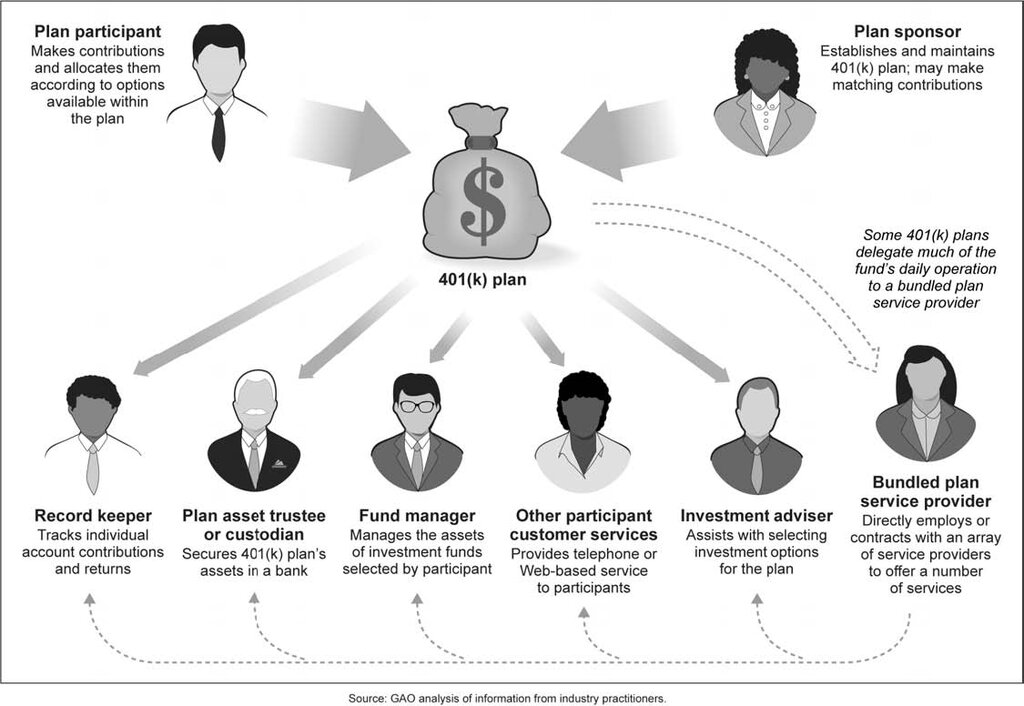
This matching contribution is a key feature of 401(k) plans and a major incentive for employees to participate. Not all employers offer a match, but it's a very common and valuable benefit.
The Tax Advantage
One of the biggest benefits of a 401(k) is the special tax treatment it receives. When you contribute to a traditional 401(k), the money is taken out of your paycheck before federal and state income taxes are calculated. This is known as a pre-tax contribution.
Making pre-tax contributions lowers your taxable income for the year. This means you pay less in taxes today.
Let's look at a simple example. Suppose you earn $50,000 a year and contribute $3,000 to your 401(k). For income tax purposes, it's as if you only earned $47,000 that year. You don't pay taxes on the $3,000 you saved.
The money in your account then grows over time. You won't pay any taxes on the investment gains each year, either. This is called tax-deferred growth. You only pay income tax when you withdraw the money in retirement.
| Feature | How It Works |
|---|---|
| Pre-Tax Contributions | Money goes into your account before income taxes are calculated. |
| Lower Taxable Income | Your reported income is lower, so your current tax bill is smaller. |
| Tax-Deferred Growth | Your investments grow without being taxed each year. |
| Taxes in Retirement | You pay income tax on the money when you withdraw it. |
This combination of automated savings, employer contributions, and tax benefits makes the 401(k) a cornerstone of retirement planning for many people.
What is the primary purpose of a 401(k) plan?
When an employer adds money to your 401(k) account as an incentive for your own contributions, it's known as a(n) __________.