Demystifying Software Architecture and Python for AI PMs
Software Architecture Basics
What Is Software Architecture?
Think of software architecture as the blueprint for a building. Before anyone lays a foundation or puts up a wall, an architect designs the structure. This plan dictates the building's shape, how the rooms connect, and how it will stand up to wind and weather. It’s the high-level plan that guides the entire construction process.
Software architecture does the same thing for a software system. It defines the major pieces of the system, what each piece does, and how they all fit together and communicate. It's not about the specific code in one small function, but about the overall structure that everything else is built upon.
Software architecture is the high-level structure of a software system.
Why does this matter? A solid architecture makes a system reliable, easier to update, and capable of growing to meet new demands. A poor architecture, like a bad blueprint, can lead to a system that's buggy, slow, and a nightmare to change. It’s the foundation that determines whether you have a sturdy skyscraper or a house of cards.
The Building Blocks
At its core, every software architecture is made of two basic things: components and connectors.
Components are the distinct units of functionality in the system. Think of them as the different rooms in a house. You might have a component that handles the user interface (the living room), another that processes business logic (the kitchen), and a third that stores data (the pantry).
Connectors are the pathways that let components communicate with each other. They’re the hallways and doorways connecting the rooms. In software, this could be an API call that requests data or a messaging system that sends notifications between different parts of the application.
Together, these components and connectors form the system's overall shape and define how information flows through it.
Common Architectural Patterns
Just as there are common styles for buildings like ranch houses or skyscrapers, there are common patterns for software architecture. These patterns are well-tested, reusable solutions to common problems. Let's look at three popular ones.
Layered Architecture
noun
An architecture where components are organized into horizontal layers, each with a specific responsibility. Communication typically flows downwards, from an upper layer to the one directly below it.
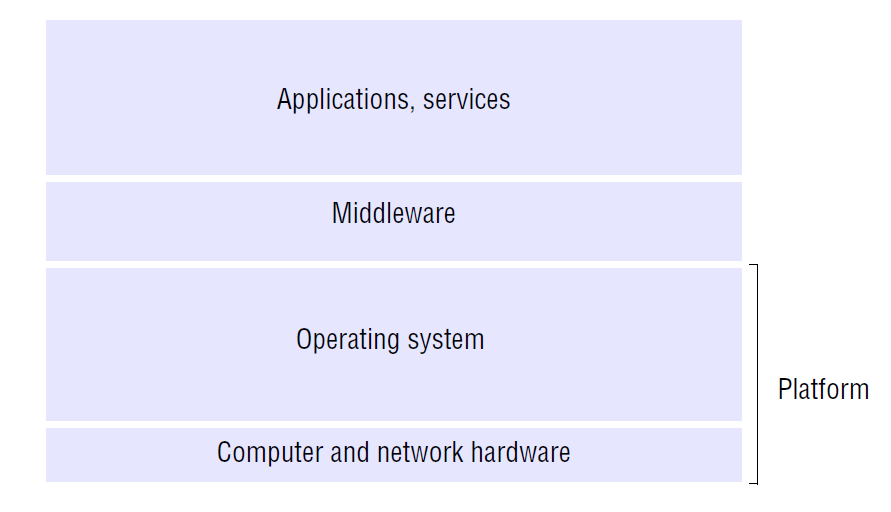
This is one of the most common patterns. It organizes the system into a stack of layers, where each layer handles a specific concern. A typical setup includes:
- Presentation Layer: The user interface (what the user sees and interacts with).
- Business Logic Layer: The core functionality of the application where rules and processes are handled.
- Data Access Layer: The part that communicates with the database to store and retrieve information.
Information generally flows down from the presentation layer to the data layer, and then back up. This separation makes the system easier to manage because you can work on one layer without having to change the others.
Microservices Architecture
Instead of building one large, monolithic application, the microservices pattern breaks it down into a collection of small, independent services. Each service is built around a specific business capability, like handling user payments or managing product inventory.
These services communicate with each other, often over a network. The big advantage is that each service can be developed, deployed, and scaled independently. If the payment service gets a lot of traffic, you can give it more resources without touching the inventory service. This flexibility is why many large-scale applications, like those from Netflix and Amazon, use this pattern.
Event-Driven Architecture
In an event-driven system, components don't call each other directly. Instead, they communicate by producing and consuming events. An event is just a message that something significant has happened, like "new user signed up" or "order placed."
One component (a producer) creates an event and sends it to a central message broker. Other components (consumers) subscribe to the events they care about. When a new event arrives, the broker sends it to all the interested consumers, which then react accordingly.
This creates a very loosely coupled system. The order service doesn't need to know anything about the notification service or the shipping service. It just announces that an order was placed, and any other part of the system can choose to act on that information. This pattern is great for building responsive and resilient systems.
Ready to check your understanding of these core concepts?
What is the primary role of software architecture in a software system?
What are the two fundamental building blocks that constitute every software architecture?
Understanding these basic architectural ideas doesn't mean you need to start designing complex systems yourself. But it does give you a framework for understanding how software is built and a common language for talking with technical teams about their goals and challenges.