Demystifying Scientific Papers
Scientific Method
A Framework for Inquiry
Science isn't just a collection of facts; it's a way of asking questions and finding reliable answers. The framework for this process is called the scientific method. It's a structured approach that helps us investigate the world, test ideas, and build knowledge that we can trust. It keeps us from fooling ourselves by demanding evidence for our claims.
At its essence, the scientific method is a systematic procedure that researchers use to explore observations, answer questions, and test hypotheses.
Think of it as a cycle. It doesn’t always follow a rigid, linear path, but it generally moves through a few key stages. A conclusion from one investigation often becomes the observation that sparks a new question.
The Steps in Practice
It all begins with noticing something interesting. This could be anything from a strange pattern in your garden to a puzzling result from a previous study. This is the observation stage. You see a phenomenon and wonder why it happens.
Let's say you observe that your houseplants near the window grow faster than those in the corner of the room.
Observation: Plants in sunny spots seem to grow more quickly.
Next, you form a hypothesis. This isn't just a random guess. It's a specific, testable statement that proposes an explanation for your observation. A good hypothesis is falsifiable, meaning there must be a way to prove it wrong.
hypothesis
noun
A proposed explanation for a phenomenon made as a starting point for further investigation.
For our plant example, a testable hypothesis would be: "If plants receive more sunlight, then they will grow taller." This is a clear prediction we can test.
Now comes the experiment. You design a controlled test to see if your hypothesis holds up. It's crucial to change only one key variable at a time, keeping everything else the same. This way, you can be sure that the variable you're testing is the cause of any changes you see.
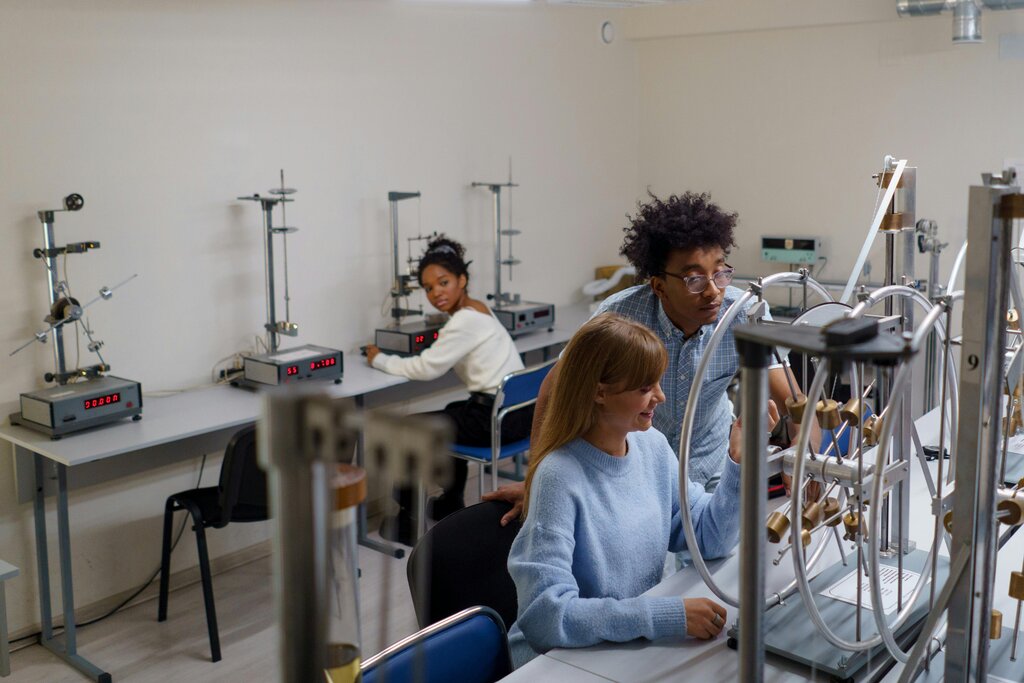
To test our plant hypothesis, we could take ten identical plants. We'd place five in a sunny window (the experimental group) and five in a dim corner (the control group). We would give all plants the same amount of water, the same soil, and keep them at the same temperature. After a month, we would measure the height of all the plants.
Finally, we draw a conclusion. After collecting and analyzing the data from your experiment, you decide whether the results support or reject your hypothesis. If the plants in the window grew significantly taller, your hypothesis is supported. If there was no difference, or if the corner plants grew taller, you would reject your hypothesis. Either outcome is valuable. A rejected hypothesis still teaches you something and helps you form a new, better hypothesis to test.
Built on Trust
The scientific method doesn't end with a single conclusion. Two critical concepts ensure that scientific knowledge is reliable: reproducibility and peer review.
Reproducibility means that other researchers must be able to perform the same experiment and get the same results. This is why scientists publish their methods in detail. It guards against fluke results and ensures that the findings are robust.
Peer review is a process where scientific articles are scrutinized by other experts in the same field before they are published. These reviewers check the methodology, analysis, and conclusions for flaws. It's a form of quality control that helps filter out weak or poorly designed research, ensuring that published science meets a high standard of credibility.
Let's review the key terms we've covered.
Now, let's test your understanding of the process.
The scientific method typically begins with which step?
A key feature of a scientific hypothesis is that it must be 'falsifiable'. What does this mean?
This cycle of observing, hypothesizing, testing, and reviewing is how scientific knowledge grows. It's a powerful tool for building a shared understanding of the world based on evidence.