Demystifying Scientific Literature
Understanding Scientific Articles
The IMRaD Blueprint
Scientific articles can seem dense and intimidating. Luckily, most follow a standard structure that makes them easier to navigate once you know the pattern. This structure is called IMRaD, a simple acronym that stands for Introduction, Methods, Results, and Discussion.
Most academic research papers follow a standard framework, often summarized as IMRaD: Introduction, Methods, Results, and Discussion.
Think of it as a story. The Introduction sets the scene and poses a question. The Methods section describes the journey taken to find the answer. Results reveals what was discovered along the way. And the Discussion reflects on what it all means. Understanding this flow is the key to reading scientific literature efficiently.
Introduction: Why This Study?
The Introduction sets the stage. It provides the background information a reader needs to understand the context of the research. It funnels down from a broad topic to a specific problem, explaining what is already known and what is still missing. This gap in knowledge is what the study aims to fill.
The Introduction always ends by clearly stating the research question or hypothesis. After reading this section, you should know exactly why the researchers conducted their study.
Methods: How They Did It
The Methods section is the recipe of the research. It describes, in precise detail, exactly how the study was conducted. This includes who or what was studied (the subjects), what tools were used (the materials), and the step-by-step process that was followed (the procedure).
A well-written Methods section provides enough information for another scientist to replicate the experiment. This transparency is a cornerstone of the scientific process, as it allows others to verify the findings.
Results: What They Found
This section presents the data collected during the study. The key here is objectivity. The results are reported without interpretation or commentary. They are the raw facts of the experiment, often presented through text, tables, graphs, and figures.
When reading the Results, your goal is simply to understand what the data shows. The explanation of what the data means comes next.
Discussion: What It All Means
The Discussion is where the authors interpret their findings. They explain what their results mean in the context of the research question stated in the Introduction. It’s a chance to connect the dots.
Here, the authors will summarize their main findings, explain how they answer the original question, and compare their results to previous research. They will also acknowledge any limitations of their study and often suggest directions for future research. This section answers the crucial question: "So what?"
The flow is logical: The Introduction poses a question, Methods explains how it was investigated, Results presents the findings, and Discussion interprets the answer.
By understanding this fundamental IMRaD structure, you can approach any scientific paper with confidence. You'll know where to look for specific information and how the different parts of the paper work together to tell a complete research story.
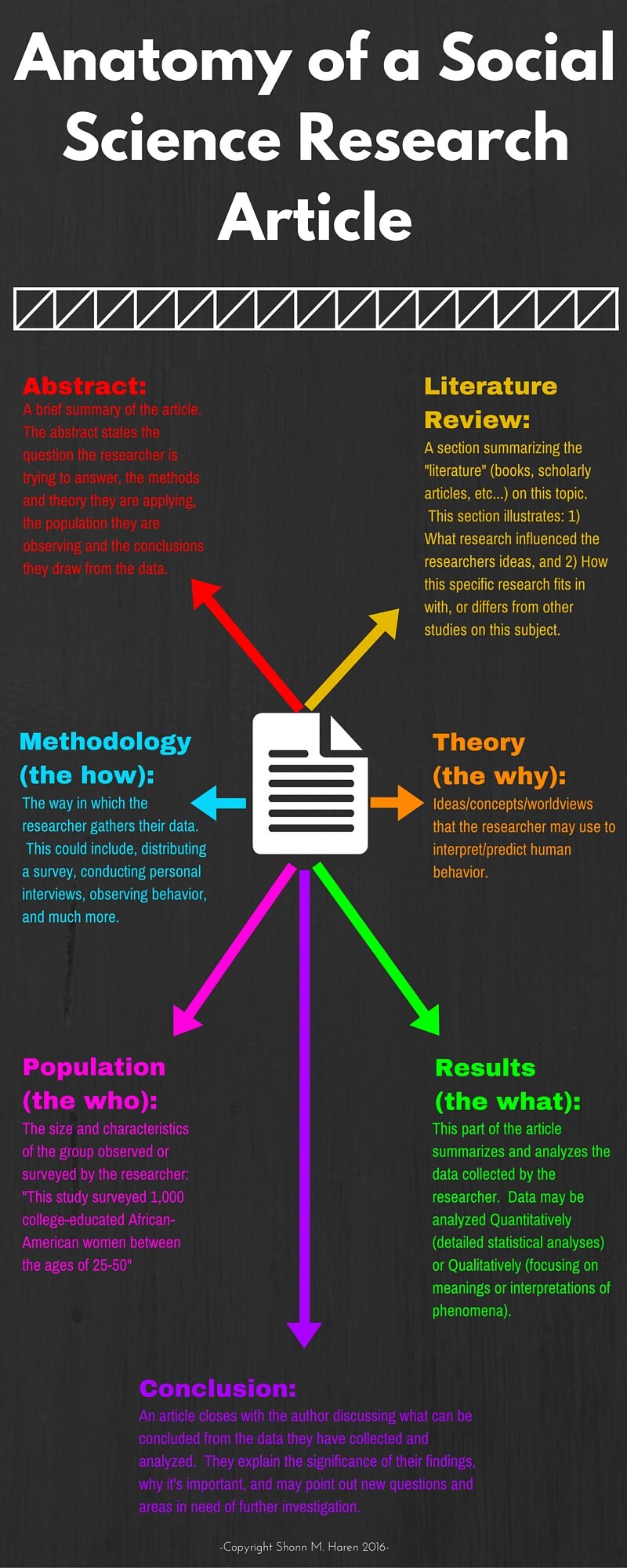
Now, let's test your understanding of how these sections fit together.
What does the acronym IMRaD stand for in the context of a scientific article?
In which section of an IMRaD paper would you find graphs, tables, and the raw data collected during the study, presented without interpretation?
Knowing the purpose of each section helps you read more strategically, whether you're looking for the main takeaway or trying to evaluate the study's methods.