Demystifying Network Address Translation NAT
Introduction to NAT
The Internet's Gatekeeper
Think of your home network like an office building. Each office has its own unique extension number, but the entire building has just one main phone number that the public can call. A receptionist answers the main line and directs calls to the correct extension. Without the receptionist, everyone in the building would need their own public phone number, which would be expensive and complicated.
In the world of computer networks, Network Address Translation (NAT) is that receptionist. It's a process that happens in your router, allowing all the devices in your home—laptops, phones, smart TVs—to share a single public IP address to access the internet.
IP Address
noun
A unique numerical label assigned to each device connected to a computer network that uses the Internet Protocol for communication.
NAT was created to solve a big problem: we were running out of internet addresses. The original internet protocol, IPv4, only has about 4.3 billion unique addresses. With the explosion of internet-connected devices, that's simply not enough. NAT provides a clever workaround by letting a single public address represent an entire private network.
How NAT Works
To understand NAT, you first need to know about two types of IP addresses: public and private.
- Public IP Address: This is the single address your Internet Service Provider (ISP) assigns to your home. It's unique on the entire internet, like your home's mailing address.
- Private IP Addresses: These are addresses your router assigns to devices inside your network. They are not unique globally and are often in ranges like
192.168.x.xor10.0.x.x. Think of these as apartment numbers; they only make sense within your specific building.
When your laptop wants to visit a website, it sends a request from its private IP address. This request goes to your router.
Here’s what the router does:
- Swaps the address: It takes the packet, replaces your laptop's private source IP address with its own public IP address, and sends it out to the internet.
- Keeps a record: The router makes a note in its internal table, called a NAT table. This note links your laptop's private IP and a specific port number to the request it just sent.
- Receives the response: The website sends its response back to your router's public IP address.
- Swaps back: The router checks its NAT table, sees that this response belongs to your laptop, swaps the public destination address back to your laptop's private address, and forwards the packet to you.
This entire process happens in milliseconds for every device on your network. Your router juggles all these connections simultaneously, acting as the single point of contact with the wider internet.
The Benefits of NAT
Beyond solving the address shortage, NAT provides a couple of significant benefits.
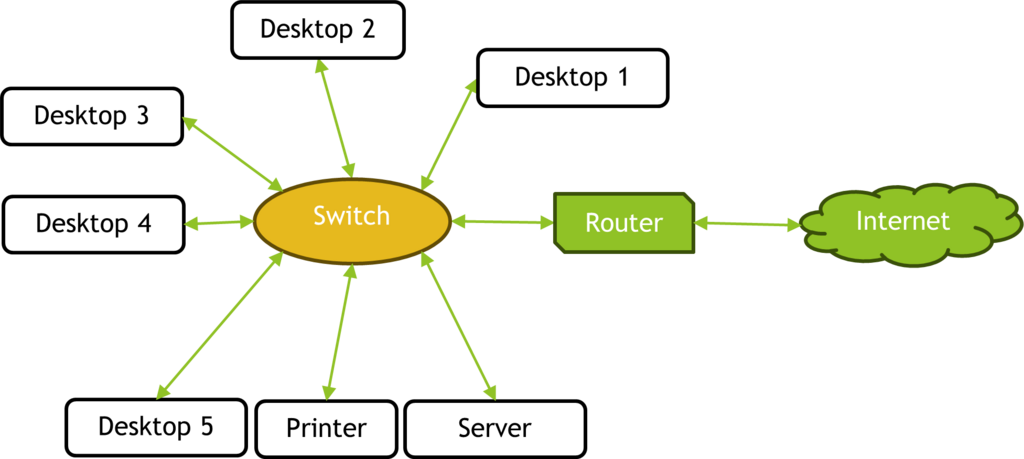
First, it offers a layer of security. Since your devices' private IP addresses are hidden from the outside world, it's much harder for an external attacker to directly target a specific computer on your network. The router acts as a natural barrier. If it receives an incoming connection request that wasn't initiated from inside your network, it doesn't have a record in its NAT table, so it simply drops the packet. It doesn't know where to send it.
Second, it simplifies network administration. You can set up your internal network with private IP addresses however you like, without needing to coordinate with your ISP or worry about conflicts with other networks on the internet.
NAT acts as both a translator and a basic guard, allowing many devices to speak to the internet through one voice while shielding their individual identities.
NAT is a fundamental technology that makes the modern internet work. It’s an elegant solution to a complex problem, working silently in the background every time you connect.
What is the primary function of Network Address Translation (NAT) in a home network?
Which of the following IP addresses is most likely a private IP address assigned by a home router?