Demystifying Modern AI
Introduction to Artificial Intelligence
What is Artificial Intelligence?
At its core, Artificial Intelligence is about making computers smart. The goal is to build machines that can perform tasks that typically require human intelligence, like learning, reasoning, problem-solving, and understanding language.
Artificial Intelligence
noun
A field of computer science dedicated to creating systems that can perform tasks that normally require human intelligence.
Think about how you recognize a friend's face in a crowd, understand a joke, or learn to ride a bike. These tasks feel effortless to us, but they involve complex processing in our brains. AI tries to replicate these abilities in machines.
A Quick History
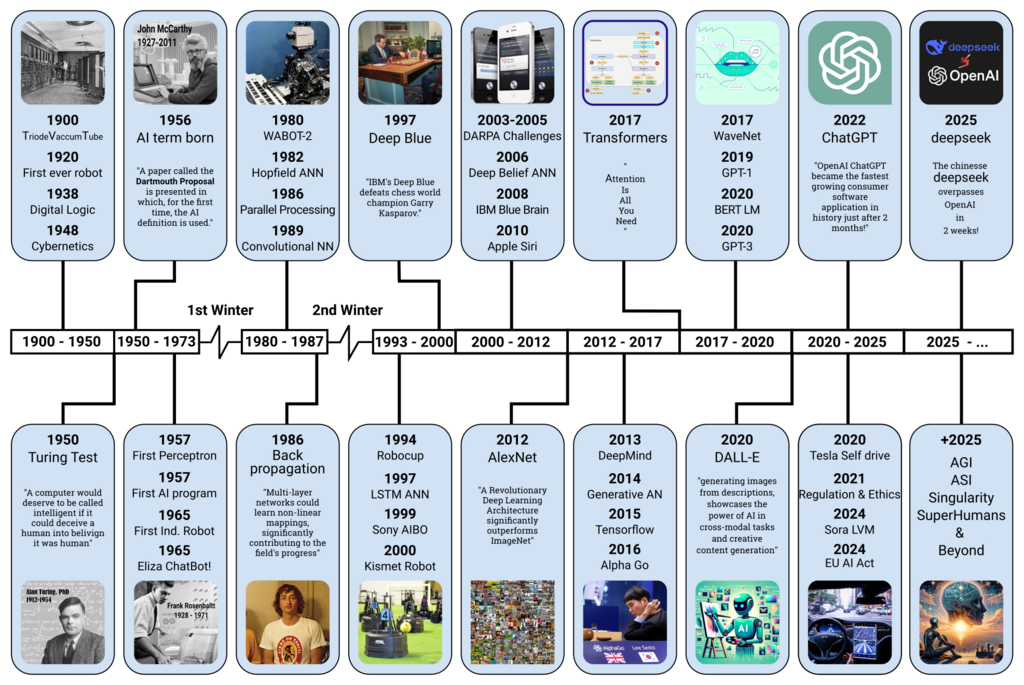
The idea of intelligent machines has been around for centuries, but the modern field of AI officially began in the summer of 1956. A group of scientists gathered for a workshop at Dartmouth College to explore the possibility of creating machines that could think. This event gave the field its name and set its direction.
The journey wasn't always smooth. The early excitement led to high expectations, and when progress was slower than hoped, funding dried up, leading to periods known as "AI winters." However, breakthroughs in computing power and the availability of massive amounts of data eventually thawed the ice, leading to the AI boom we see today.
The Flavors of AI
AI isn't just one thing; it's a broad field with many specialized areas. Just as medicine has cardiologists and dermatologists, AI has subfields focused on different problems.
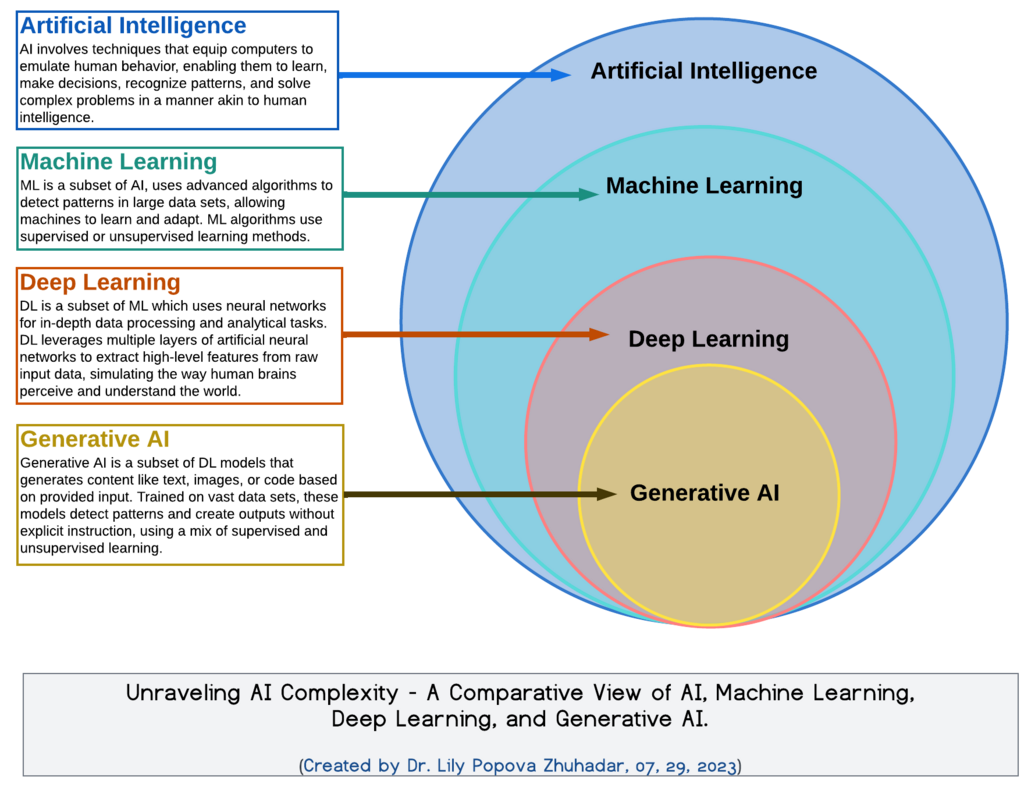
One of the most important subfields is Machine Learning (ML). Instead of writing explicit, step-by-step instructions for a computer, machine learning allows it to learn patterns directly from data. It's like showing a child hundreds of pictures of cats and letting them figure out what a cat looks like on their own, rather than describing it with a long list of rules.
Other subfields include:
- Natural Language Processing (NLP): Helping computers understand and generate human language. Think of translation apps or chatbots.
- Computer Vision: Giving machines the ability to "see" and interpret the visual world from images and videos. This powers everything from facial recognition to self-driving cars.
A key technique that powers many of these advances is the neural network.
A neural network is a computing system loosely inspired by the structure of the human brain. It's made up of interconnected nodes, or "neurons," that process information and pass it along to other neurons.
By adjusting the strength of the connections between these neurons, the network learns to recognize patterns in data. This structure is particularly effective for complex tasks like image recognition and speech-to-text conversion.
Narrow vs. General AI
When people talk about AI, they are often thinking of two very different concepts: narrow AI and general AI.
| Type | Description | Examples |
|---|---|---|
| Narrow AI (ANI) | Designed to perform a single, specific task. | A chess-playing computer, a spam filter, a recommendation engine. |
| General AI (AGI) | A hypothetical AI that can understand, learn, and apply knowledge across a wide range of tasks, just like a human. | Does not exist yet; common in science fiction. |
All the AI we use today is Narrow AI. Your virtual assistant is great at setting timers and answering trivia, but it can't write a novel or discover a new scientific theory. Artificial General Intelligence, or AGI, remains a long-term goal for researchers. It represents the quest to create a machine with the flexible, creative, and common-sense intelligence of a human being.
Understanding these foundational concepts is the first step in seeing how AI is already changing our world and what its future might hold.