Demystifying Large Language Models
Introduction to Large Language Models
More Than Just Autocomplete
At its core, a large language model (LLM) is an advanced AI designed to understand, generate, and interact with human language. Think of it as a super-powered version of the autocomplete on your phone. While your phone might suggest the next word in a sentence, an LLM can write an entire essay, compose a poem, or even generate computer code.
Large language models (LLMs) are AI systems that understand and create human language, doing tasks like summarizing articles, answering questions, writing code, and more.
These models are
large
adjective
Refers to both the massive amount of text data they are trained on (often spanning a significant portion of the internet) and the huge number of parameters they contain. Parameters are the internal variables the model learns from data, which it uses to make predictions.
Their primary purpose is to process language-based tasks by predicting the most likely sequence of words. By analyzing patterns in their training data, they learn grammar, facts, reasoning abilities, and even styles of writing.
From Simple Rules to Deep Context
Language models aren't a new invention. Early versions, based on statistical methods, simply looked at which words were most likely to follow another. For example, after seeing the phrase "a cup of," an early model might know that "coffee" is a probable next word. However, these models had a very short memory. They couldn't remember the beginning of a paragraph by the time they got to the end, making them unsuitable for complex tasks.
The real breakthrough came with a new architecture that allowed models to handle context over long stretches of text.
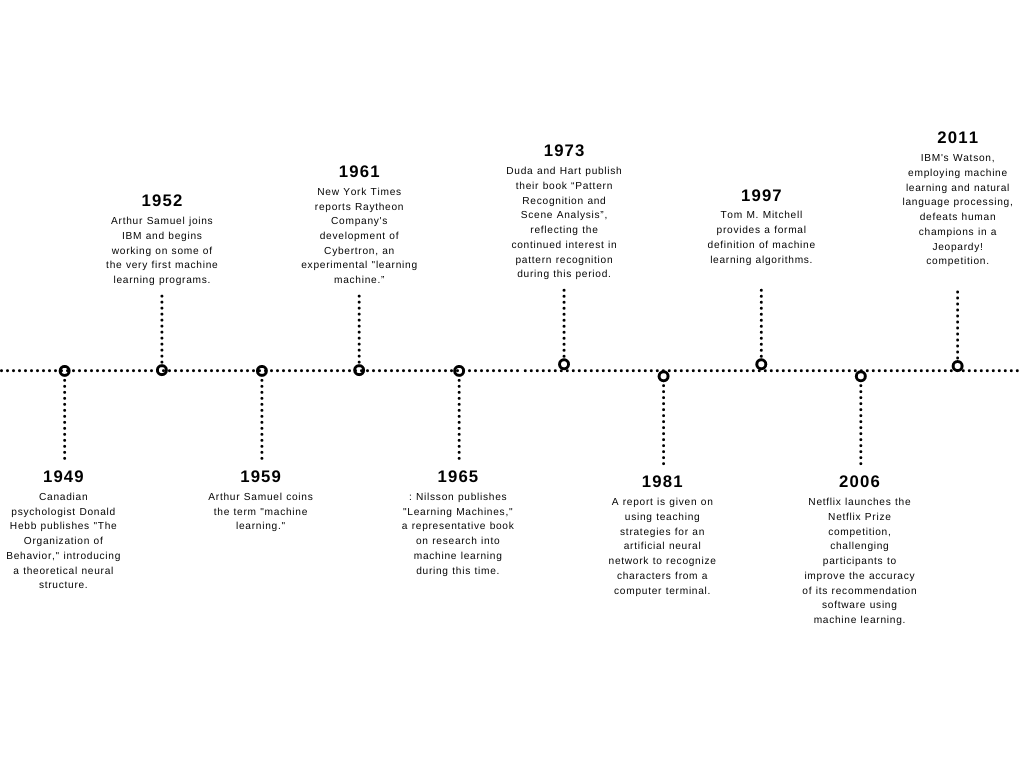
In 2017, a research paper titled "Attention Is All You Need" introduced the Transformer architecture. This was a game-changer. Instead of processing words one by one in sequence, the Transformer could process them all at once. Crucially, it introduced a mechanism called "attention," which allows the model to weigh the importance of different words in the input text when generating an output. This ability to grasp relationships between words, no matter how far apart they are in a sentence or document, gave LLMs a much deeper understanding of context.
What Makes a Transformer?
The Transformer architecture is the engine behind most modern LLMs. It has two main parts: an encoder and a decoder.
The encoder's job is to read and understand the input text. It creates a numerical representation, called a context vector, that captures the meaning and nuances of the input.
The decoder then takes this context vector and generates the output text, one word at a time. At each step, it looks at the original input and the words it has already generated to decide what to write next. This structure allows LLMs to perform a wide variety of tasks, from translation to creative writing.
LLMs in the Wild
The applications for LLMs are vast and growing every day. They are used in many fields for different purposes.
- Content Creation: Writing articles, marketing copy, emails, and even scripts.
- Customer Service: Powering chatbots that can answer questions and resolve issues 24/7.
- Software Development: Assisting programmers by generating code, finding bugs, and explaining complex algorithms.
- Education: Acting as personalized tutors, summarizing textbooks, and creating study materials.
- Healthcare: Analyzing medical literature to help researchers find information and summarizing patient notes for doctors.
The versatility of LLMs comes from their ability to generalize from the patterns in text data to perform tasks they weren't explicitly trained for.
This general structure, powered by the Transformer, is the foundation of the powerful AI tools we see today. It represents a significant leap from older models, enabling a much richer and more contextual understanding of human language.
Time to review what we've covered.
Now, let's test your knowledge.
What is the fundamental task of a large language model?
What key mechanism, introduced by the Transformer architecture, allows models to weigh the importance of different words in the input text?
With these fundamentals in place, you're ready to explore the more detailed mechanics of how these powerful models are built and trained.