Demystifying Large Language Models
Introduction to Large Language Models
What Are Large Language Models?
At its core, a Large Language Model, or LLM, is an AI designed to understand and generate human-like text. Think of it as a supercharged version of the autocomplete on your phone. Instead of just guessing the next word, it can write entire essays, answer complex questions, translate languages, and even write computer code.
Large language models (LLMs) are AI systems that understand and create human language, doing tasks like summarizing articles, answering questions, writing code, and more.
These models are called "large" because they are built on massive neural networks and trained on enormous amounts of text data from the internet, books, and other sources. This vast training allows them to learn the patterns, grammar, context, and nuances of human language. Their significance is huge, as they're changing how we interact with information and technology, powering everything from advanced search engines to creative writing assistants.
The Road to Modern LLMs
The journey to today's powerful LLMs has been a long one. Early language models could only handle simple tasks, like predicting the next word in a sentence based on the previous few words. While useful, their understanding of context was very limited.
A major breakthrough came in 2017 with the invention of the Transformer architecture. Before the Transformer, models processed text sequentially, word by word. This was slow and made it difficult to keep track of long-range dependencies, like how a pronoun at the end of a paragraph relates to a name mentioned at the beginning.
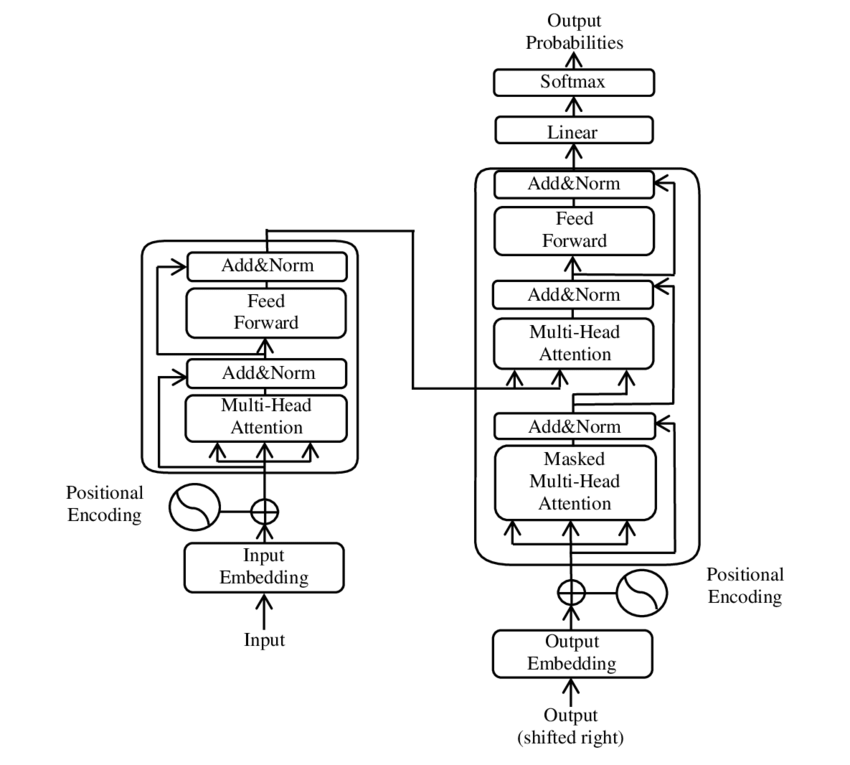
The Transformer changed the game. Its key innovation is a mechanism called "attention," which allows the model to weigh the importance of different words in the input text simultaneously. This means it can process text in parallel, making it much faster and better at understanding complex relationships within the language. This architecture is the foundation for almost all modern LLMs, including models like GPT.
Capabilities and Challenges
LLMs have a wide array of impressive abilities. They can generate creative text, from poetry to marketing copy. They can summarize long documents into key bullet points, translate between languages with surprising accuracy, and function as conversational partners that can answer follow-up questions.
However, they aren't perfect. LLMs have several key limitations we need to be aware of.
One major challenge is "hallucination." This is when the model generates text that sounds plausible but is factually incorrect or nonsensical. Because it's just predicting the next most likely word, it doesn't have a true understanding of facts.
Another significant issue is bias. Since LLMs are trained on vast amounts of human-written text from the internet, they can inadvertently learn and reproduce the biases, stereotypes, and misinformation present in that data. Developers are constantly working on techniques to mitigate these problems, but they remain active areas of research.
Understanding both the incredible power and the current limitations of LLMs is the first step to using them effectively and responsibly.
What is the primary function of a Large Language Model (LLM)?
The Transformer architecture allows LLMs to process text much more efficiently than older models. What key innovation made this possible?