Demystifying JSON
Introduction to JSON
The Universal Language of Data
Imagine you're building a weather app. Your app needs to get the latest forecast from a weather service. How does that service send the information—temperature, conditions, wind speed—to your app in a way it can instantly understand? This is where JSON comes in.
JSON (JavaScript Object Notation) is a lightweight, text-based data interchange format that's easy for humans to read and write, and easy for machines to parse and generate.
JSON, which stands for JavaScript Object Notation, is a standard way to structure data so it can be easily shared between different computer systems. Think of it as a universal translator for data. It doesn't matter if the server is written in Python and your app is written in Swift; both can understand and work with a JSON message.
At its core, JSON organizes information into simple text using key-value pairs. For example, a piece of data about a person might look like this:
{
  "firstName": "Ada",
  "lastName": "Lovelace",
  "yearOfBirth": 1815
}
Even without knowing any programming, you can probably guess what that data represents. That readability is one of JSON's greatest strengths.
Where Did JSON Come From?
JSON originated from JavaScript, the language that powers interactivity on the web. In the early 2000s, developers needed a better way for web pages to fetch data from a server without having to reload the entire page. They started using a subset of JavaScript's syntax for structuring data, and it worked remarkably well.
Its simplicity and efficiency led to its widespread adoption, far beyond its JavaScript roots. Today, it’s a language-independent standard, meaning it can be used with virtually any modern programming language, from Python and Java to C# and Ruby.
Why Not Something Else?
Before JSON became popular, a format called XML (eXtensible Markup Language) was the dominant choice for data exchange. While powerful, XML can be verbose and more complex for both humans and computers to handle.
JSON offers several key advantages.
Lightweight: JSON uses less text to represent the same data, which means faster transmission over networks and less storage space.
Readable: Its syntax is clean and minimal, making it easier for developers to read and debug.
Easy to Parse: Computers can process, or "parse," JSON data very quickly and efficiently.
Let's compare how you might represent the same user data in both formats.
| Format | Example |
|---|---|
| XML | <user><firstName>Ada</firstName><lastName>Lovelace</lastName></user> |
| JSON | {"firstName": "Ada", "lastName": "Lovelace"} |
As you can see, the JSON version is more compact. For small amounts of data, the difference is minor. But for the massive datasets that power modern applications, this efficiency adds up quickly.
JSON in the Wild
You encounter JSON every day, even if you don't see it. It's the backbone of countless web applications and services.
APIs: When you use an app that shows you movie times, stock prices, or social media updates, it's likely fetching that information from a server's API (Application Programming Interface) in JSON format.
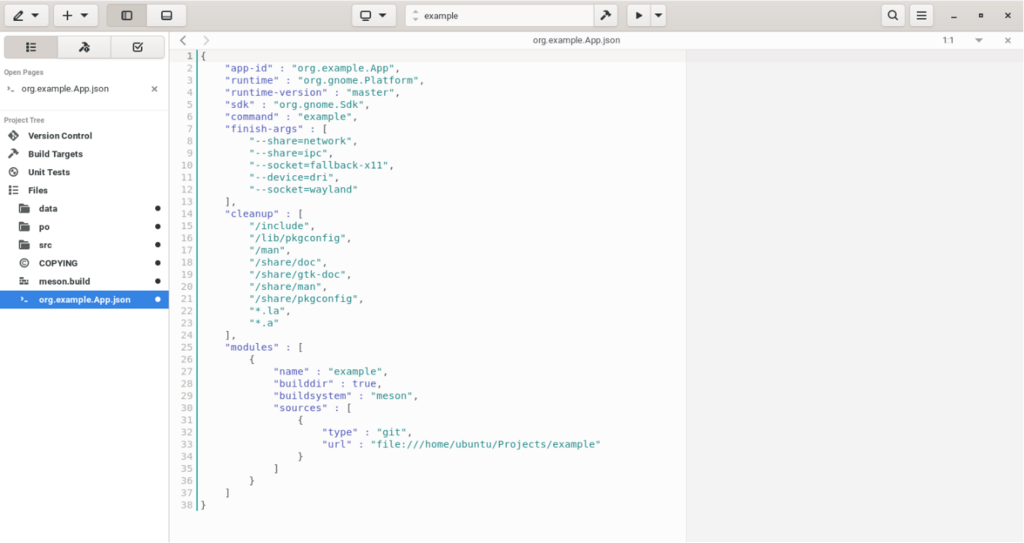
Configuration Files: Many software tools use JSON files to store settings and configurations because they are easy for both developers to edit and programs to read.
Data Storage: Some modern databases, known as NoSQL databases, store their data directly in a JSON-like format, offering flexibility in how information is structured.
Essentially, anytime one computer system needs to send structured information to another, JSON is one of the most popular and effective ways to do it.
Time to check what you've learned.
What does JSON stand for?
What is the fundamental way that JSON organizes data?
Now that you understand what JSON is and why it's so important, we'll dive into its specific structure and data types in the next section.