Demystifying Generative AI for Everyone
Defining Generative AI
What Is Generative AI?
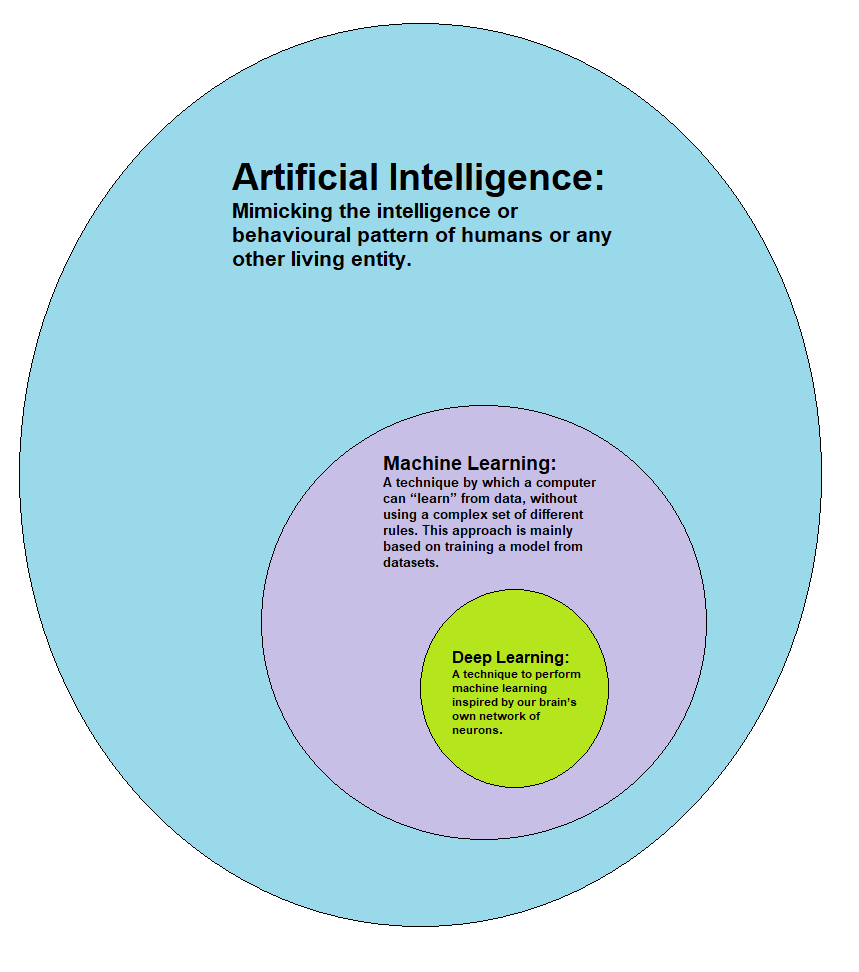
Generative AI creates new, original content. It can write an email, compose a song, or design an image from scratch. Think of it as a digital creator that learns by studying vast amounts of existing information. It's a type of artificial intelligence, but a specific and powerful one.
Imagine an artist who has studied every painting in every museum in the world. When you ask them to paint a cat in the style of Van Gogh, they don't just find an existing cat picture. They use their knowledge of cats and Van Gogh's style to create a brand new painting.
Generative AI works in a similar way. It's trained on massive datasets—like a huge portion of the internet—to learn patterns, structures, and relationships. Then, it uses that knowledge to generate fresh content that fits your request. This is made possible by complex systems known as large language models (LLMs), which are the engines behind most text-based generative AI.
Creator vs. Critic
To understand what makes generative AI special, it helps to compare it to other forms of AI. For decades, most AI has been what's called discriminative AI a critic, not a creator. Its main job is to classify or identify things.
For example, a discriminative model can look at a photo and tell you if it contains a cat or a dog. It can check if an email is spam. It sorts, filters, and categorizes existing data. It answers yes-or-no questions based on what it sees.
Generative AI, on the other hand, is a creator. Instead of just identifying a cat in a photo, it can generate a picture of a cat that has never existed. It doesn't just filter spam; it can write a brand-new email for you.
| Feature | Discriminative AI (The Critic) | Generative AI (The Creator) |
|---|---|---|
| Primary Task | Classify or predict a label | Generate new, original data |
| Example | Is this a picture of a cat? | Create a picture of a cat. |
| Output | A label or category (e.g., "cat") | New content (e.g., an image file) |
| Analogy | A multiple-choice test | An essay question |
This creative ability is also what separates generative AI from traditional software. A program like Microsoft Word follows a strict set of rules coded by a human. It does exactly what it's told, and nothing more. Generative AI is different. It wasn't given explicit rules for how to write a poem. Instead, it learned the patterns of poetry by analyzing millions of examples, and now it can generate its own.
How It 'Thinks'
The key word is 'predict.' When a generative AI model writes a sentence, it's essentially predicting the next most likely word, one after another. It asks itself, "Given the words I've already written, what word should come next based on everything I've ever read?" It repeats this process over and over to build sentences, paragraphs, and entire articles.
Generative AI isn't thinking or understanding in the human sense. It's a powerful pattern-matching and prediction engine, calculating the most probable output for a given input.
The same core idea applies to images. A model generates a picture by predicting the most likely color for each pixel, based on the text prompt you gave it and the millions of images it was trained on. It's a complex, mathematical process of probability, not a spark of creative consciousness.
A Brief History
The idea of artificial intelligence isn't new. The foundational concepts were laid in the 1950s by pioneers like , who proposed a test to see if a machine could exhibit intelligent behavior indistinguishable from that of a human. The journey from then to now has had periods of rapid advancement and quiet spells known as 'AI winters,' where progress stalled due to limitations in computing power and data availability.
The game-changer was the explosion of two things in the 21st century: massive amounts of data from the internet and incredibly powerful computer processors. This combination allowed for the development of deep learning and the huge models that power today's generative AI, turning science fiction into everyday reality.
Ready to check your understanding? Let's see what you've learned.
What is the primary function of Generative AI?
An AI model that looks at a photograph and identifies whether it contains a cat or a dog is performing a task typical of:
Now you have a solid foundation of what generative AI is and how it differs from other technologies. Next, we'll explore the different types of content it can create.