Demystifying Financial Statements
Introduction to Financial Statements
Your Financial Report Card
Financial statements are like a company's report card. They tell a story about where its money comes from, where it goes, and its overall financial health. Instead of grades, they use numbers to show how a business is performing.
Financial statements are essential tools that provide valuable insights into the financial health and performance of a company.
There are three main reports that work together to give a complete picture: the balance sheet, the income statement, and the cash flow statement. Let's look at each one.
The Balance Sheet
The balance sheet is a snapshot of a company's financial position at a single point in time. Think of it like a photo. It shows what the company owns and what it owes on a specific day.
It's built on a fundamental equation that must always, as the name implies, balance.
By looking at these three components, you can quickly get a sense of a company's net worth and its financial structure.
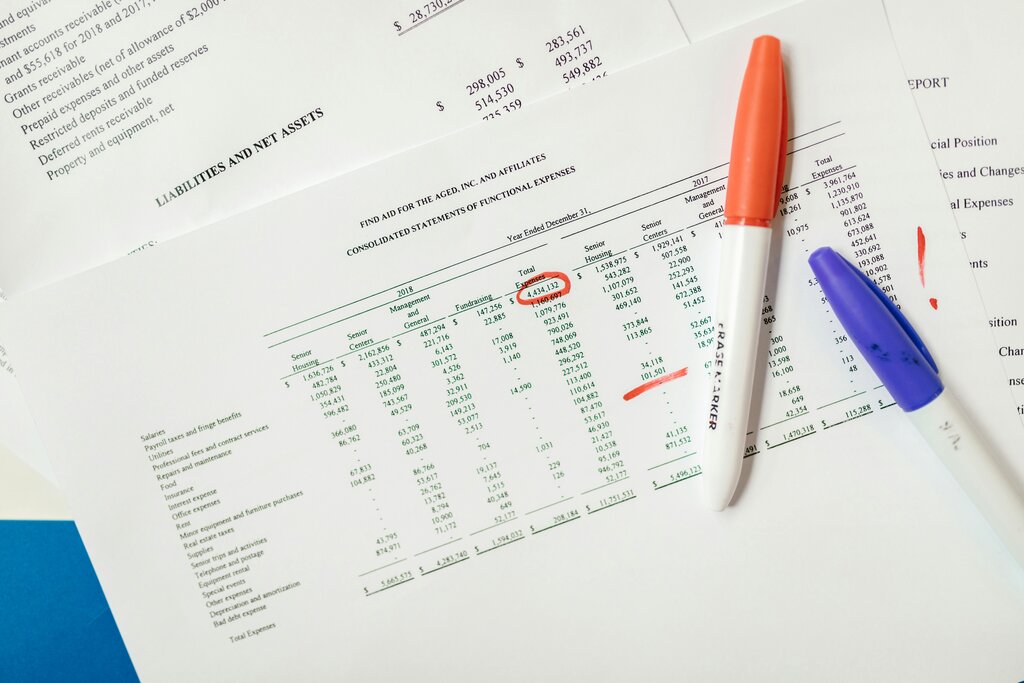
The Income Statement
If the balance sheet is a photo, the income statement is a video. It shows a company's financial performance over a specific period, like a quarter or a year. It's often called the Profit and Loss (P&L) statement.
Did the company make or lose money during this period? The income statement has the answer.
It boils down to a simple calculation.

The Cash Flow Statement
Profit isn't the same as cash. A company can be profitable on paper but still run out of money. The cash flow statement tracks the actual cash moving in and out of a company over a period.
It answers a crucial question: where did the cash come from, and where did it go?
| Activity Type | Description | Example |
|---|---|---|
| Operating | Cash from the main business activities. | Cash received from customers. |
| Investing | Cash used for or generated from investments. | Buying or selling equipment or buildings. |
| Financing | Cash from investors or banks. | Taking out a loan or paying dividends. |
A healthy company generally wants to see positive cash flow from its operations, as it shows the core business is generating enough cash to sustain itself.
How They Work Together
These three statements are not independent; they are deeply connected and tell a cohesive story.
The net income from the income statement links to both the balance sheet and the cash flow statement. Part of the net income might be paid out as dividends, while the rest is added to the company's equity on the balance sheet. Cash flow activities directly impact the cash balance shown on the balance sheet.
Think of it this way: the balance sheet gives you two snapshots in time (beginning and end of the year). The income statement and cash flow statement explain what happened between those two snapshots to change the company's financial position.
By reviewing all three together, anyone from an investor to a manager can get a well-rounded view of a company's financial performance and stability.
If the income statement is like a video of a company's performance over time, what is the best analogy for a balance sheet?
Which financial statement is primarily focused on a company's revenues and expenses over a specific period, like a quarter or a year?