Demystifying Diffusion Models
Introduction to Generative AI
What is Generative AI?
Artificial intelligence isn't just about recognizing patterns or making predictions anymore. A newer, more creative branch has emerged: Generative AI. At its core, generative AI is a type of artificial intelligence that creates new, original content. It doesn't just analyze or classify existing data; it uses that data as inspiration to produce something entirely fresh.
Think of it like a musician who listens to thousands of hours of classical music. They don't just learn to identify a Beethoven piece; they learn the underlying rules of harmony, melody, and structure. Then, they can compose a brand new symphony that sounds like it belongs to that era but is uniquely their own.
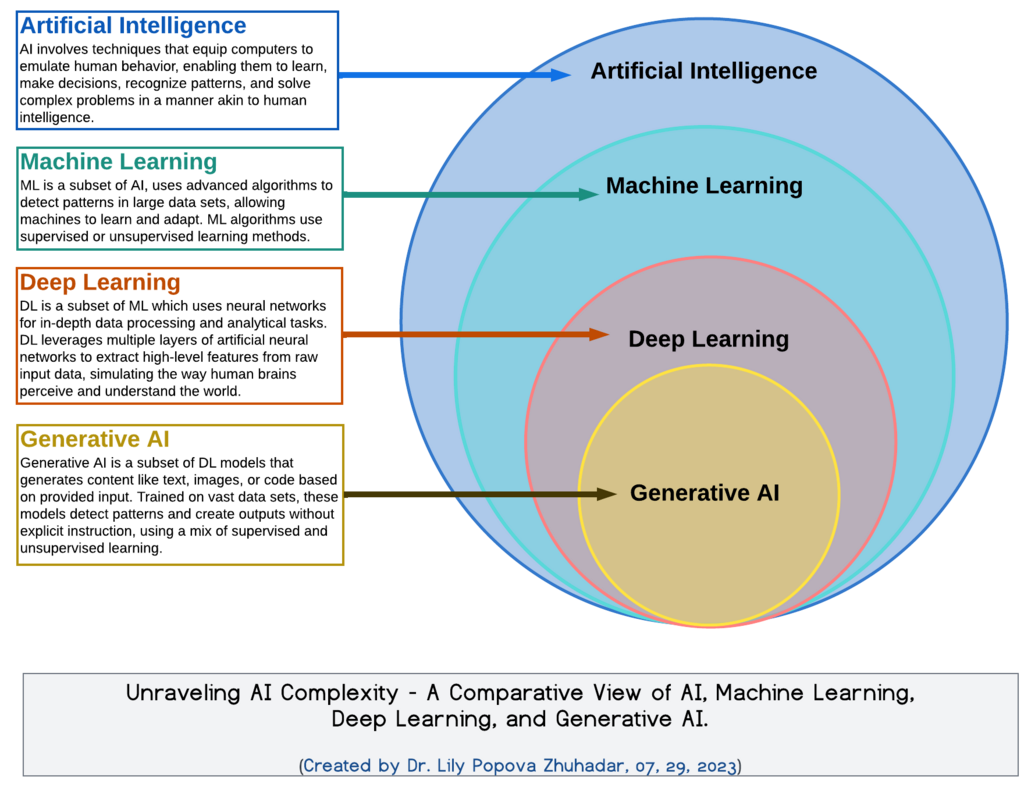
This ability to generate, rather than just interpret, is a significant leap. It shifts AI from being a tool for analysis to a partner in creation. Generative AI is a subset of deep learning, which itself is a part of machine learning and the broader field of artificial intelligence.
A Family of Creative Models
Generative AI isn't a single technology. It's a family of different models, each with its own unique approach to creating. Three of the most prominent types are GANs, VAEs, and Diffusion Models.
Generative Adversarial Networks (GANs)
noun
GANs use a competitive system between two neural networks. One network, the Generator, creates new data instances. The other, the Discriminator, tries to distinguish between the real data and the fake data created by the generator.
Imagine a cat-and-mouse game between an art forger (the generator) and an art critic (the discriminator). The forger paints new artworks, and the critic tries to spot the fakes. As the forger gets better at tricking the critic, the critic gets better at spotting forgeries. This constant competition pushes the forger to create incredibly convincing, original pieces.
Next are Variational Autoencoders (VAEs). A VAE works by first learning to compress data into a simplified representation, capturing its most essential features. It then learns to reconstruct the original data from that compressed version. Once it masters this process, it can create new data by generating novel compressed representations and then decoding them into full, original outputs. It's like an artist who can distill the essence of a face into a few key lines and then draw a completely new face from a similar set of lines.
Finally, we have Diffusion Models. This is the approach we'll be focusing on. Diffusion models work by systematically destroying an image by adding noise, then learning how to reverse that process.
It starts with pure static and, step by step, refines it by removing the noise until a clear, coherent image emerges. This methodical, step-by-step generation process allows for a high degree of control and often results in very high-quality outputs.
From Code to Creativity
The applications for these models are vast and growing every day. They are transforming industries and unlocking new creative possibilities.
- Art and Design: AI can generate stunning images, illustrations, and logos from simple text descriptions.
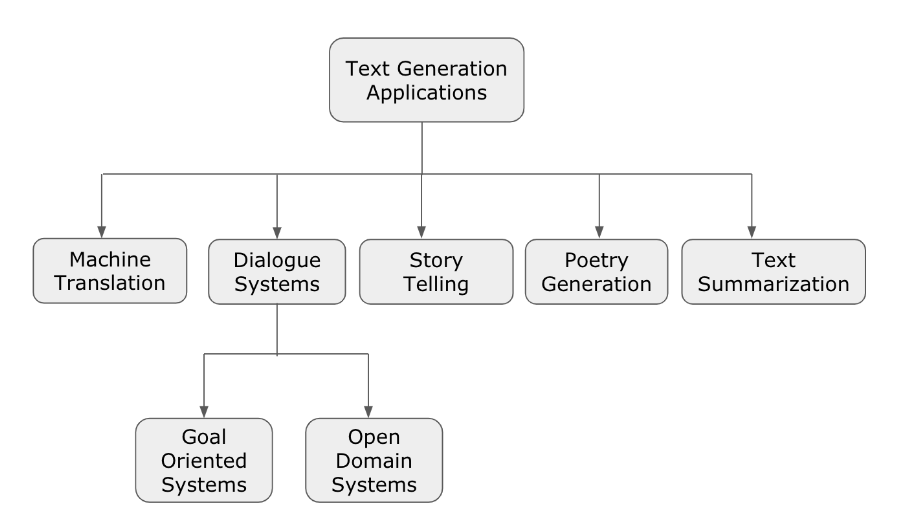
- Writing and Content: Models can write emails, draft articles, summarize long documents, and even write computer code.
- Music: Generative AI can compose original music in various styles or help human artists overcome creative blocks.
- Science and Engineering: In medicine, these models can design new proteins for drugs. In engineering, they can create new product designs optimized for specific constraints.
- Entertainment: AI can generate realistic characters and environments for video games and films, or even synthesize realistic voices for dialogue.
This technology acts as a powerful tool, augmenting human creativity rather than replacing it. It allows creators to explore ideas faster, visualize concepts instantly, and push the boundaries of what's possible. As we dive deeper into diffusion models, we'll see exactly how this creative process works from the inside out.
What is the primary characteristic that distinguishes Generative AI from other types of AI?
Which generative model is best described as a competitive game between an 'art forger' (generator) and an 'art critic' (discriminator)?