Demystifying Dev Testing for Project Managers
Version Control Basics
A Time Machine for Your Code
Imagine you're writing an important paper. You save the first draft as final_paper.doc. Then you make some changes and save it as final_paper_v2.doc. Before you know it, your folder is a mess of files like final_paper_really_final_this_time.doc.
This is a clumsy way to track changes. A Version Control System (VCS) solves this problem, but for software code. It's a tool that tracks and manages changes to a set of files over time. Think of it as a detailed project diary that automatically records every single modification.
Version Control System
noun
A system that records changes to a file or set of files over time so that you can recall specific versions later.
Every time you save a meaningful change, the VCS takes a snapshot of your files. This allows you to look back at previous versions, see who made what changes, and even revert to an older state if something breaks. It's an essential safety net for any software project.
Why Bother With Version Control?
Using a VCS offers some powerful benefits. First, it makes collaboration much easier. When multiple people work on the same project, a VCS helps merge their changes without one person accidentally overwriting another's work. It provides a single source of truth for the entire team.
Second, it creates a complete history of the project. You can see the entire timeline of changes, which is incredibly useful for understanding how the code evolved and for tracking down when a bug was introduced.
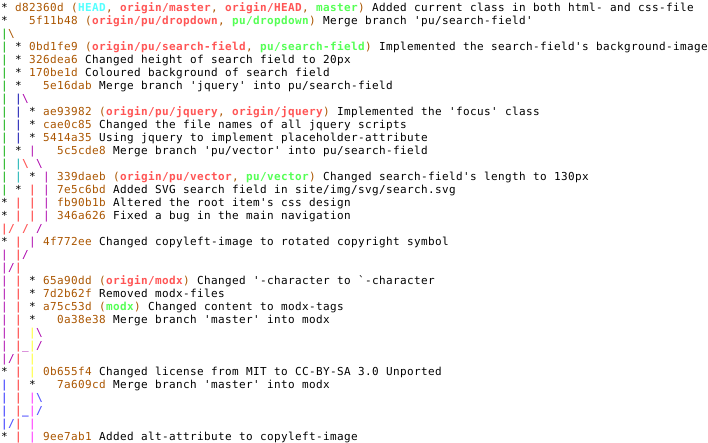
Finally, it gives you the freedom to experiment. Want to try a new feature but worried you might mess things up? A VCS lets you create a separate branch to work on your new idea. If it doesn't work out, you can just discard it without affecting the main project. If it does work, you can easily merge it back in. This ability to undo mistakes and explore new ideas without risk is a game-changer.
A version control system is like a powerful undo button for your entire project, combined with a detailed history of every change ever made.
Meet the Tools of the Trade
There are many version control systems, but the most popular by far is Git. You'll find it used in companies big and small all over the world. It’s the industry standard for a reason: it’s fast, flexible, and works well for projects of any size.
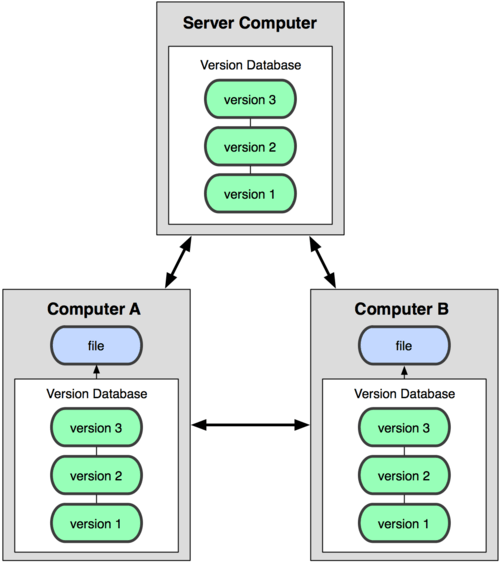
Git is a distributed version control system (DVCS). This means that instead of one central server holding the project's history, every developer has a full copy of the entire history on their own computer. This makes it faster and allows people to work offline.
Other systems exist, like Subversion (SVN) and Mercurial, but Git has become the dominant tool. Understanding its basic principles is a fundamental skill for any modern software developer.
What is the primary problem that a Version Control System (VCS) is designed to solve?
When using a VCS, you can experiment with a new feature in an isolated environment without affecting the main project. This is typically done by creating a new ______.
Understanding version control is the first step toward better collaboration and more stable, reliable code.