Demystifying Complex Topics
Introduction to the Concept
What Is Machine Learning?
Machine learning is a way of teaching computers to make predictions or decisions without being explicitly programmed for every possible scenario. Instead of writing step-by-step rules, we give a computer a large amount of data and let it learn the patterns on its own.
Think about a spam filter. In traditional programming, you might create a long list of rules: if an email contains the words "free money" or "urgent offer," mark it as spam. This is brittle. Spammers can easily change their wording to get around the rules.
With machine learning, you show the computer thousands of emails that you've already labeled as "spam" or "not spam." The machine learning model analyzes this data and learns the underlying characteristics of spam emails. It might notice that spam often has lots of exclamation points, uses unusual formatting, or comes from specific types of addresses. It builds its own internal logic for identifying junk mail, a model that's far more flexible and effective than a static list of rules.
Algorithm
noun
A set of rules or instructions a computer follows to solve a problem. In machine learning, the algorithm's job is to analyze data and build a predictive model.
At its core, machine learning is a shift from telling a computer how to do something to showing it what to do through examples.
A Brief History
The ideas behind machine learning aren't new. The term itself was coined in 1959 by Arthur Samuel, an IBM researcher who developed a checkers-playing program. His program learned from playing thousands of games against itself, eventually becoming better than Samuel himself.
For decades, machine learning remained a niche academic field. The concepts were solid, but progress was limited by two major roadblocks: a lack of data and insufficient computing power. The algorithms needed vast amounts of examples to learn from, and the computers of the day were too slow to process them efficiently.
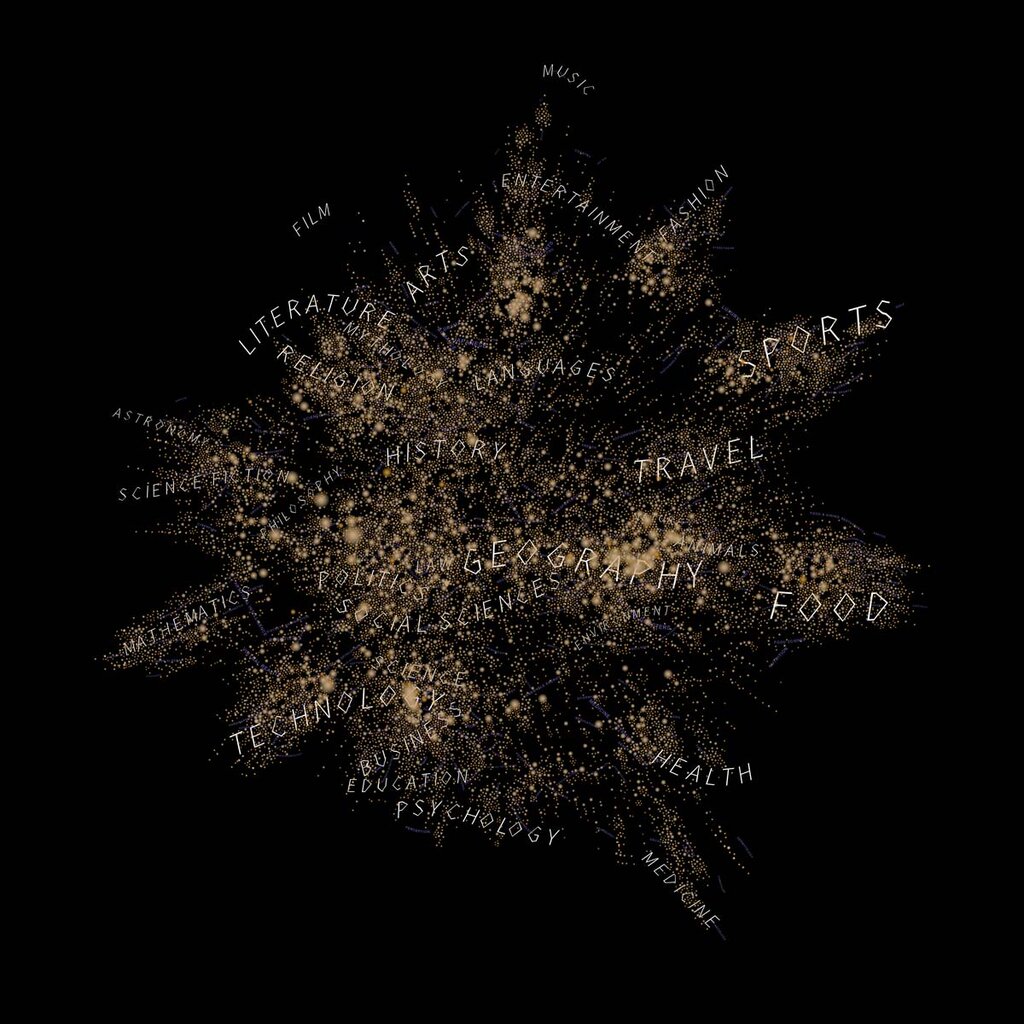
Everything changed with the rise of the internet and the explosion of digital data. Suddenly, we had access to enormous datasets on everything from customer purchases to medical images. At the same time, computer processors became exponentially more powerful, especially with the development of GPUs (Graphics Processing Units) that could perform the necessary calculations in parallel.
This combination of big data and powerful hardware allowed machine learning to move from the laboratory into the real world, powering a revolution in technology.
Real-World Applications
Machine learning is now a part of daily life, often in ways you might not notice. It's not just about futuristic robots; it's the engine behind many of the services we use every day.
| Application | How It Uses Machine Learning |
|---|---|
| Recommendation Engines | Analyzes your past behavior (movies watched, products bought) to predict what you might like next. |
| Image Recognition | Identifies people and objects in photos, enabling features like automatic tagging on social media or unlocking your phone with your face. |
| Medical Diagnosis | Learns to spot patterns in medical scans (like MRIs or X-rays) that might indicate diseases, helping doctors make faster, more accurate diagnoses. |
| Financial Trading | Predicts stock market fluctuations by analyzing historical data, news articles, and social media sentiment. |
| Natural Language Processing | Powers voice assistants like Siri and Alexa, allowing them to understand your spoken commands and respond intelligently. |
These applications all share a common thread. They involve problems with too much complexity or too much data for a human to write explicit rules. By learning from examples, machine learning models can find subtle patterns and make predictions at a scale and speed that would otherwise be impossible.
Ready to test your understanding of these core concepts?
What is the primary difference between machine learning and traditional programming?
According to the text, the term 'machine learning' was first coined in 1959 by a researcher working on a program that could play what game?