Demystifying ChatGPT
Introduction to Large Language Models
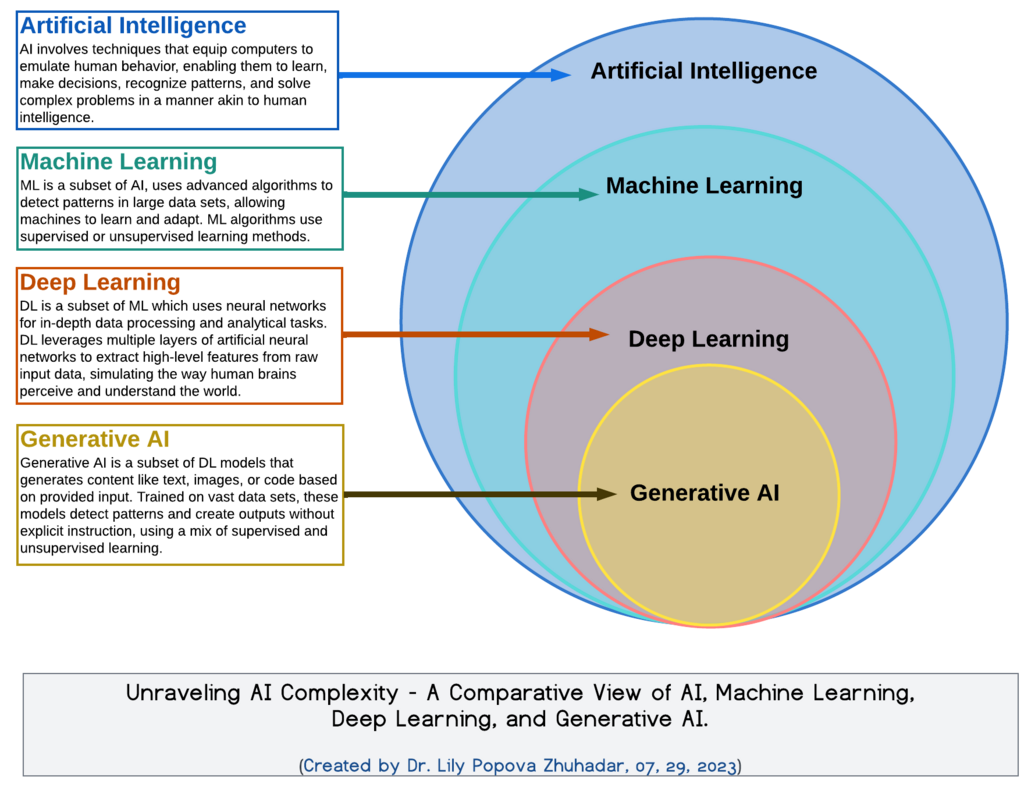
What Is a Large Language Model?
At its core, a Large Language Model, or LLM, is a type of artificial intelligence designed to understand and generate human-like text. Think of it as a very advanced pattern-matching system. It's 'large' because it's trained on an immense amount of text data—from books, articles, websites, and more—and has a huge number of internal parameters, like dials and knobs, that get tuned during training.
Parameter
noun
In machine learning, a parameter is an internal variable in the model that is learned from the training data. The values of these parameters are what the model uses to make predictions.
The primary goal of an LLM is to predict the next word in a sequence. If you give it the phrase "The cat sat on the...," it uses its vast training to calculate the most probable next word, like "mat," "couch," or "floor." By repeatedly predicting the next word, it can generate entire sentences, paragraphs, and even full articles. This simple predictive ability is the foundation for complex tasks like answering questions, summarizing documents, and translating languages.
A Brief History
The idea of machines understanding language isn't new, but LLMs are a recent breakthrough. Early language models were based on statistical rules and had limited capabilities. They could handle simple tasks but struggled with nuance and context.
These older models, known as n-gram models, looked at sequences of only a few words (like 2 or 3) to predict the next one. They lacked long-term memory.
Things began to change with the rise of neural networks, which are computing systems inspired by the human brain. Models like Recurrent Neural Networks (RNNs) could process sequences of words and remember some context, which was a big step forward. However, they had trouble remembering information from far back in a long text—a problem known as the 'vanishing gradient'.
The real revolution came in 2017 with the introduction of the Transformer architecture.
The Transformer architecture has revolutionized the Natural Language Processing field and is the backbone of Large Language Models (LLMs).
The Transformer Breakthrough
The Transformer architecture solved the memory problem with a mechanism called 'attention.' Instead of processing a sentence word-by-word in strict order, the attention mechanism allows the model to weigh the importance of all other words in the input when considering a single word. It can look at the entire context at once.
In the sentence above, the word 'it' could refer to the 'animal' or the 'street'. The attention mechanism helps the model understand that 'it' refers to 'animal' because the animal is the one that can be 'tired'. This ability to understand relationships between words, no matter how far apart they are, is what makes Transformers so powerful.
This architecture is the foundation of most modern LLMs, including the GPT (Generative Pre-trained Transformer) series that powers models like ChatGPT.
What Are LLMs Used For?
Because they are so flexible, LLMs have a huge range of applications. Their core ability to process and generate language can be adapted to many different tasks.
| Application | Description |
|---|---|
| Content Creation | Writing articles, emails, marketing copy, and even creative stories. |
| Summarization | Condensing long documents or articles into key points. |
| Chatbots | Powering sophisticated customer service and personal assistant bots. |
| Code Generation | Writing and debugging computer code based on natural language descriptions. |
| Translation | Translating text between different languages with improved accuracy and nuance. |
| Question Answering | Finding and formulating answers to questions from a given body of text. |
This versatility has allowed LLMs to move from being a research curiosity to a technology that is reshaping industries, from software development to education and healthcare.
Time to check your understanding of these core concepts.
What is the primary, fundamental task of a Large Language Model?
What key architectural innovation, introduced in 2017, allowed models to weigh the importance of all words in a sentence simultaneously, overcoming the memory limitations of earlier models?
You now have a foundational understanding of what LLMs are, how they came to be, and the key technology that makes them work. This knowledge is the first step toward exploring their more advanced capabilities.