Demystifying Basic Arithmetic Rules
Understanding Negative Numbers
Beyond Zero
So far, we've dealt with numbers that are zero or greater. But what happens when you need to represent something less than zero? For that, we use negative numbers. A negative number is simply a number with a value less than zero, and it's always marked with a minus sign (–) in front of it.
Think of owing someone 💲10. You don't have 💲10; you have less than zero dollars from that person's perspective. You're at -💲10.
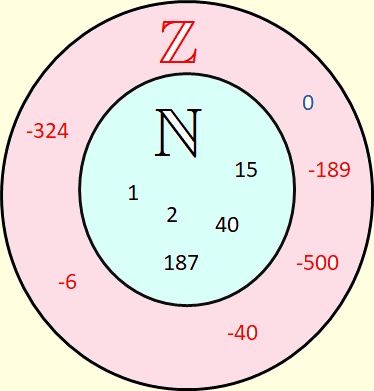
Negative numbers are all around us. They describe temperatures below freezing, like -5° Celsius. They represent elevations below sea level, such as the Dead Sea at -430.5 meters. In business, they show a financial loss or debt. All these numbers together, positive whole numbers, negative whole numbers, and zero, form a set called the integers.
Integer
noun
A whole number (not a fraction) that can be positive, negative, or zero.
The easiest way to picture integers is with a number line. It's a straight line with zero in the middle. Positive numbers stretch out to the right, getting larger as they go. Negative numbers stretch out to the left, getting smaller as they move further from zero.
This visual tool makes comparing numbers easy. Any number to the right is greater than any number to its left. So, 3 is greater than 1. And, perhaps surprisingly, -2 is greater than -5. Even though 5 seems bigger than 2, -5 is further to the left of zero, making it a smaller value.
Additive Inverses
Every positive number has an opposite, a negative number that is the same distance from zero on the number line. For example, 4 and -4 are both four units away from zero. These pairs are called additive inverses.
The special thing about additive inverses is that when you add them together, they always cancel each other out, resulting in zero.
For instance, if you have $20 and you spend $20, you have $0. The numbers 20 and -20 are additive inverses. This property is the foundation for solving many algebraic equations.
Ready to check your understanding?
Which of the following best describes the set of integers?
On a number line, a number to the left of another number is always smaller.
Grasping these basics about negative numbers, the number line, and opposites sets the stage for performing arithmetic with them.