Demystifying Artificial Intelligence
Defining Artificial Intelligence
What Is AI, Really?
Forget about sentient robots from science fiction. At its core, Artificial Intelligence (AI) is about creating tools that solve problems. It's the science of making machines that can mimic human-like intelligence—learning, reasoning, and adapting.
Think of an AI as a digital assistant. At first, it might only know how to check the weather. But as it gets more information, it learns your commute, figures out the best time for you to leave, and even suggests bringing an umbrella. The more data it gets, the smarter and more helpful it becomes. This ability to learn from information is the big idea behind modern AI.
AI is all around us. It's the spam filter in your email, the recommendation engine on Netflix, and the photo filters on your social media apps. Each one is a specialized tool designed to perform a single task intelligently.
Two Flavors of AI
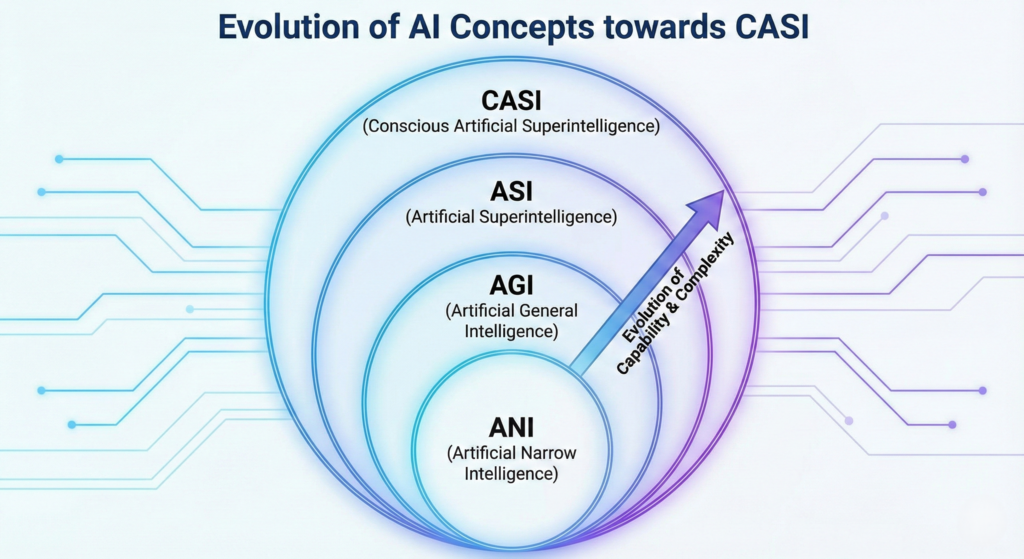
AI isn't a single entity. It's better to think of it in two main categories: the AI we have today and the AI of the future.
Narrow AI (ANI): This is the only type of AI that currently exists. It’s designed to be very good at one specific thing. A chess-playing AI can beat a grandmaster but can't tell you a joke or recommend a movie. Siri can set a timer, but it can't write a novel. These systems are specialists, not generalists.
General AI (AGI): This is the theoretical, human-like AI you see in movies. An AGI would be able to understand, learn, and apply its intelligence to solve any problem, just like a human being. It could switch from translating languages to composing music to discovering scientific principles. Creating AGI is a huge challenge, and a benchmark for it was proposed by the computing pioneer long before the technology was possible.
How AI Learns
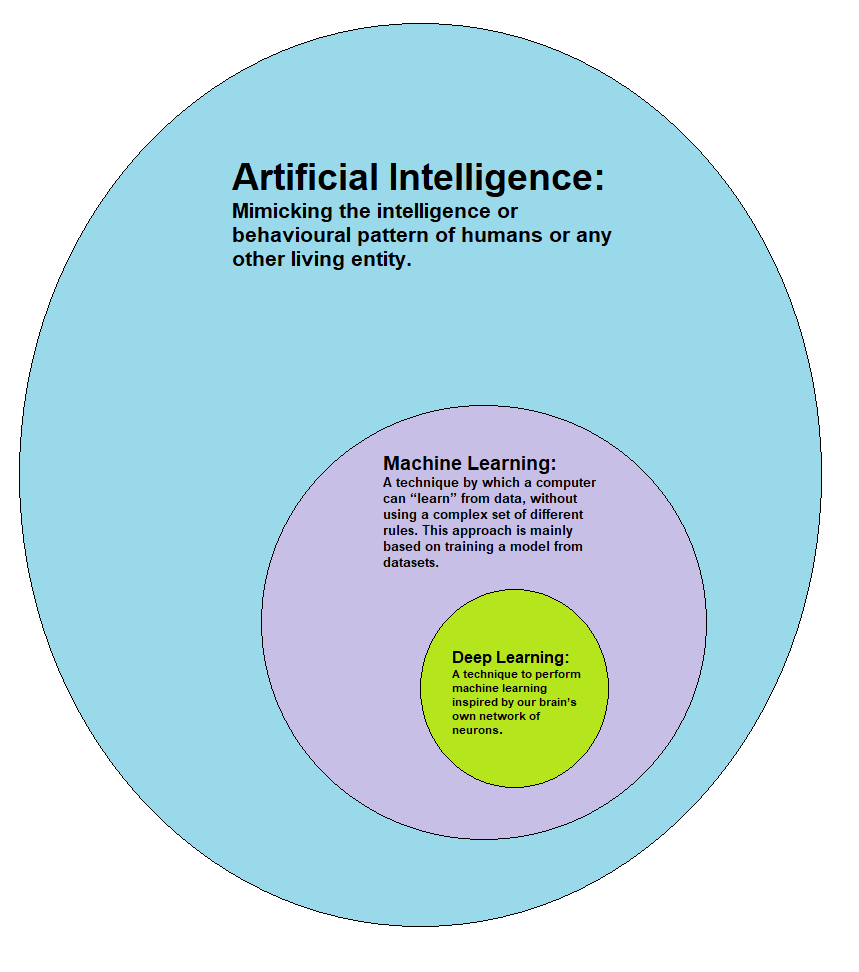
So how does an AI get smart? The simple answer is data. Data is the fuel for AI. Just as a person learns from books, experiences, and conversations, an AI learns by processing vast amounts of information. The more examples an AI sees, the better it becomes at recognizing patterns and making predictions.
This learning approach marks a huge shift from earlier AI systems. The first attempts at AI were based on rigid, pre-programmed rules. A programmer would have to write code for every possible scenario. For example: "IF an email contains the words 'free money', THEN it is spam." This kind of was brittle and couldn't handle new situations it hadn't been explicitly programmed for.
Today's AI learns the rules for itself. By analyzing millions of examples, a modern spam filter learns the characteristics of junk mail on its own. This shift from hand-coded rules to data-driven learning is what has made AI so powerful and widespread in recent years.
Ready to check your understanding?
What is the fundamental concept behind modern Artificial Intelligence?
A specialized AI that can defeat a world champion in chess but cannot recommend a movie is an example of what?
Now you have a solid grasp of what AI is—and what it isn't. It's a powerful problem-solving tool that learns from data, and it's already an integral part of our daily digital lives.