Demystifying Artificial Intelligence for Everyone
Defining Artificial Intelligence
More Than a Recipe
Think about a simple calculator. It follows strict rules. If you type 2 + 2, it will always give you 4. It can't learn to play chess or recognize a cat. This is traditional programming: a set of fixed instructions, like a recipe, that a computer follows perfectly every single time.
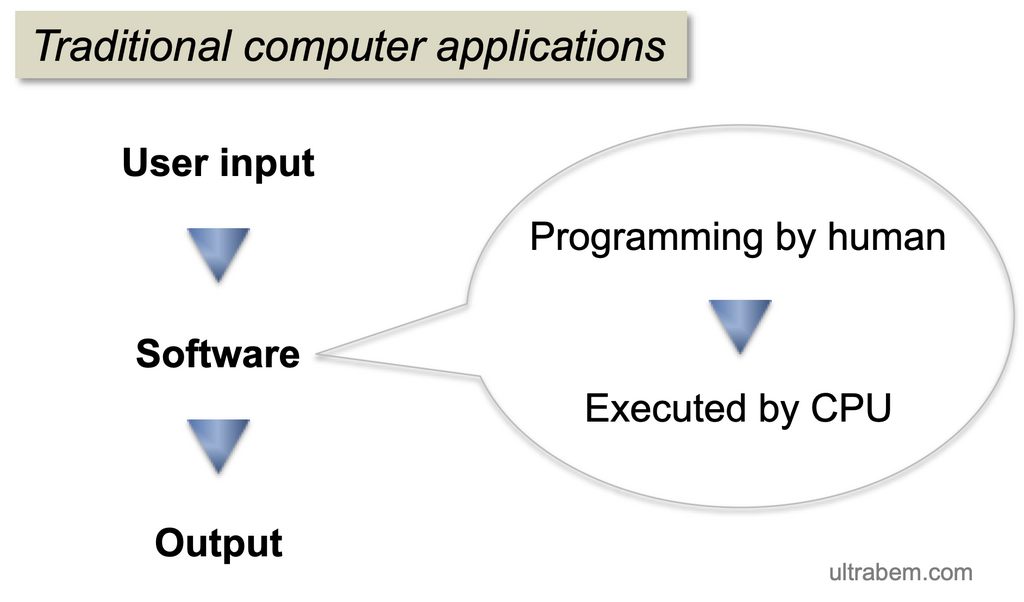
Artificial intelligence, or AI, is different. It's not about following a static recipe. It's about building systems that can learn, adapt, and make decisions in ways that seem intelligent. Instead of just executing commands, AI systems analyze information to perform tasks that normally require human thought.
AI is the science of creating systems capable of thinking, learning, and making decisions like humans.
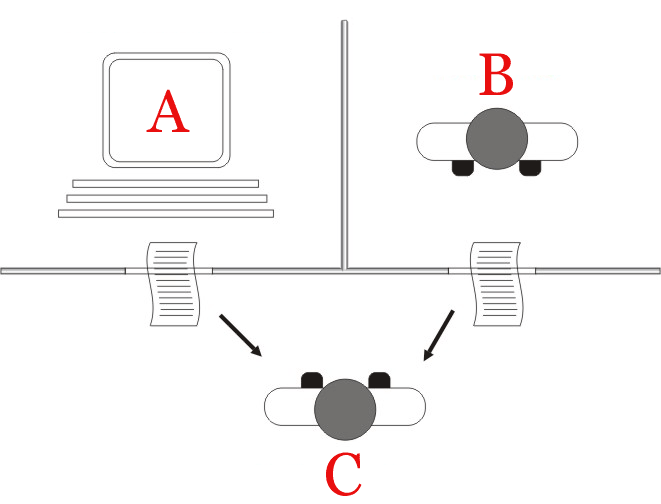
One of the earliest ideas to gauge machine intelligence was a simple thought experiment. Imagine you're texting with two unseen participants. One is a person, and the other is a machine. You can ask them anything you want. If you can't reliably tell which is which, the machine could be said to have passed the Turing Test and demonstrated intelligent behavior.
Two Flavors of AI
When people talk about AI today, they're almost always talking about one specific type: Artificial Narrow Intelligence (ANI), or Narrow AI. This kind of AI is a specialist. It’s designed to perform a single task or a narrow set of tasks extremely well.
Think of Narrow AI as a grandmaster who can only play chess, or a translator who only knows French and English. It’s brilliant, but only within its defined lane.
You use Narrow AI every day. It’s the technology that unlocks your phone with your face, filters spam from your inbox, and powers the recommendation engines that suggest what you should watch next on a streaming service. Each of these systems is powerful, but the face ID can't write an email, and the spam filter can't suggest a movie.
The other type is Artificial General Intelligence (AGI), which you've likely seen in movies. This refers to a machine with the capacity to understand or learn any intellectual task that a human being can. An AGI could switch from composing music to performing scientific research to having a deep conversation about philosophy. It would possess consciousness and self-awareness.
It’s crucial to remember that AGI does not exist yet. All the incredible AI tools we have today are forms of Narrow AI. They are powerful tools for specific jobs, not conscious minds.
Time for a quick check-in on these core ideas.
Which statement best describes the primary difference between traditional programming and Artificial Intelligence (AI)?
A streaming service suggests a new TV show based on your viewing history. What is this an example of?
So, AI isn't just about robots and sci-fi. It’s a powerful branch of computer science that’s already shaping our world by enabling machines to perform specific, intelligent tasks.