Demystifying Artificial Intelligence
Introduction to Artificial Intelligence
What Is Artificial Intelligence?
Artificial intelligence, or AI, is the science of making machines that can think or act like humans. The goal is to create systems that can perform tasks that typically require human intelligence, such as learning, reasoning, problem-solving, and understanding language.
Think about how you learn. You observe, you try things, and you get better over time. AI tries to replicate this process in a computer. Instead of a programmer writing rigid, step-by-step instructions for every possible scenario, they create a system that can adapt and make its own decisions based on new information.
At its core, AI is about creating intelligent agents—systems that can perceive their environment and take actions to achieve goals.
A Brief History of AI
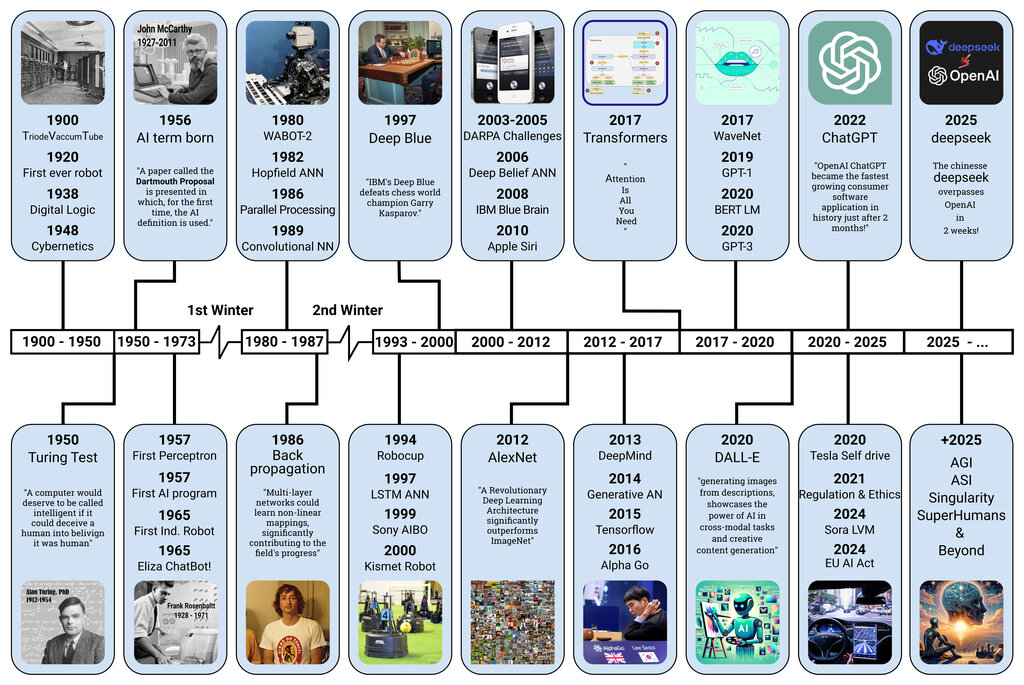
The idea of intelligent machines has been around for centuries, but the formal field of AI research began in the mid-20th century. A pivotal moment was a workshop at Dartmouth College in 1956, where leading researchers gathered to discuss the possibility of creating thinking machines. It was here that the term "artificial intelligence" was officially coined.
1956: Dartmouth Conference: Official birth of AI as a field of study, coining the term “Artificial Intelligence.”
Early AI research was full of optimism. Researchers built programs that could solve algebra problems, prove theorems in logic, and speak simple English. However, they soon hit a wall. The real world was far more complex than the simple problems they were solving. The limited computing power of the time and a lack of data led to a period of reduced funding and interest, often called the "AI winter."
But the field didn't die. It evolved. This timeline shows some of the key moments that have shaped AI's journey.
The Shift to Learning
The resurgence of AI came from a new approach. Instead of trying to program intelligence rule by rule, researchers focused on creating systems that could learn from data. This subfield of AI is called machine learning.
A classic example is a spam filter for your email. Early spam filters relied on rules, like flagging emails with the word "free" in the subject line. But spammers quickly learned to work around these rules. A machine learning approach is different. You show the system thousands of examples of spam and non-spam emails, and it learns to identify the patterns on its own. It becomes much better at spotting new types of spam because it's not tied to a fixed set of rules.
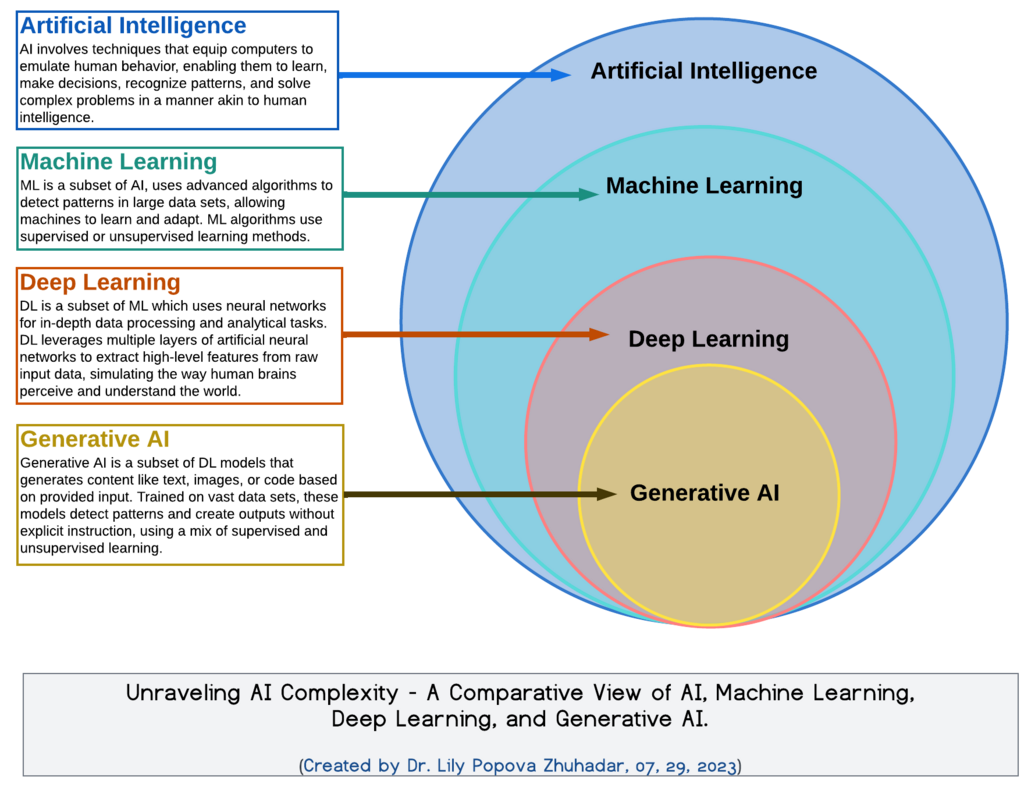
Within machine learning, an even more powerful approach emerged, inspired by the structure of the human brain: neural networks.
Neural Network
noun
A computational model inspired by the brain's network of neurons. It consists of layers of interconnected nodes, or "neurons," that process information and learn to recognize patterns in data.
A neural network is made of layers of artificial neurons. Data is fed into the first layer, which processes it and passes its output to the next layer, and so on. Each connection between neurons has a weight, which is adjusted as the network learns from data. This allows the network to find very complex and subtle patterns that would be nearly impossible for a human to program manually.
Neural networks, especially those with many layers (known as "deep learning"), are the driving force behind many of today's most impressive AI achievements. They power everything from voice assistants to the systems that can generate realistic images from a text description.
To check your understanding of these core concepts, try this short quiz.
The term 'Artificial Intelligence' was officially coined at a workshop held at which institution?
What is the primary difference between a machine learning approach and an older, rule-based approach to AI?