Demystifying Artificial Intelligence
Introduction to Artificial Intelligence
What Is Artificial Intelligence?
Think about how you learned to recognize a cat. As a child, you saw many different cats—big, small, fluffy, sleek. Your brain identified patterns: pointy ears, whiskers, a certain way of moving. Over time, you built a mental model of what a "cat" is. Artificial Intelligence, or AI, is the science of teaching computers to do something similar: to learn, reason, and make decisions.
This introduction to this special issue discusses artificial intelligence (AI), commonly defined as “a system’s ability to interpret external data correctly, to learn from such data, and to use those learnings to achieve specific goals and tasks through flexible adaptation.”
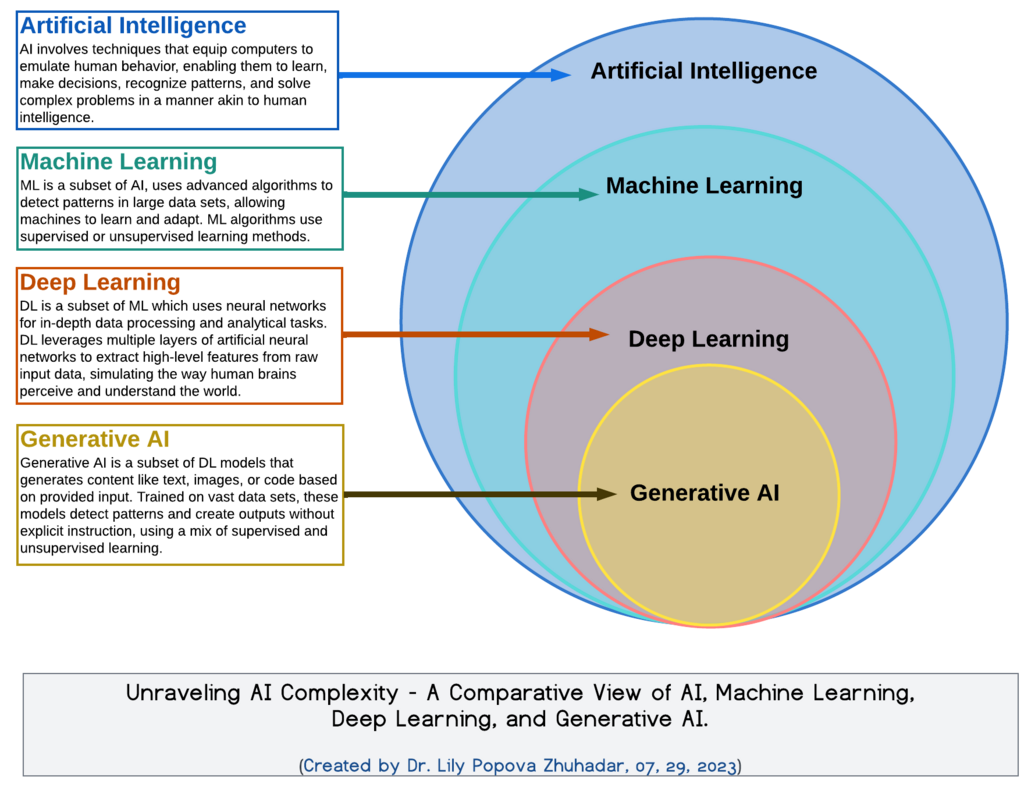
AI isn't one single technology. It's a broad field of computer science with many subfields. You've probably heard terms like Machine Learning and Deep Learning. These are specific ways of achieving AI. Machine Learning involves training computers on large amounts of data, while Deep Learning is a more advanced type of machine learning that uses structures inspired by the human brain.
A Brief History of AI
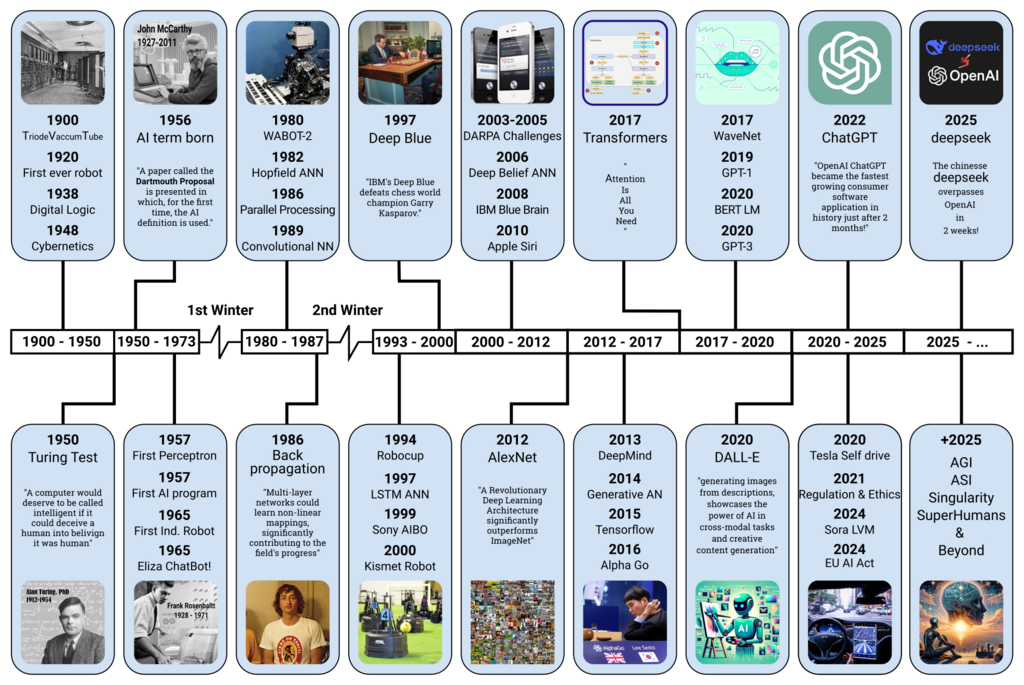
The idea of intelligent machines has been around for centuries, but the field of AI officially began in 1956 at the Dartmouth Workshop. A group of scientists gathered to explore the idea that "every aspect of learning or any other feature of intelligence can in principle be so precisely described that a machine can be made to simulate it."
The years that followed were full of excitement and big promises. Early AI could solve algebra problems and prove theorems. But progress was slow. The computers of the time weren't powerful enough, and researchers underestimated the complexity of human intelligence. This led to periods known as "AI winters," when funding and interest dried up.
The first AI winter occurred in the mid-1970s, followed by another in the late 1980s. These periods were crucial for resetting expectations and focusing research on more achievable goals.
Things started to change in the 1990s and 2000s. The rise of the internet created massive amounts of data, and computers became exponentially more powerful. These two ingredients—data and computing power—fueled a resurgence in AI, particularly in machine learning. Today, we are in an AI boom, with new breakthroughs happening at a rapid pace.
Why AI Matters
AI is no longer just a subject of science fiction. It's a powerful tool that is changing how we live and work. Its impact is felt across nearly every industry, helping to solve complex problems and automate tasks. Here are just a few examples:
- Healthcare: AI helps doctors diagnose diseases earlier and more accurately by analyzing medical images like X-rays and MRIs.
- Finance: Banks use AI to detect fraudulent transactions in real-time and to assess credit risk.
- Entertainment: Streaming services use AI to recommend movies and music tailored to your personal tastes.
- Transportation: AI is the brain behind self-driving cars, navigating roads and making split-second decisions to avoid accidents.
Algorithm
noun
A set of step-by-step instructions or rules that a computer follows to perform a task or solve a problem.
Understanding some basic terminology is key to talking about AI. At its core, AI runs on algorithms. When we talk about "training" an AI, we're often referring to machine learning, where an algorithm learns from data.
Machine Learning
noun
A subfield of AI where computer systems learn and improve from experience (data) without being explicitly programmed.
A common approach within machine learning involves neural networks, which are loosely modeled on the human brain.
Neural Network
noun
A computing system inspired by the biological neural networks that constitute animal brains. It's a key part of deep learning.
Now, let's test what you've learned about the fundamentals of AI.
What is the primary goal of Artificial Intelligence?
The periods in AI history characterized by reduced funding and interest are known as ________.
This is just the beginning of the journey into AI. By understanding its core concepts, history, and impact, you have a solid foundation to build upon as you explore this transformative technology.