Demystifying Artificial Intelligence Architectures
Machine Learning Paradigms
Three Ways to Learn
Machine learning models learn from data, but not all learning is the same. The right approach depends entirely on the problem you want to solve and, most importantly, the kind of data you have. The three main styles, or paradigms, are supervised, unsupervised, and reinforcement learning. Each has its own strengths and is suited for different tasks, from predicting stock prices to teaching a robot how to walk.
Supervised Learning
Supervised learning is like studying with a set of flashcards. Each card has a question on one side (the input) and the correct answer on the back (the output). The model sees thousands of these examples and learns the relationship between the inputs and their corresponding correct outputs. This process requires —data that has already been tagged with the right answer.
This method is split into two main types of problems:
- Classification: The output is a category. Is this email spam or not spam? Does this medical scan show a tumor or not?
- Regression: The output is a continuous numerical value. What will be the price of this house? How many units will this product sell next month?
The model's goal is to get good enough at predicting the right answer that it can make accurate predictions for new, unlabeled data it has never seen before.
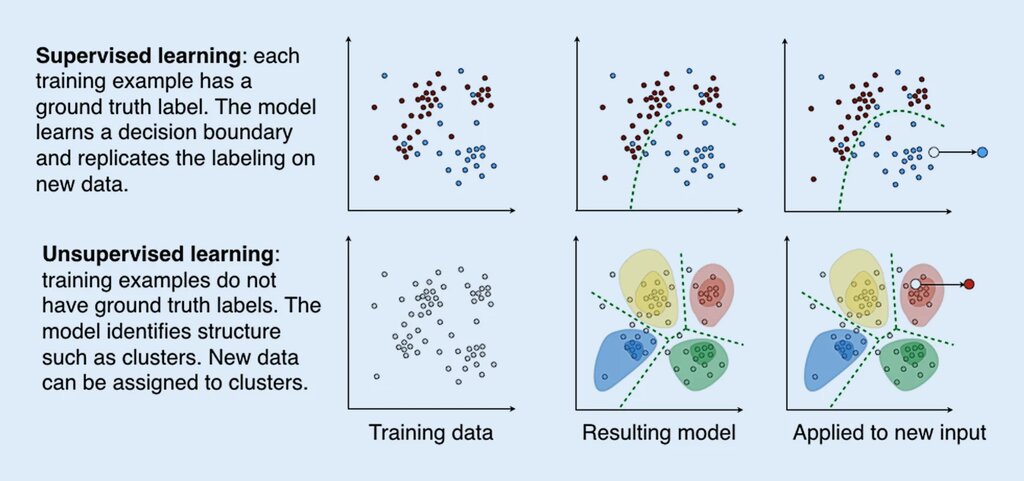
The major trade-off is the need for that initial labeled dataset. If you have it, supervised learning is powerful and reliable for making predictions. If you don't, getting it can be a significant hurdle.
Unsupervised Learning
Unsupervised learning is the opposite. It works with unlabeled data, so there are no
Unsupervised learning is the opposite. It works with unlabeled data, so there are no "right answers" to learn from. Instead, the goal is to find hidden patterns or structures within the data itself. It's like being given a box of mixed Lego bricks and asked to sort them into piles of similar pieces without any instructions.
The most common task in unsupervised learning is , which groups similar data points together. For example, an e-commerce company might use clustering to segment its customers into different groups based on their purchasing habits. This can reveal natural groupings in the customer base, like "frequent bargain hunters" or "high-value weekend shoppers," without having to define those categories in advance. Another use is dimensionality reduction, which simplifies complex datasets by finding the most important features.
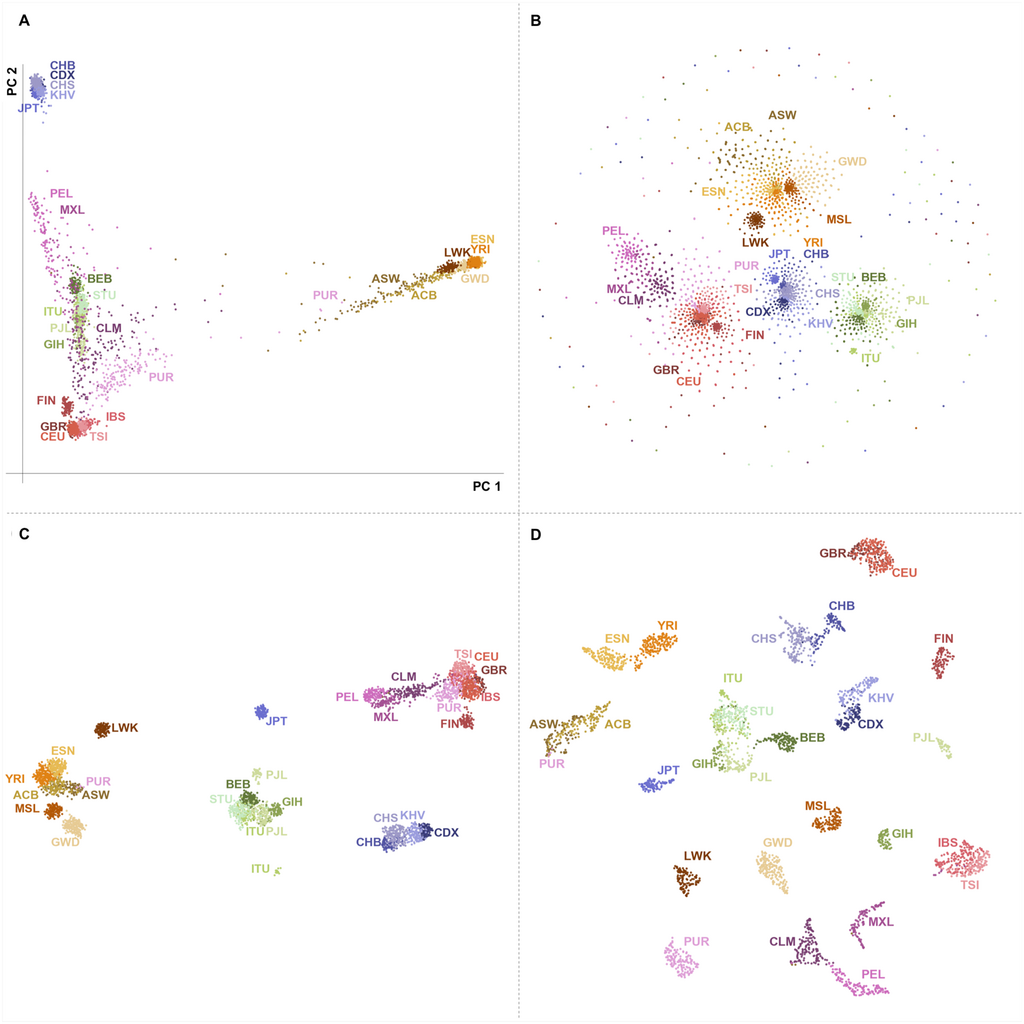
The main advantage here is that you don't need to go through the expensive process of labeling data. The downside is that interpreting the results can be more of an art than a science. The model might identify a cluster, but it's up to a human to determine what that cluster represents and if it's useful.
Reinforcement Learning
Reinforcement learning (RL) is about learning through trial and error. It's modeled on how animals (and humans) learn from the consequences of their actions. An RL system consists of an agent that operates in an environment. The agent can take actions, and after each action, it receives feedback in the form of a reward or penalty.
The agent's goal is to learn a policy—a strategy for choosing actions—that maximizes its total reward over time. Think of training a dog: when it sits on command (action), it gets a treat (reward). Over time, it learns that sitting is a good policy. In the tech world, this is how AI models learn to play complex games like Chess or Go, master robotic tasks like walking, or optimize the flow of traffic in a city.
Reinforcement learning shines in dynamic, complex situations where the optimal path isn't obvious. The major trade-off is its complexity and computational cost. Training an RL model can require millions of simulation attempts, which can be slow and expensive.
Choosing the Right Paradigm
So, how do you choose? The decision comes down to a few key questions about your data and your goal.
| Question | Supervised | Unsupervised | Reinforcement |
|---|---|---|---|
| Do you have labeled data? | Yes | No | Not required |
| What is your goal? | Make predictions | Find hidden structure | Learn a strategy |
| Example Task | Spam detection | Customer segmentation | Playing a game |
These paradigms aren't mutually exclusive. Many advanced systems use a hybrid approach, like using unsupervised learning to find features in data before feeding them into a supervised model. Understanding the core trade-offs of each is the first step in building effective machine learning solutions.
A machine learning model is trained to predict whether an email is 'spam' or 'not spam'. What type of problem is this?
What is the primary requirement for training a supervised learning model?