Demystifying AI Agents
Introduction to AI Agents
What Is an AI Agent?
At its core, an AI agent is a program that can act on its own. It's designed to perceive its environment, make decisions, and take actions to achieve specific goals. Think of it as a smart assistant that doesn't need constant instructions. It operates independently to get a job done.
An agent's entire job boils down to a simple loop: perceive, decide, and act.
What separates an AI agent from a simple script or a basic chatbot? A few key characteristics make them distinct.
First is autonomy. Agents can operate without direct human intervention. You give them a goal, and they figure out the steps to reach it. They're not just following a rigid, pre-programmed path.
Next is adaptability. The environment an agent operates in can change. A truly smart agent can react to these changes. If an obstacle appears, it finds a way around it. If a plan fails, it tries a new one. This ability to learn from experience and adjust its behavior is crucial.
Finally, agents are goal-oriented. They aren't just performing random tasks. Every action is driven by a purpose. Whether it's booking a flight, managing a smart home, or navigating a complex game, the agent is always working towards a specific outcome.
A Brief History
The idea of autonomous agents isn't new. It dates back to the earliest days of artificial intelligence in the mid-20th century. Early systems were heavily rule-based. They operated on a set of "if-then" conditions. For example, "if the room is dark, then turn on the light." These agents were simple and predictable but lacked the flexibility to handle new situations.
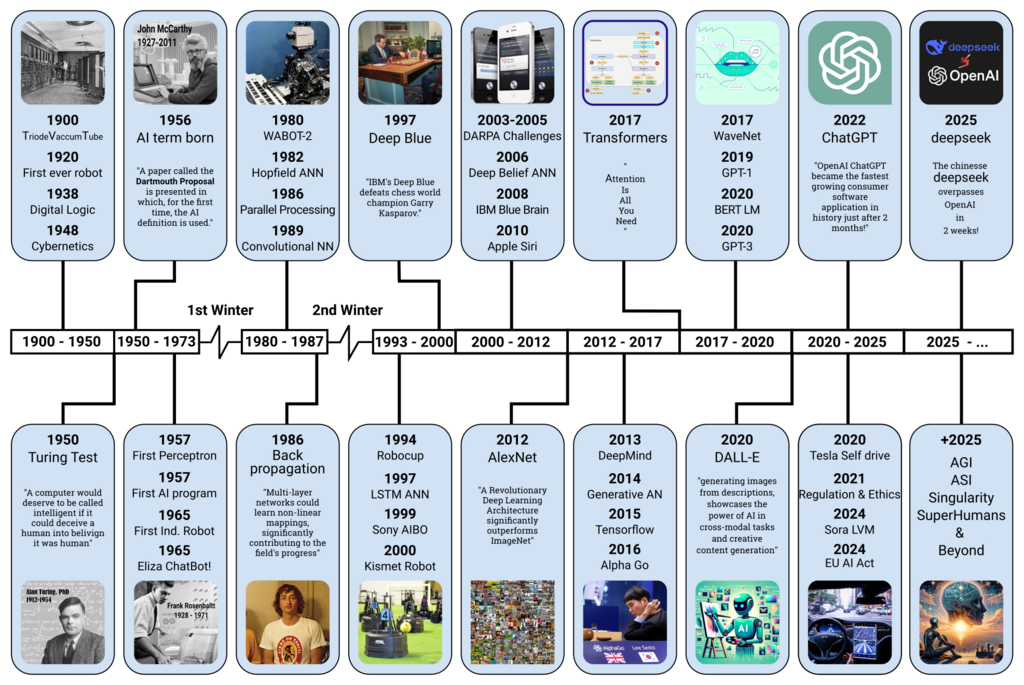
Over time, researchers realized that for agents to be truly intelligent, they needed to do more than just follow rules. They needed to learn and reason about their world. This led to the development of agents that could build internal models of their environment, allowing them to plan and think ahead. The rise of machine learning and large language models has accelerated this evolution, leading to the sophisticated agents we see today that can understand natural language, use various digital tools, and solve complex, multi-step problems on their own.
Types of Agents
Not all agents are created equal. They can be grouped into different types based on how they make decisions. The simplest are reactive agents.
Reactive Agent
noun
An agent that makes decisions based only on its current perception of the environment, without considering past events or future consequences.
Reactive agents work on instinct. They see something and they react, following a pre-set rule. They don't have memory or a sense of history. Think of an automatic vacuum cleaner bumping into a wall and immediately changing direction. It’s a direct response to its immediate surroundings.
A step up in complexity is the deliberative agent.
Deliberative Agent
noun
An agent that maintains an internal model of its environment and uses it to plan its actions based on its goals.
These agents are the planners. They have an explicit goal and can think ahead about the consequences of their actions. They maintain an internal map of their world and use it to figure out the best sequence of steps to achieve their objective. A chess-playing AI is a good example. It doesn't just react to your last move; it considers many possible future moves to find the one that brings it closer to winning.
Finally, we have hybrid agents, which combine the best of both worlds.
Hybrid agents have multiple layers. A reactive layer handles immediate needs and reflexes, allowing for quick responses to sudden events. At the same time, a deliberative layer works in the background, creating and updating long-term plans. A self-driving car is a perfect real-world analogy. It uses its reactive layer to brake suddenly if a pedestrian steps out, while its deliberative layer is constantly planning the overall route to the destination.
Understanding these different types of agents helps us see how AI can be tailored to solve different kinds of problems, from simple automation to complex, strategic planning.
What is the primary function of an AI agent?
Which of the following is NOT considered a key characteristic of an AI agent?