Democrats vs Republicans A Political Overview
Origins and Evolution
The First Political Divisions
In the early days of the United States, there were no formal political parties. Instead, there were broad political factions. The first major split was between the Federalists, led by Alexander Hamilton, and the Anti-Federalists, who rallied around Thomas Jefferson. The Federalists wanted a strong central government and a national bank to promote economic growth. The Anti-Federalists feared this would lead to tyranny and championed states' rights and a society of farmers.
This informal division soon solidified. Jefferson's supporters organized into the Democratic-Republican Party, which valued a strict interpretation of the Constitution and a limited federal government. They envisioned an agrarian republic, distrusting centralized power and big cities. The Federalists, meanwhile, advocated for a looser interpretation of the Constitution, believing it gave the federal government implied powers to build a strong, industrial nation.
The Federalists eventually faded away, but the core debate—the power of the federal government versus the rights of the states—would remain a central theme in American politics.
Democrats and Whigs
By the 1820s, the Democratic-Republican Party began to fracture. Different factions supported different presidential candidates, leading to a contentious election in 1824. Andrew Jackson, a war hero from Tennessee, emerged as a dominant figure. His supporters built a new political organization that became the Democratic Party.
Jacksonian Democrats stood for the "common man." They championed westward expansion and opposed the national bank, which they saw as an institution that benefited the wealthy elite at the expense of farmers and laborers. Their vision was one of greater democracy for white men, but it also included policies like the forced removal of Native Americans from their lands.
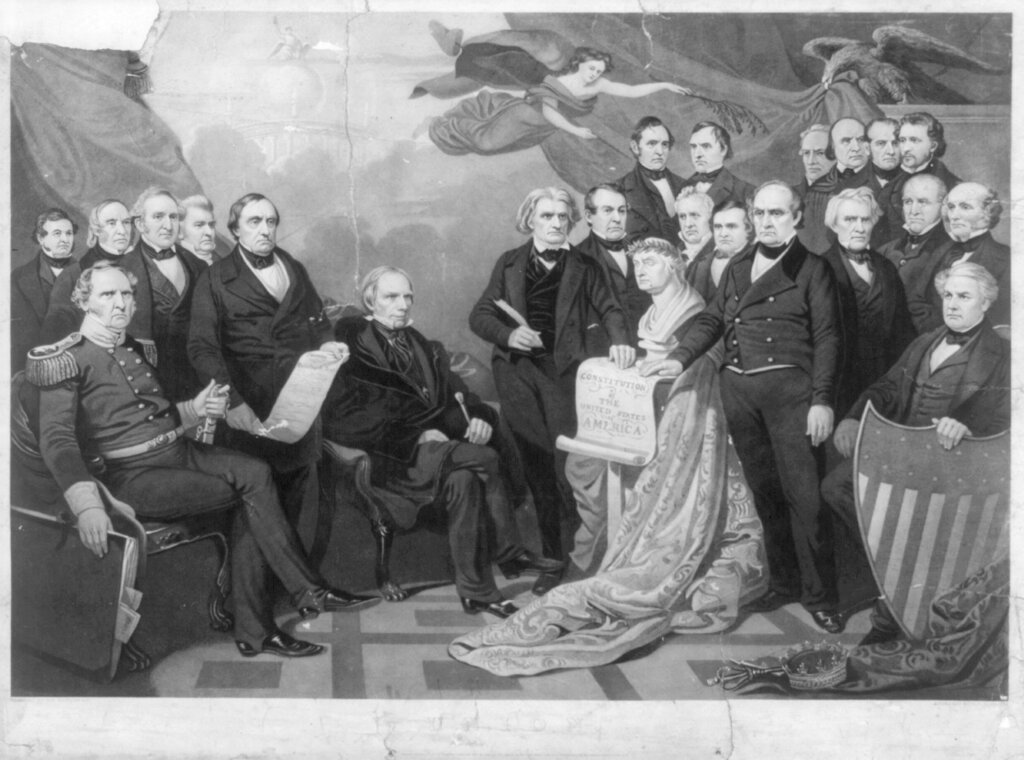
Opposition to Jackson coalesced into the Whig Party. The Whigs, led by figures like Henry Clay and Daniel Webster, favored modernization, a national bank, and protective tariffs to help American industries grow. For about two decades, the Democrats and Whigs were the two major forces in American politics, competing for control of the presidency and Congress.
The Rise of the Republicans
The issue that ultimately destroyed the Whig Party and reshaped American politics was slavery. As the country expanded westward, the question of whether new territories should permit slavery became explosive. The existing parties tried to sidestep the issue, but a series of events made that impossible.
The breaking point was the Kansas-Nebraska Act of 1854. This law allowed settlers in new territories to decide for themselves whether to allow slavery, effectively repealing the Missouri Compromise of 1820, which had banned slavery in the northern part of the Louisiana Purchase. Outrage in the North was immediate.
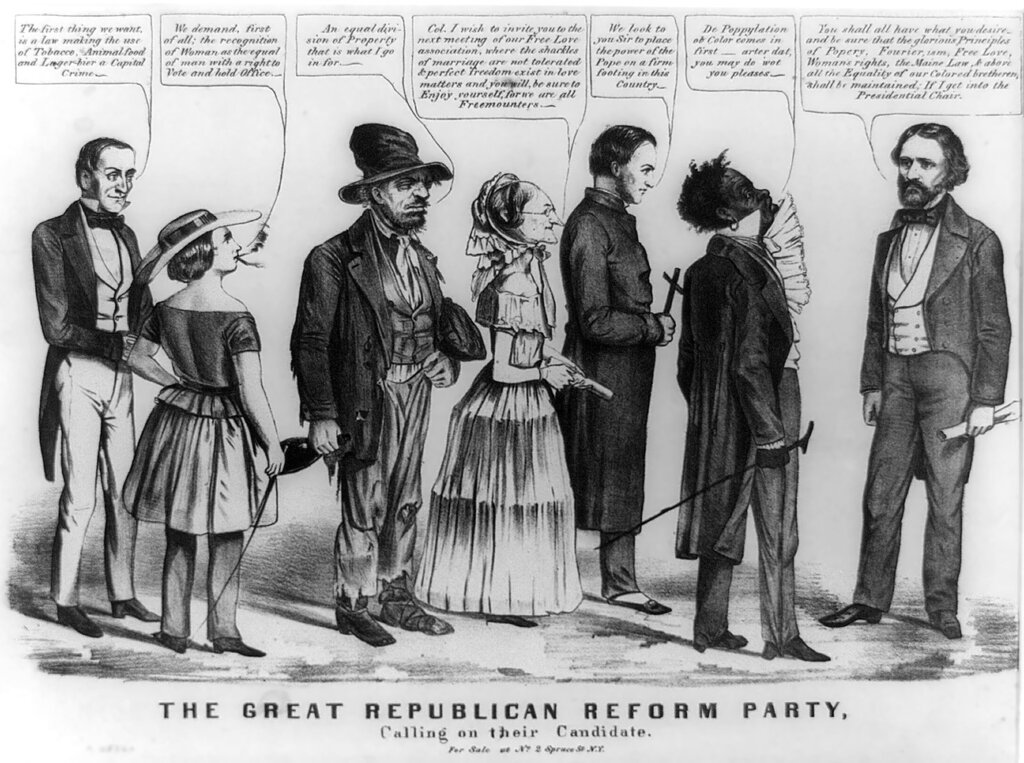
In response, a new political party emerged: the Republican Party. It was a coalition of anti-slavery activists, former Whigs, and disaffected Northern Democrats. Their central platform was preventing the expansion of slavery into the western territories. In 1860, their candidate, Abraham Lincoln, won the presidency, triggering the secession of Southern states and the start of the Civil War.
Shifts and Realignments
After the Civil War, the parties we know today were in place, but their ideologies were very different from what they are now. For decades, the Republicans were the party of big business and federal intervention (to protect civil rights and promote industry), while the Democrats were a coalition of Southern conservatives and urban immigrants.
Two major events caused the parties to swap many of their core positions. The first was the Great Depression. President Franklin D. Roosevelt, a Democrat, responded with the New Deal, a massive expansion of the federal government's role in the economy and in providing a social safety net. This transformed the Democratic Party into the party of active government, attracting a new coalition of workers, farmers, and African Americans who had previously voted Republican.
The second major shift came during the Civil Rights Movement of the 1950s and 1960s. Democratic presidents Harry Truman, John F. Kennedy, and Lyndon B. Johnson championed civil rights legislation. This support alienated many conservative white Southerners, who had been a loyal Democratic voting bloc since the Civil War. These voters began to shift their allegiance to the Republican Party, which increasingly adopted a platform of states' rights and social conservatism.
| Era | Democratic Party Focus | Republican Party Focus |
|---|---|---|
| Civil War (1860s) | States' rights, agrarianism (dominated by the South) | Union, anti-slavery expansion, strong federal government |
| Gilded Age (1870s-1890s) | Limited government, support from Southern states and urban immigrants | Pro-business, industrial growth, high tariffs |
| New Deal (1930s-1940s) | Active federal government, social safety net, labor rights | Fiscal conservatism, limited government, pro-business |
| Modern Era (1960s-Present) | Civil rights, social programs, strong federal government regulation | States' rights, social conservatism, tax cuts, fiscal conservatism |
These realignments created the political landscape we recognize today. The parties' names have stayed the same for over 150 years, but the ideas and voters they represent have changed dramatically.
Now, let's test your understanding of how the parties evolved.
What was the central belief of the Federalist faction, led by Alexander Hamilton?
The passage of the Kansas-Nebraska Act in 1854 directly led to the formation of which political party?
Understanding this history helps explain the complex and often shifting nature of American politics.