Democracy Human Rights and Accountability in IPE
Democratic Institutions
The Machinery of Democracy
Democratic institutions are the essential machinery of a free society. Think of them as the rules and structures that guide how a country is run, ensuring that power isn't concentrated in the hands of a few. These systems are designed to make governments answerable to the people they serve and to protect fundamental human rights.
Separation of Powers
A core principle in democratic governance is the separation of powers. Instead of one person or group holding all the authority, the government is divided into distinct branches, each with its own responsibilities. This creates a system of checks and balances, where each branch can limit the power of the others.
The three main branches are:
- Legislative: This branch makes the laws. It's usually a parliament or congress made up of elected representatives.
- Executive: This branch enforces the laws. It's typically led by a president or prime minister and includes government agencies.
- Judicial: This branch interprets the laws. It consists of courts and judges who settle disputes and ensure laws are applied fairly.
This structure is a powerful tool for protecting human rights. If the legislative branch passes a law that violates citizens' freedoms, an independent judicial branch can declare that law unconstitutional and void. Likewise, if the executive branch oversteps its authority, the other branches can intervene. This prevents the kind of unchecked power that often leads to rights abuses.
The separation of powers isn't just a theory. It's a practical defense against tyranny, ensuring that no single part of the government can dominate the others or the people.
Accountability and Elections
How do we ensure that the people in power actually listen to the public? The most direct answer is through elections. Regular, free, and fair electoral processes are the cornerstone of political accountability in a democracy. They give citizens the ultimate power: the ability to choose their leaders and remove them from office.
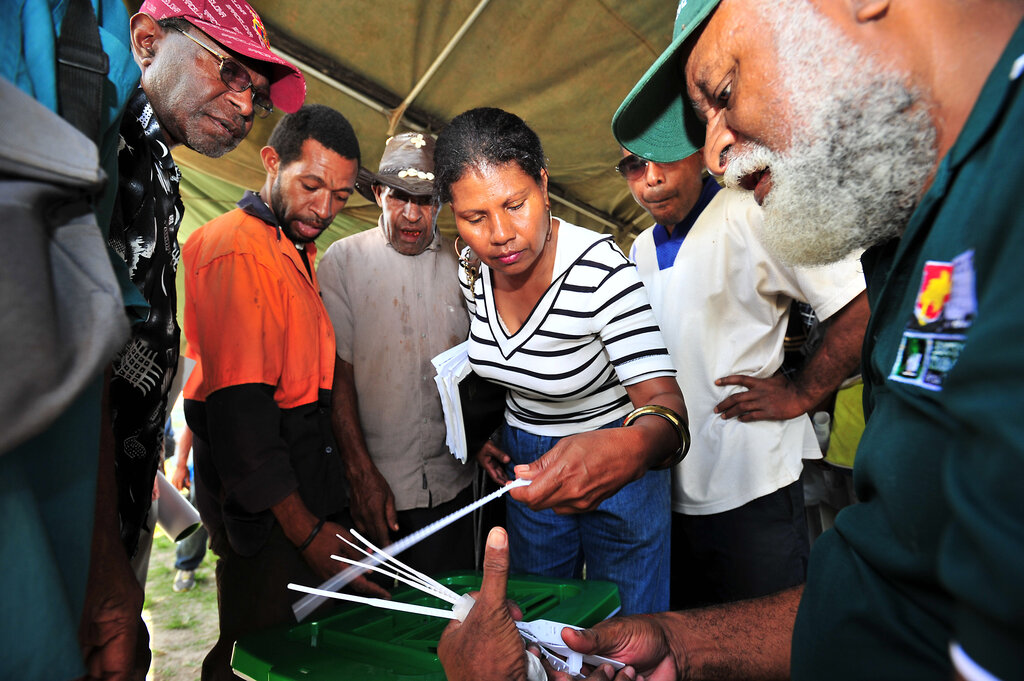
When politicians know they will face voters at the next election, they have a strong incentive to represent the public's interests. If they fail to deliver on promises, enact unpopular policies, or engage in corruption, they risk being voted out. This process forces a degree of responsiveness that is absent in non-democratic systems. Accountability isn't just about punishment; it's about creating a continuous dialogue between the government and the governed.
The Role of Civil Society
Government institutions don't operate in a vacuum. A healthy democracy also relies on a vibrant civil society. This term refers to the vast array of groups and organizations that are independent of the government, including non-profits, community groups, human rights organizations, labor unions, and news media.
Civil Society
noun
Organizations outside of the state that help people define and advance their own interests.
Civil society plays several crucial roles:
- Watchdog: These groups monitor government actions, expose corruption, and publicize human rights abuses. A free and independent press is especially critical here.
- Advocacy: They represent the interests of different segments of the population, lobbying for policy changes and raising awareness about important issues.
- Participation: They provide avenues for people to get involved in public life beyond just voting, fostering a sense of community and shared responsibility.
One of the primary ways civil society supports democracy is by promoting democratic values such as trust, tolerance, and participation.
By holding power accountable from the outside, civil society organizations act as a vital check on government. They amplify the voices of marginalized communities and ensure that the political conversation includes a wide range of perspectives, strengthening both human rights and democratic accountability.
What is the primary purpose of the separation of powers in a democratic government?
If a country's parliament passes a law that many believe violates fundamental human rights, which branch of government is typically responsible for reviewing the law and potentially declaring it unconstitutional?
These interconnected elements, from the internal checks of separated powers to the external pressure from elections and civil society, form the foundation of a government that serves and protects its people.