Deming's Philosophy for Systems Improvement
Implementing Deming's Principles
From Theory to Practice
Understanding Deming's 14 Points and his System of Profound Knowledge is one thing; putting them into action is another. Implementation isn't about flipping a switch or simply adopting new tools. It's a fundamental shift in an organization's culture, moving from a top-down, fear-based system to one of shared responsibility, learning, and continuous improvement.
This transformation requires patience and a long-term perspective. It's about changing how people think about their work, their colleagues, and the organization's purpose. The goal is to create an environment where quality is everyone's job and improvement is a daily habit, not a special project.
Cultivating Continuous Improvement
A culture of continuous improvement, or Kaizen, is the heartbeat of a Deming-inspired organization. It's the idea that everything—from a complex manufacturing process to a simple administrative task—can be made better. This isn't about finding blame; it's about systematically and collaboratively finding and solving problems.
Continuous improvement is both a mindset and a culture, and it must be an ongoing effort.
One of the most effective tools for building this culture is the PDCA Cycle, also known as the Deming Cycle. It provides a simple, iterative framework for teams to tackle improvements:
- Plan: Identify a problem or an opportunity for improvement and develop a hypothesis for a potential solution.
- Do: Implement the plan on a small scale. Test the change.
- Check: Analyze the results of the test. Did it work as expected?
- Act: If the change was successful, implement it more broadly and standardize the new process. If not, begin the cycle again with a new plan.
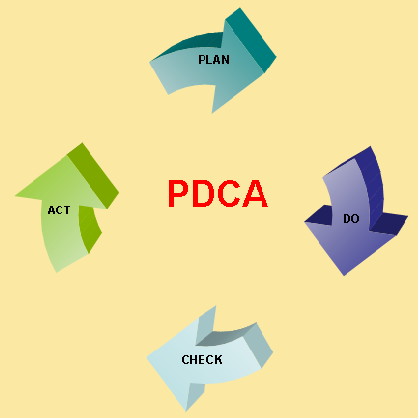
By repeatedly using the PDCA cycle, teams learn to make data-driven decisions and see improvement as a constant, manageable process rather than a massive, disruptive overhaul.
Overcoming Resistance to Change
Any significant change will meet resistance. It's human nature. People may be comfortable with the old way of doing things, fear losing their jobs, or distrust management's motives. Deming understood this when he urged leaders to "drive out fear."
Overcoming this resistance requires a deliberate and empathetic approach:
- Leadership Commitment: The change must be led from the top. Leaders need to consistently communicate the vision and demonstrate their commitment through their actions, not just their words.
- Clear Communication: Explain the why behind the changes. When employees understand the purpose—to improve quality, secure the company's future, and make their work more meaningful—they are more likely to get on board.
- Empowerment and Training: Give employees the tools and knowledge they need to succeed in the new system. This builds confidence and demonstrates the organization's investment in its people, linking directly to Deming's points on training and education.
- Involvement: Don't impose change; co-create it. Involve people from all levels and departments in identifying problems and designing solutions. This fosters a sense of ownership and breaks down the departmental barriers Deming warned against.
Success Stories
Deming's principles have been successfully applied across countless industries, far beyond the Japanese manufacturing plants where they first gained fame.
Healthcare: Virginia Mason Medical Center in Seattle adopted principles from the Toyota Production System—which is heavily based on Deming's philosophy—to improve patient safety and efficiency. By empowering frontline staff to identify and solve problems, they dramatically reduced patient wait times, medication errors, and costs, all while improving the quality of care.
Government: The City of Madison, Wisconsin, embraced Deming's methods to transform its public services. Departments used quality tools to streamline processes like garbage collection and street repair. By focusing on the system and listening to employee ideas, they improved service quality and saved taxpayer money without cutting staff.
Technology: A notable example in the tech world is the DevOps movement, which embodies many Deming principles. It focuses on breaking down barriers between development and operations teams, creating faster feedback loops (like the PDCA cycle), and building a culture of shared responsibility for quality. This systemic approach helps companies release better software faster.
Measuring the Impact
How do you know if the transformation is working? While Deming cautioned against arbitrary numerical targets, he was a strong advocate for using data to understand and improve processes. Measuring the impact of his principles involves looking beyond simple financial metrics.
| Metric Category | Key Indicators to Track |
|---|---|
| Process Performance | Reduced variation in process outputs, shorter cycle times, fewer defects or errors. |
| Customer Satisfaction | Higher satisfaction scores, increased customer loyalty and retention, fewer complaints. |
| Employee Engagement | Lower employee turnover, higher morale, increased participation in improvement initiatives. |
| Financial Health | Reduced waste and rework costs, increased market share, improved long-term profitability. |
The key is to use these metrics not to judge individuals but to understand the health of the system. They provide the feedback necessary for the continuous improvement cycle to function, guiding the organization toward its constant purpose of better quality and service.
What is the primary nature of implementing W. Edwards Deming's principles within an organization?
A team has analyzed the results of a small-scale test of a new process and found it successful. According to the PDCA (Deming) Cycle, what is their next step?
Implementing Deming's philosophy is a journey, not a destination. It requires persistent leadership, a willingness to learn, and a deep respect for people. By fostering a culture of continuous improvement, organizations can build a sustainable foundation for quality and long-term success.