Deming and Wheeler Systems Thinking for Engineers
Deming's Profound Knowledge
A Lens for Better Systems
W. Edwards Deming, a pivotal figure in quality management, believed that managing an organization wasn't just an art, it was a science. He proposed that effective leaders need a specific framework to truly understand and improve their organizations. He called this framework the System of Profound Knowledge.
It's not a rigid set of rules, but rather a way of thinking. It consists of four interconnected ideas that, when used together, provide a powerful lens for seeing how a business or any complex system really works. Understanding these four parts is the first step toward meaningful, lasting improvement.
Deming started that profound knowledge was composed of four interrelated pats:
Appreciation for a System
First, we need to see organizations as systems. A system isn't just a pile of parts; it's a network of interconnected components that work together to achieve a common goal. Think of an orchestra. The goal is to create beautiful music. The violin section, the conductor, the sheet music, and the concert hall are all components. If the violinists decide to play as fast as they can to show off their individual skill, they might sound impressive alone, but they'll ruin the performance for everyone. The system fails.
The success of a system depends on how well the parts work together, not on how well each part performs in isolation. A manager's job is to optimize the entire system, not just individual departments. Pitting sales against production, for example, creates internal competition that can damage the company's overall aim.
To lead a system, one must understand the relationships and dependencies between all its parts.
Knowledge of Variation
No two things are ever exactly alike. Your commute to work takes a different amount of time each day. A baker's loaves of bread never weigh precisely the same. This is variation, and it exists in every process. Deming taught that there are two types of variation, and a manager's ability to distinguish between them is critical.
- Common cause variation is the natural, inherent randomness in a stable process. It's the background noise. Your commute time might fluctuate by a few minutes each day due to normal traffic flow. It's predictable within a range.
- Special cause variation comes from an external, unpredictable event. A flat tire on your way to work is a special cause. It's not part of the normal system.
Why does this matter? Because treating common cause variation as if it's special is a huge mistake called tampering. If you try to "fix" the system every time your commute is a minute longer than average, you'll likely make your future commute times more erratic, not less. The correct response to common cause variation is to study and improve the entire system, while special causes require immediate, targeted investigation.
Understanding variation means knowing when to act and when to leave a stable process alone.
Theory of Knowledge
The third part of the framework is about how we know what we know. Deming argued that true knowledge isn't just about collecting data or information. Information is not knowledge. Knowledge comes from making predictions based on a theory, and then testing that theory.
A manager with a theory might predict, "If we train our cashiers to ask this specific question, customer satisfaction will increase by 10%." They can then run an experiment, collect data, and see if the prediction holds. The result, whether a success or failure, builds knowledge. Without a theory, there is no way to learn. Management by results alone, without a plan for how to achieve them, leads nowhere.
Psychology
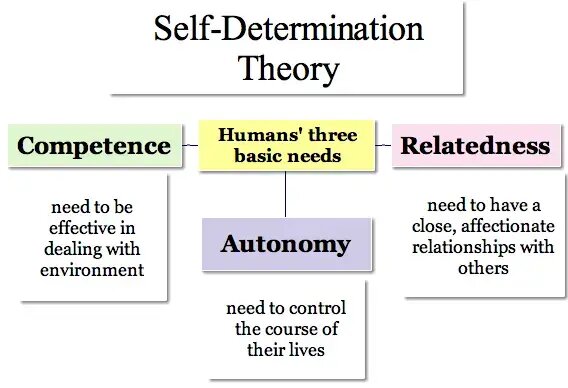
Finally, a system is made up of people. Understanding psychology is essential because people are not interchangeable parts. Everyone is motivated by different things. Most people have an innate desire to do good work, to learn, and to feel pride in what they do. Management practices that ignore this are destined to fail.
Things like performance rankings that pit employees against each other, fear-based management, or a lack of trust can crush intrinsic motivation. Deming believed that a manager's role is to act as a coach, removing obstacles and creating an environment where people can find joy and pride in their work. Understanding what motivates and demotivates people is fundamental to nurturing a healthy, productive system.
These four elements are not separate disciplines to be mastered one by one. They are a single, integrated system of thought. Appreciating a system, understanding its variation, building knowledge through theory, and respecting human psychology all work together to provide a profound understanding of how to lead and improve.
Ready to check your understanding of Deming's framework?
According to Deming's concept of a system, what is the primary role of a manager?
A coffee shop's espresso machine normally pulls a shot in 28-32 seconds. One day, a power surge damages the machine, causing it to pull shots in over 50 seconds. This is an example of:
By viewing the world through this lens, leaders can move beyond simple fixes and begin to make deep, sustainable improvements.