Delta Exchange Mastery
Delta Exchange Overview
Meet Delta Exchange
Delta Exchange is a marketplace for trading cryptocurrency derivatives. Instead of buying and selling digital currencies like Bitcoin or Ether directly, traders on Delta use financial contracts whose value is derived from these assets. This approach opens up more complex trading strategies than just holding the coins themselves.
Think of it like this: buying a concert ticket is like buying a cryptocurrency. A derivative is like placing a bet on whether the concert will sell out. You don't own the ticket, but you have a financial stake in its success.
These tools are generally for traders who have a good handle on market movements and want to do more than simply buy low and sell high. Delta provides the platform for these advanced kinds of trades.
What You Can Trade
The platform supports a variety of trading instruments, each with its own purpose. The main ones you'll encounter are futures, perpetual swaps, and options.
Futures
noun
A contract to buy or sell an asset at a predetermined price at a specific time in the future. For example, you could agree today to buy 1 Bitcoin for $70,000 one month from now, regardless of the actual price on that day.
Perpetual Swaps are similar to futures but have a key difference: they never expire. You can hold onto the position for as long as you want. They're designed to closely track the price of the underlying cryptocurrency through a mechanism called a funding rate.
Options give you the right, but not the obligation, to buy (a call option) or sell (a put option) an asset at a set price before a certain date. This gives you more flexibility than a futures contract.
| Instrument | Key Feature | Best For |
|---|---|---|
| Futures | Fixed expiry date & price | Speculating on a future price |
| Perpetual Swaps | No expiry date | Long-term positions |
| Options | Right, not obligation | Hedging risk or flexible speculation |
Platform Features
Delta Exchange packs in several tools to help traders. One of its main features is the ability to trade with leverage. This allows you to open a position that is larger than the amount of capital you put up, amplifying potential profits—and losses.
Leverage is a powerful tool, but it significantly increases risk. It's crucial to understand how it works before using it.
The platform also offers advanced charting tools to analyze market trends and a robust API (Application Programming Interface) for traders who want to connect their own automated trading software, or bots, to the exchange.
Navigating the Interface
When you first log in, the trading dashboard can look complex, but it's organized into a few main sections. Let's break down a typical layout.
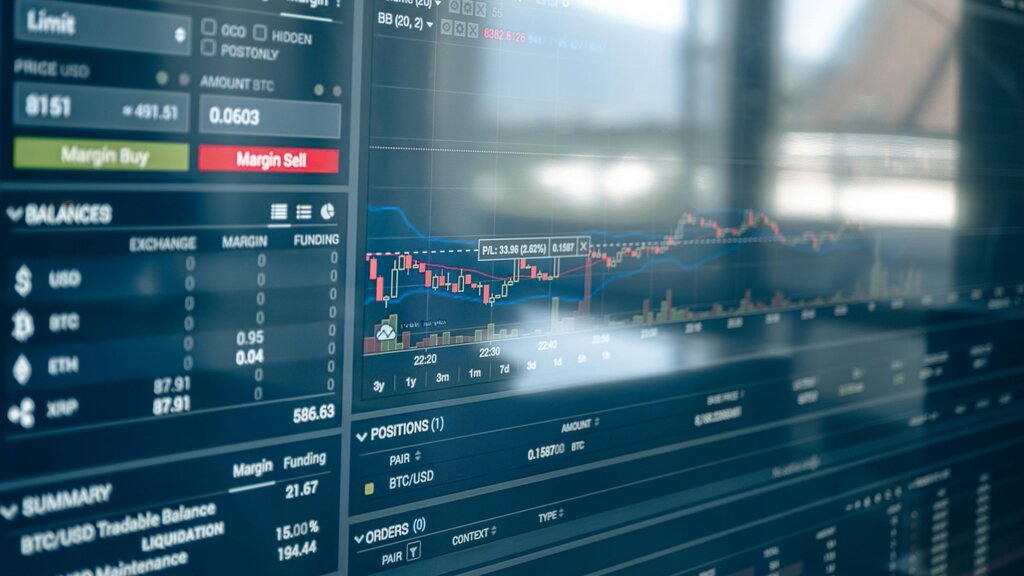
- Instrument Selection: Usually at the top or side, this is where you choose which asset and contract you want to trade (e.g., BTC-USD Perpetual).
- Chart: The largest part of the screen is the price chart. This visualizes the asset's price history. You can customize it with different timeframes and technical indicators.
- Order Book: This shows a live list of all the current buy and sell orders placed by other traders. It gives you a sense of market supply and demand at different price levels.
- Order Entry Panel: This is your control panel. Here, you'll enter the details of your trade—the price, quantity, and type of order you want to place.
- Positions & History: At the bottom, you'll usually find a summary of your current open positions, your order history, and your account balance.
Getting familiar with these core areas is the first step to confidently using the platform.
What is the primary purpose of the Delta Exchange platform?
Which trading instrument available on Delta Exchange is specifically designed to not have an expiration date?
This overview covers the basics of what Delta Exchange is and how to find your way around. In the next steps, we'll dive into placing actual trades.