Degree vs Bootcamp ROI
Understanding ROI
What Is Return on Investment?
Return on Investment, or ROI, is a straightforward way to measure an investment's performance. It answers a simple question: for every dollar you put in, how much did you get back? It's a ratio that compares the gain or loss from an investment relative to its cost.
Return on Investment (ROI)
noun
A performance measure used to evaluate the efficiency or profitability of an investment. It is expressed as a percentage of the initial cost.
The formula for ROI is simple and powerful. It helps you standardize the performance of different investments, making them easier to compare.
To use this formula, you first need to find the Net Profit. That's just the final value of your investment minus what you originally paid for it.
Let's walk through a quick example. Imagine you buy a vintage bicycle for $200. You spend another $50 fixing it up. Your total cost of investment is $250. A few months later, you sell it for $400.
Your net profit is 💲150 (💲400 sale price - 💲250 total cost). Plugging this into the ROI formula, you get (💲150 / 💲250) × 100%, which equals a 60% ROI. For every dollar you invested, you got 💲1.60 back.
More Than Just Money
While ROI is typically about financial gains, the idea of a "return" can be much broader. Investments can yield both monetary and non-monetary benefits. Monetary returns are the tangible financial profits we just calculated. Non-monetary returns are the intangible benefits that don't have a clear price tag.
For example, investing time to learn a new language might not have an immediate financial payoff. But it could lead to new friendships, cultural understanding, and travel opportunities. These non-monetary returns are valuable, even if you can't put them on a balance sheet.
The Limits of ROI
ROI is a great starting point, but it doesn't tell the whole story. It has a few important limitations you should keep in mind.
| Limitation | Why It Matters |
|---|---|
| Ignores Time | An ROI of 50% over one year is fantastic. An ROI of 50% over ten years is less impressive. The basic ROI formula doesn't account for how long it took to get the return. |
| Doesn't Measure Risk | Two investments might have the same potential ROI, but one could be a safe bet while the other is a wild gamble. ROI alone doesn't capture this difference in risk. |
| Hard to Quantify Intangibles | It's difficult to assign a dollar value to non-monetary benefits like happiness, confidence, or a stronger professional network. This means they are often left out of ROI calculations. |
Because of these factors, it's wise to see ROI as just one piece of the puzzle. A truly smart decision considers not only the potential return but also the associated costs, risks, and time involved.
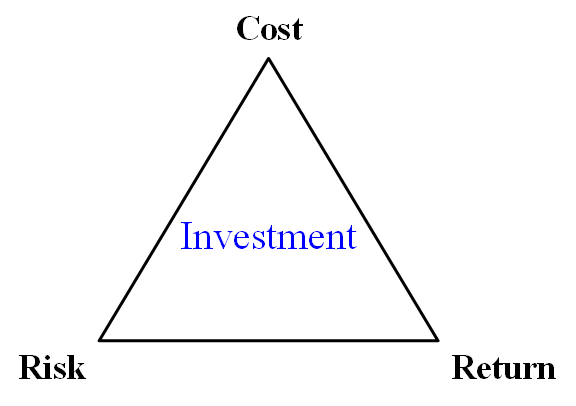
Understanding ROI gives you a framework for evaluating decisions, but it's most powerful when combined with other considerations and your own judgment.
What is the primary purpose of calculating Return on Investment (ROI)?
You buy a collectible for 50 to have it professionally restored, and later sell it for $525. What is the ROI on your investment?