Degree vs Bootcamp ROI
Understanding ROI
What is ROI
Return on Investment, or ROI, is a simple way to measure the financial gain or loss from an investment. Think of it as a financial report card. You spend money and time on something, and ROI tells you how much value you got back in return compared to your initial cost.
investment
noun
The action or process of investing money, time, or effort into something with the expectation of a future benefit.
In education, the investment isn't just tuition. It includes the cost of books, supplies, and even the income you might miss out on by being in school instead of working. The return is typically the increase in your earnings over your career because of that education. Calculating ROI helps you look at an educational path not just as an expense, but as a strategic financial decision.
The ROI Formula
The basic formula for ROI is straightforward. You take the net profit (the final value minus the initial cost) and divide it by the original cost of the investment. The result is often expressed as a percentage.
Net Profit is calculated as the final value (or gain) from the investment minus the original cost of the investment.
For an educational program, this might look like:
- Gain from Investment: The increase in your salary after completing the program.
- Cost of Investment: The total expenses, including tuition, fees, and books.
Let's say a certification costs $5,000 and leads to a $10,000 salary increase in the first year. The net profit is $5,000 ($10,000 - $5,000). Plugging this into the formula gives us a 100% ROI for that year.
A positive ROI means your investment is generating a profit. A negative ROI means you've lost money.
Factors That Shape ROI
Calculating the precise ROI of education is complex because many factors come into play. It's not just a simple one-time calculation. Three key areas influence the final number: costs, earnings, and career progression.
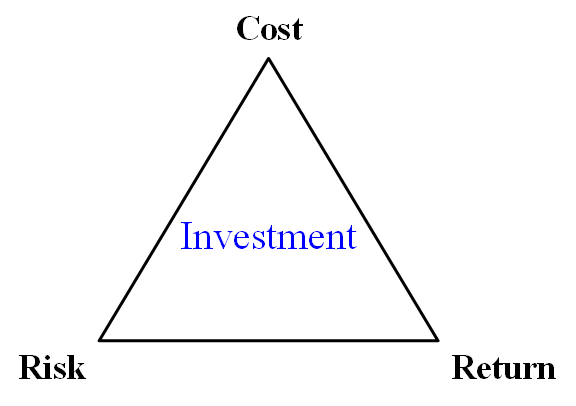
Costs are the most direct factor. This includes obvious expenses like tuition, fees, and supplies. But it's also important to consider opportunity costs, which is the potential income you give up by choosing to study instead of work. Living expenses can also be a major part of the overall cost if you need to relocate or can't work full-time.
Earnings are the other side of the equation. This is the projected increase in your income as a direct result of your education. Your starting salary after graduation is a key data point, but it's just the beginning. The value of your education unfolds over your entire career.
Career progression ties everything together. A degree or certification might not only boost your starting salary but also open doors to faster promotions, bigger raises, and more senior roles down the line. This long-term earning potential is a crucial, though sometimes harder to predict, part of the return.
To think about your return on investment, you want to look at what you spend - the cost of tuition, room, board, and more, and then compare it to what you have the potential to earn.
Let's test your understanding of these core concepts.
What is the primary purpose of calculating Return on Investment (ROI) for an educational program?
A professional certification costs 12,000. What is the ROI for the first year?
By understanding these components, you can better evaluate how an educational program aligns with your personal and financial goals.