DeFi Liquidity for Yield Strategies
Introduction to DeFi
What is Decentralized Finance?
Think about sending money to a friend. You probably use a bank or a payment app. These companies act as trusted middlemen, verifying the transaction and moving the funds. They control the process.
Decentralized Finance, or DeFi, is a new financial system that gets rid of the middlemen. It uses blockchain technology to create financial tools that are open for anyone to use, without needing permission from a central authority.
Decentralized Finance (DeFi)
noun
A system of financial applications built on blockchain networks that operate without central intermediaries like banks or brokerages.
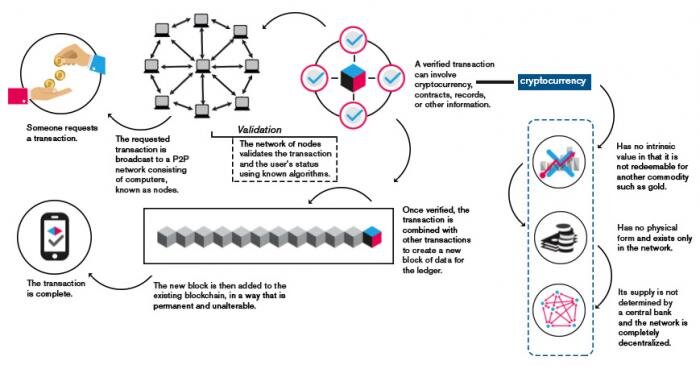
Instead of relying on institutions, DeFi relies on code. These applications are built using smart contracts, which are programs stored on a blockchain that automatically execute when certain conditions are met. This makes financial interactions transparent, secure, and automated.
At its heart, DeFi operates on blockchain technology, offering a radically open and programmable financial system.
DeFi vs. Traditional Finance
The core difference between DeFi and traditional finance (often called TradFi) is decentralization. In TradFi, your money and data are held by banks and corporations. In DeFi, you hold your own assets and interact directly with financial protocols.
This shift leads to some significant benefits, like greater transparency and accessibility. Because DeFi applications run on public blockchains, all transaction activity is visible to anyone. And since there are no gatekeepers, anyone with an internet connection can access these financial services.
| Feature | Traditional Finance (TradFi) | Decentralized Finance (DeFi) |
|---|---|---|
| Control | Controlled by banks & institutions | Controlled by code (smart contracts) |
| Accessibility | Requires identity verification; can be exclusive | Open to anyone with an internet connection |
| Transparency | Opaque; internal operations are private | Transparent; transactions are on a public ledger |
| Operations | Manual processes; operates during business hours | Automated; runs 24/7 |
This structure makes the entire system more open and less prone to censorship or manipulation by a single entity. The rules are written in code and enforced by the network itself.
The Building Blocks of DeFi
DeFi isn't a single product but an ecosystem of different applications and protocols. These components, often called "money legos," can be combined in various ways. Let's look at the three main types.
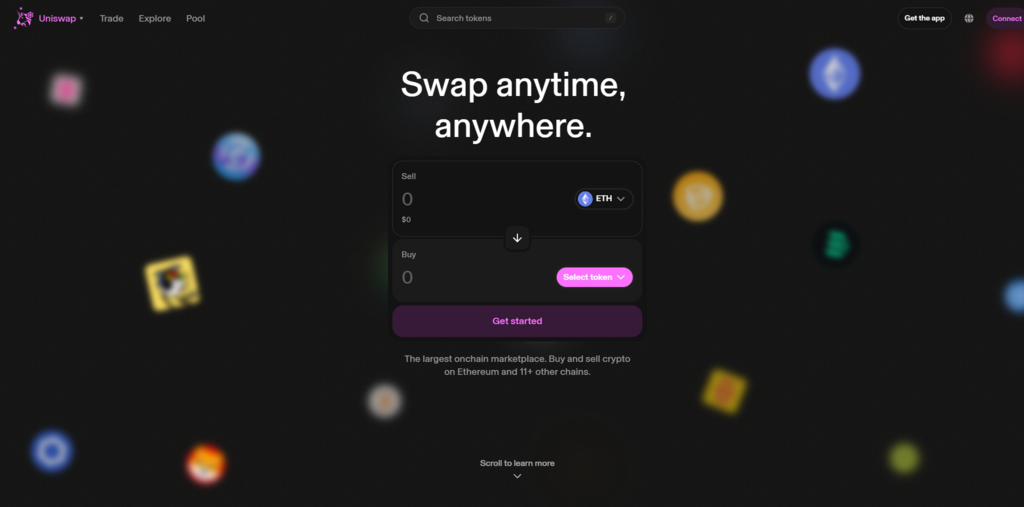
Decentralized Exchanges (DEXs): These are peer-to-peer marketplaces where you can trade digital assets directly with other users. Unlike centralized exchanges, a DEX never takes custody of your funds. Trades are executed automatically on the blockchain via smart contracts.
Think of it as a vending machine for assets. You put one type of token in, and another comes out, all without needing a cashier or a company to process the swap.
Lending Platforms: DeFi lending allows you to borrow or lend assets without going through a bank. Lenders can earn interest on their holdings by supplying them to a lending pool, and borrowers can take out loans by providing collateral. The interest rates are typically determined algorithmically based on supply and demand.
Yield Farming: This is a more advanced DeFi strategy. Yield farming involves lending or staking cryptocurrency in exchange for rewards, often in the form of another cryptocurrency. Users move their assets between different lending platforms to maximize the interest or rewards they earn. It's essentially a way to make your crypto assets work for you to generate more crypto.
These core components form the foundation of an open financial system that is constantly evolving. By understanding them, you can begin to see how different DeFi services connect and build upon one another.