Deepfakes Explained
Introduction to Deepfakes
The Rise of Synthetic Media
You've likely seen a video of a celebrity saying something they never actually said, or a picture of an event that never happened. This is the world of deepfakes, a technology that uses artificial intelligence to create highly realistic but fake images and videos.
deepfake
noun
A portmanteau of "deep learning" and "fake." It refers to synthetic media in which a person in an existing image or video is replaced with someone else's likeness.
The term first appeared in 2017 on the social media site Reddit, where a user shared manipulated videos. Since then, the technology has evolved at a startling pace. What once required powerful computers and deep expertise is now becoming accessible to anyone with a modern smartphone.
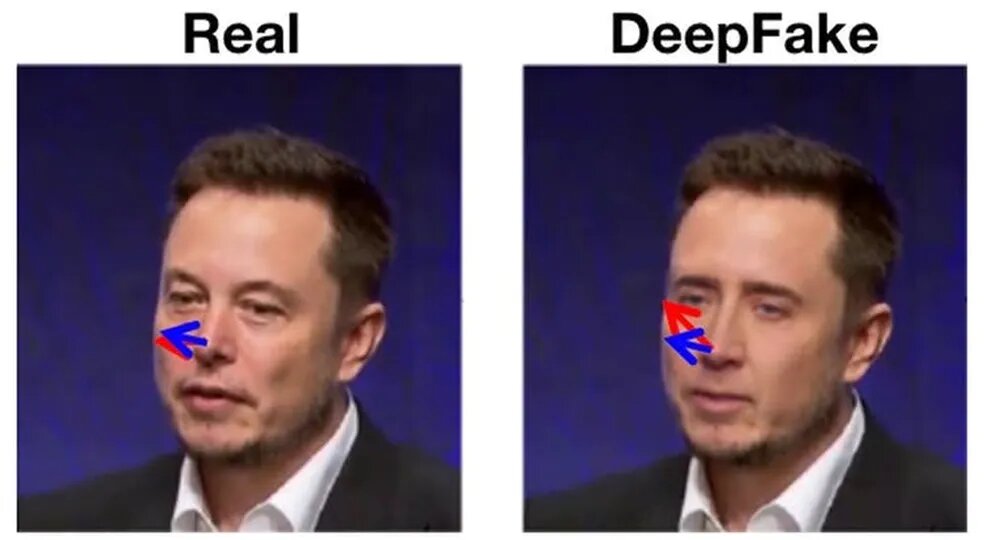
But how does a computer learn to create such convincing fakes? The magic behind most deepfakes is a clever AI technique called a Generative Adversarial Network, or GAN.
Generative Adversarial Networks (GANs)
Imagine two AIs locked in a constant battle: a forger and a detective. The forger, called the Generator, tries to create fake images. The detective, called the Discriminator, tries to spot them.
The Generator starts by producing random, nonsensical images. The Discriminator, which has been trained on thousands of real images, easily labels them as fake. But with each attempt, the Generator gets feedback from the Discriminator and adjusts its approach, trying to create a fake that's a little more convincing.
This cycle repeats millions of times. The Generator gets better at forgery, and the Discriminator gets better at detection. Eventually, the Generator becomes so skilled that the Discriminator can no longer reliably tell the difference between a real image and a fake one. The result is a highly realistic, AI-generated image.
This adversarial process is incredibly powerful. By pitting two neural networks against each other, a GAN can learn to generate content that is nearly indistinguishable from reality.
As the algorithms behind GANs have improved and more open-source tools have become available, creating deepfakes is no longer limited to AI researchers. This growing accessibility means that synthetic media is becoming a more common part of our digital landscape.