Deepfake Detection and Media Literacy
Understanding Deepfakes
What Are Deepfakes?
Have you ever seen a video of a politician saying something outrageous, only to find out later they never said it? Or maybe you've seen a movie where an actor who passed away years ago appears in a new scene. Both could be the work of deepfakes.
deepfake
noun
Synthetic media (video, audio, or images) in which a person's likeness is replaced with someone else's, created using artificial intelligence techniques.
The term itself is a blend of "deep learning" and "fake." Deep learning is a type of machine learning that uses complex neural networks to analyze vast amounts of data. In this case, the AI studies photos and videos of a person from multiple angles to learn how they look, move, and speak. It then uses this knowledge to generate new, fabricated content that looks and sounds authentic.
The 21st century’s answer to Photoshopping, deepfakes use a form of artificial intelligence called deep learning to make images of fake events, hence the name deepfake.
The result is a powerful tool that can create incredibly realistic and convincing fakes, making it difficult to tell what's real and what's not.
A Rapid Evolution
While the idea of manipulating images has been around for over a century, AI-powered deepfakes are a much more recent phenomenon. The technology began gaining public attention around 2017 when anonymous users on internet forums started sharing AI-generated videos.
The key technological breakthrough was the development of Generative Adversarial Networks, or GANs. A GAN involves two competing neural networks: a "generator" that creates the fake images, and a "discriminator" that tries to spot them. They essentially train each other, with the generator getting better at making fakes and the discriminator getting better at catching them. This back-and-forth process rapidly improves the quality of the fakes until they become nearly indistinguishable from reality.
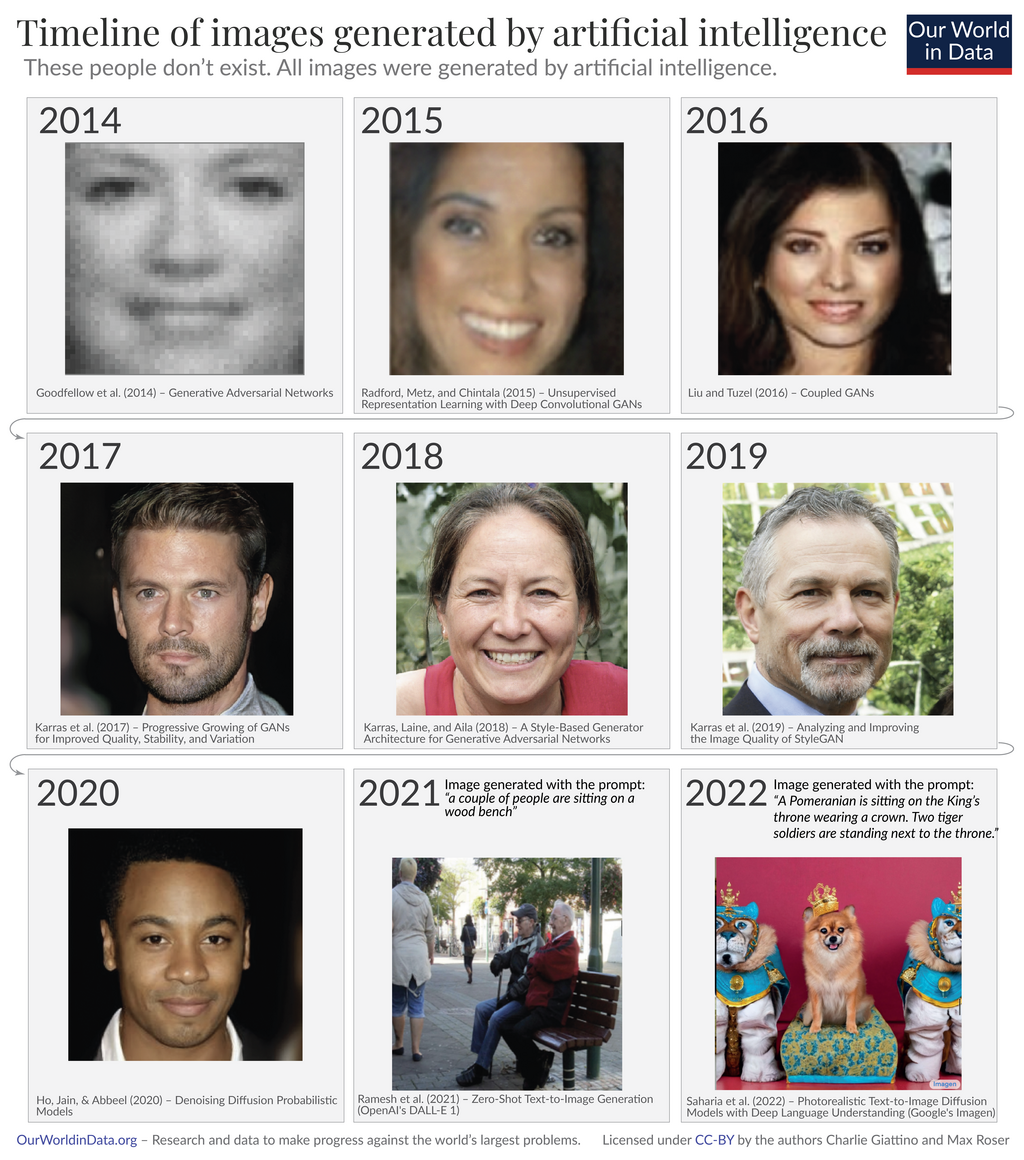
What started as a niche hobby has quickly become accessible. Today, various apps and software allow anyone to create basic deepfakes with just a few clicks, lowering the barrier to entry and increasing the potential for both creative and malicious use.
Uses and Misuses
Deepfake technology isn't inherently bad. It has legitimate and even beneficial applications. In the film industry, it can be used for dubbing movies into different languages with synchronized lip movements or for digitally de-aging actors. Artists use it as a new medium for expression, and educators can create historical simulations, like having Abraham Lincoln deliver the Gettysburg Address.
However, the potential for misuse is significant and concerning. Deepfakes can be a powerful tool for spreading misinformation and propaganda. Imagine a fake video of a world leader declaring war, released just before a critical election. The damage could be done before the video is proven to be a fake.
The technology is also used for fraud, with criminals using deepfake audio to clone a person's voice and trick family members or employees into transferring money. It has also been used for harassment, particularly for creating non-consensual explicit content featuring celebrities and private individuals.
The Societal Impact
The rise of deepfakes poses a fundamental challenge to our trust in what we see and hear. If any video or audio clip can be faked, how can we believe anything? This erosion of trust is perhaps the most significant societal impact. It creates an environment where it's easy to dismiss real evidence as fake and accept fabricated content as truth, a phenomenon sometimes called the "liar's dividend."
The liar's dividend is the benefit a liar gets when their audience can no longer distinguish between truth and lies. A politician could dismiss a real, damaging video of them as a deepfake, and some people would believe it.
There are no easy answers. While technologists work on detection tools and lawmakers consider regulations, one of the most effective tools we have right now is awareness. Understanding that this technology exists, how it works, and the ways it can be used to manipulate us is the first step in defending against it. It forces us to be more critical consumers of information and to question the source and context of the media we encounter.
The most powerful defense against deepfakes is awareness—and a refusal to take things at face value.
Now, let's test your understanding of these concepts.
The term "deepfake" is a blend of which two words?
In a Generative Adversarial Network (GAN), what are the roles of the two competing neural networks?