Deep Value Investing Mastery
Introduction to Deep Value Investing
Finding Hidden Gems
Imagine you're at a flea market. Most things are priced fairly, but you spot a beautiful antique chair in the corner with a surprisingly low price tag. You know it's worth much more than the seller is asking. Buying that chair is a bit like deep value investing.
Deep value investing is a strategy focused on finding companies that are trading for significantly less than their actual worth. It’s not about chasing fast-growing tech companies or jumping on popular trends. Instead, it’s about patiently searching for businesses the market has overlooked or unfairly punished, believing their true value will eventually be recognized.
The goal is simple: buy a dollar of assets for fifty cents.
This approach has its roots in the early 20th century. After the stock market crash of 1929, investors were terrified. An economist named Benjamin Graham developed a new, more defensive way to invest. He argued that investors should stop speculating and start analyzing businesses like a careful owner would. His ideas laid the groundwork for what we now call value investing.
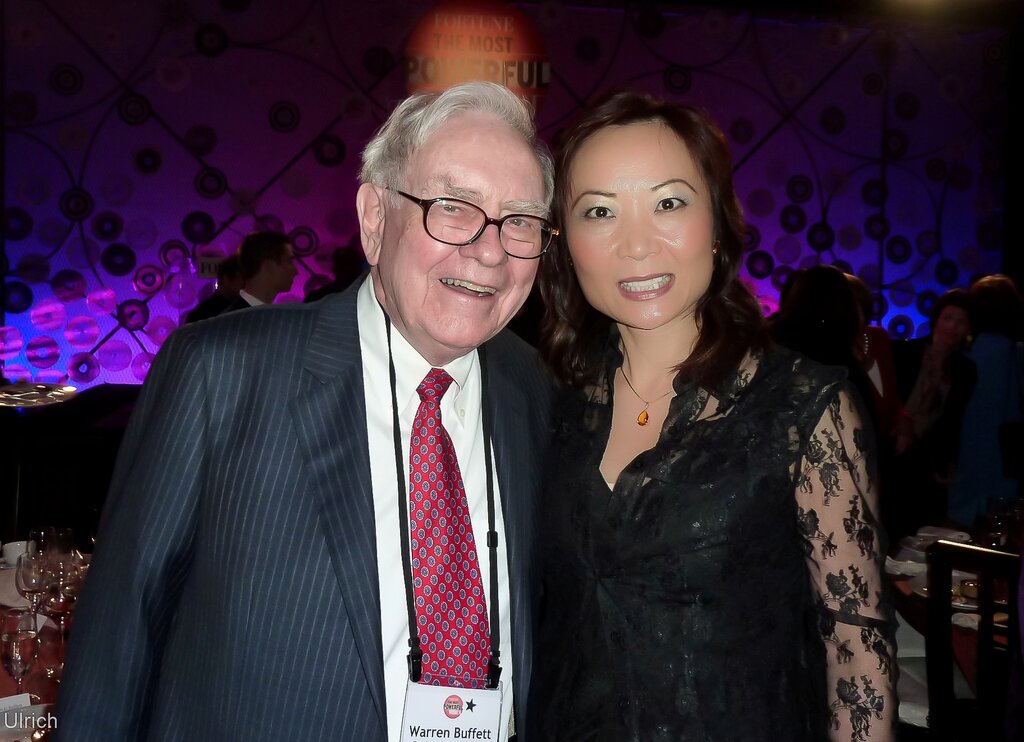
Graham's most famous student, Warren Buffett, took these ideas and built an empire. Initially, Buffett followed Graham's method of buying extremely cheap, often struggling companies—a strategy sometimes called "cigar butt" investing, looking for one last puff of value. Over time, however, Buffett's approach evolved. He began to focus on buying wonderful companies at a fair price, rather than just fair companies at a wonderful price. This shift highlighted a move toward quality, not just cheapness.
The Core Principles
Value investing rests on two key concepts: intrinsic value and the margin of safety. Understanding them is crucial.
Intrinsic Value
noun
The true underlying worth of a company, based on its assets, earnings power, and economic prospects.
A stock's price is what you pay for it on any given day, and it can bounce around based on news, emotions, and market whims. A company's intrinsic value is what it's fundamentally worth. A value investor's job is to estimate that intrinsic value and compare it to the current price.
The first key lesson for the would-be Value Investor is that the worth of a business is independent of the market price.
Once you have an estimate of a company's intrinsic value, you can apply the second principle: the margin of safety. This is the difference between the estimated intrinsic value and the price you pay for the stock. The larger the gap, the bigger your margin of safety.
Think of it like building a bridge. If the bridge needs to support 10 tons, you don't build it to hold exactly 10 tons. You build it to hold 30 tons. That extra capacity is your margin of safety. In investing, it provides a cushion in case your valuation is wrong or the company faces unexpected trouble.
This whole process requires patience. Value investing is not a get-rich-quick scheme. It can take months or even years for an undervalued stock's price to rise toward its intrinsic value. Value investors must be willing to hold their investments for the long term, ignoring the market's short-term noise and trusting their analysis.
What is the primary goal of a deep value investor?
The difference between a company's estimated intrinsic value and the price an investor pays for its stock is known as the __________.