Deep Reinforcement Learning Explained
Introduction to Reinforcement Learning
Learning Through Experience
Imagine teaching a puppy a new trick. You don't give it a textbook on how to sit. Instead, you say "sit," and when it sits, you give it a treat. If it rolls over instead, you don't. Through trial and error, the puppy learns that the action "sit" in the context of your command leads to a reward. This is the core idea behind reinforcement learning (RL).
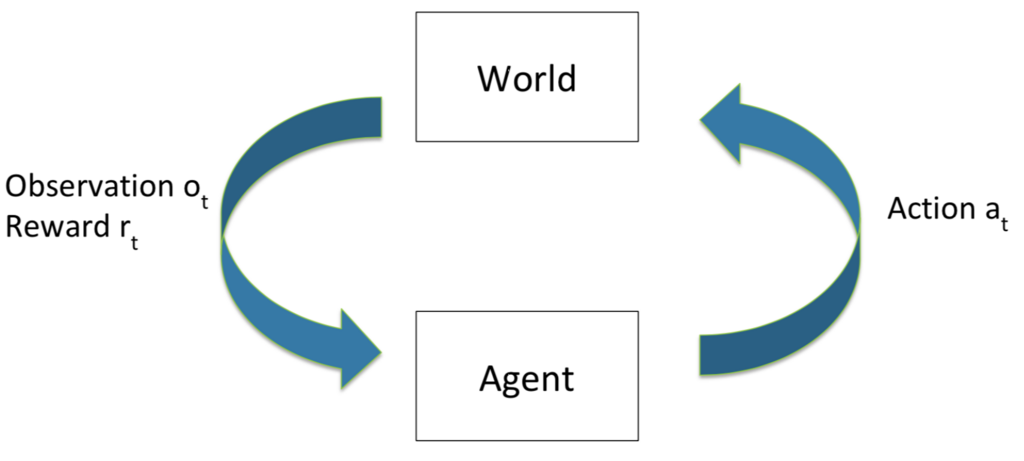
Reinforcement Learning (RL) is a type of machine learning where an agent learns to make decisions by interacting with an environment, aiming to maximize a cumulative reward over time.
Unlike other types of machine learning that learn from labeled data, RL agents learn from the consequences of their actions. They are explorers, figuring out the best way to accomplish a goal in a complex, often uncertain, world.
The Core Components
Every reinforcement learning problem has a few key players. Understanding them is essential to understanding how RL works.
Agent
noun
The learner or decision-maker. It observes the environment and decides which actions to take.
The environment is the world the agent interacts with. It's everything outside of the agent itself. For the chess-playing agent, the environment is the board and the opponent.
A state is a snapshot of the environment at a particular moment. It’s all the information the agent needs to make a decision. In chess, the state is the position of all the pieces on the board.
An action is a move the agent can make. The set of all possible moves is the action space. A chess agent can move any legal piece.
Finally, a reward is the feedback the environment gives the agent after an action. It's a signal that tells the agent how good or bad its last action was. A positive reward for capturing an opponent's piece, and a negative one for losing its own.
Playing the Long Game
An agent's goal isn't just to get the biggest immediate reward. A chess agent might sacrifice a pawn (a small negative reward) to set up a checkmate (a huge positive reward) later. It's playing for the long run.
The objective in RL is to maximize the cumulative reward, which is the total reward collected over time. The agent needs to learn a strategy, called a policy, that maps states to actions in a way that achieves the highest possible total score. This often involves balancing immediate gains with potential future rewards.
The agent learns to trade short-term rewards for long-term success through a process of trial and error.
This simple framework is incredibly powerful and has been used to solve a wide range of problems.
- Game Playing: AI agents have mastered complex games like Go and StarCraft, discovering strategies that human players never considered.
- Robotics: Robots learn to walk, run, and manipulate objects by being rewarded for successful movements and penalized for falling or dropping things.
- Resource Management: RL can optimize energy consumption in data centers or manage financial investment portfolios by rewarding efficiency and high returns.
- Personalized Recommendations: Systems can learn to recommend movies or products by getting a reward when a user engages with a suggestion.
Now, let's review the key terms we've introduced.
Ready to test your understanding? Let's see what you've learned about the fundamentals of reinforcement learning.
What is the primary way a reinforcement learning agent learns?
In the context of a self-driving car learning to navigate a city, the current positions of all other cars, traffic light status, and the car's own speed would collectively represent a ____.
By understanding these core components—agent, environment, state, action, and reward—you have the foundation for exploring the fascinating world of reinforcement learning.